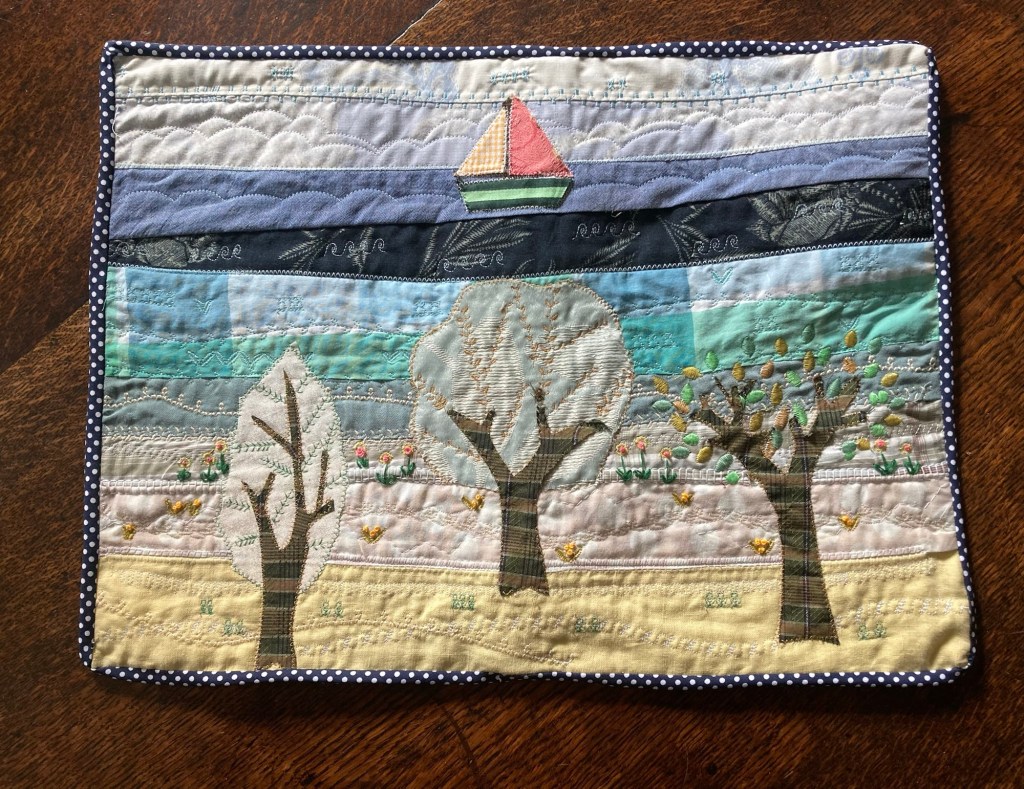
Using stitches from my new machine and just a little hand embroidery I turned strips of scrap from old clothes and fabric remnants into a rustic placemat
A great way of trying out the decorative stitches.
Using stitches from my new machine and just a little hand embroidery I turned strips of scrap from old clothes and fabric remnants into a rustic placemat
A great way of trying out the decorative stitches.
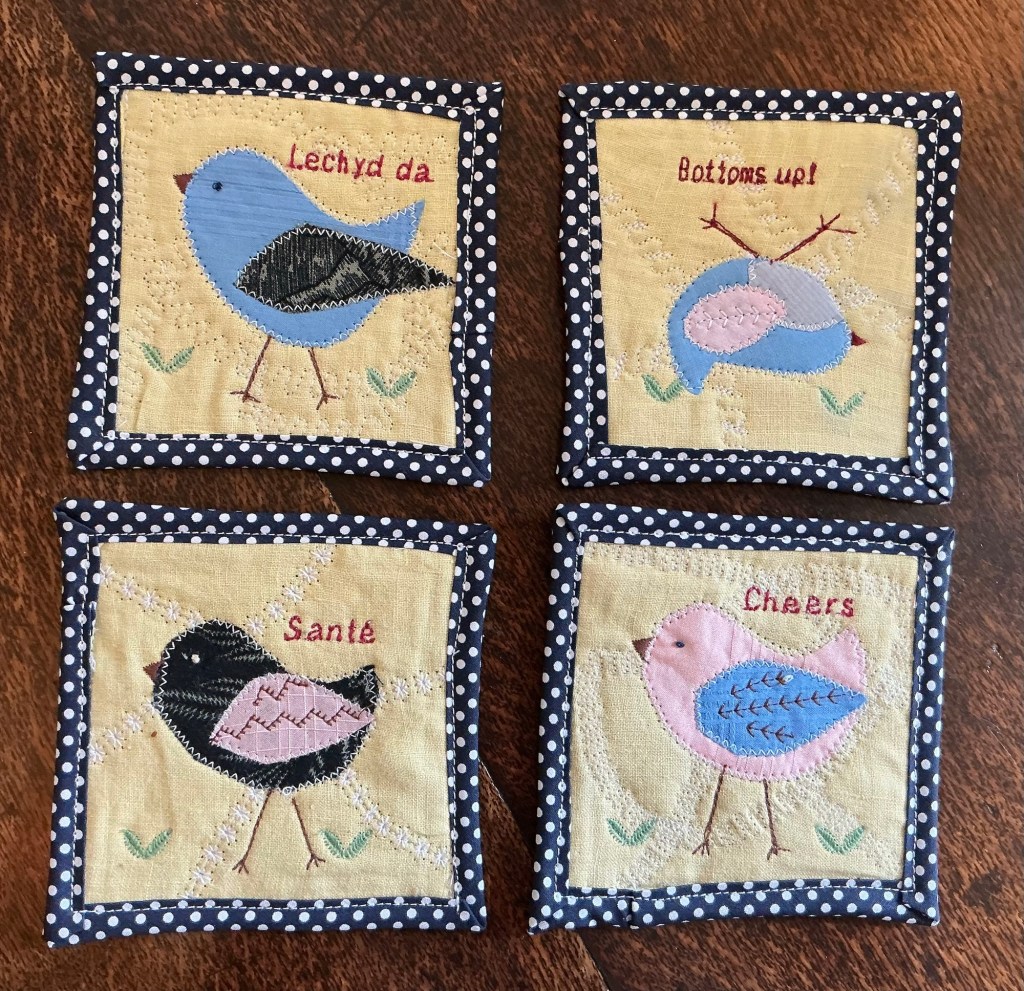
I made these coasters to try out my letter character skills on my new machine and had to master binding to finish them off.
Experimenting with the feet that came with my new Janome machine…
The over edge stitch recommended the c foot and the results blew me away.
So easy to line the foot up with the straight edge of the fabric just so that the standard width stitch finishes the edge exactly.
Who needs an overlocker?
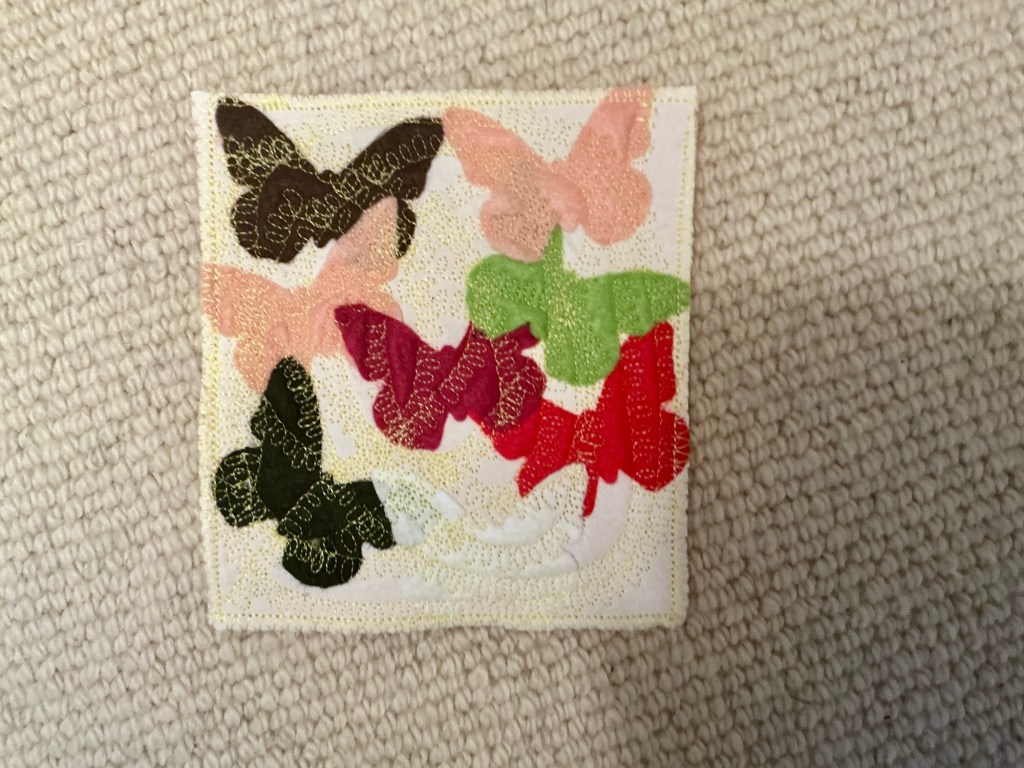
This was due cut felt butterfly shapes on a 6” cotton square with a felt backing.
I used a decorative stitch to fix the shapes and it makes a simple glass coaster or mug rug.
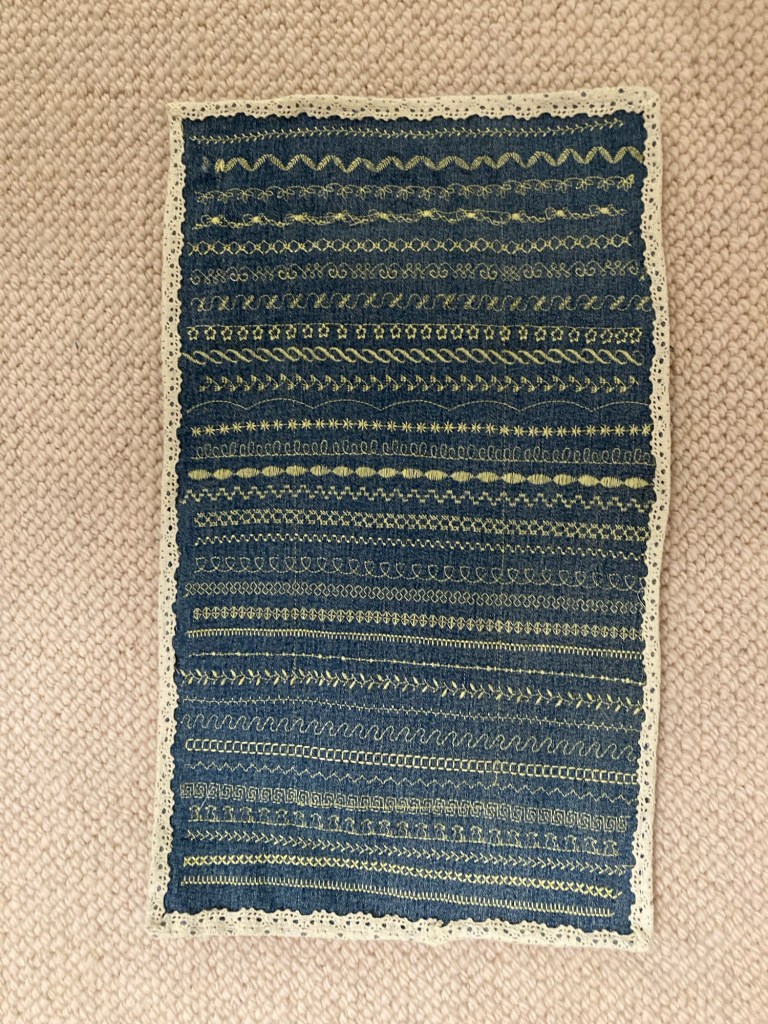
Trying out the decorative stitches on my new Janome machine … I ran lines of stitches across a panel of denim cut from an old pair of jeans
I decided to turn the sampler into a mat so backed it with another denim panel then bound the edges with some ancient tape
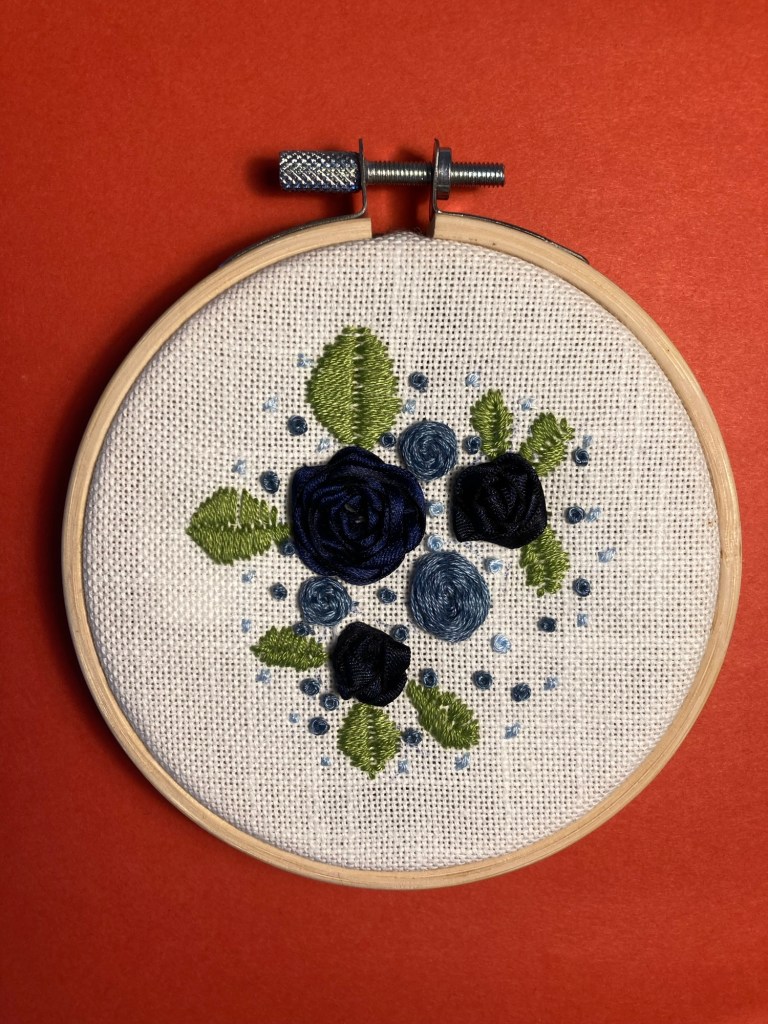
ribbon roses (from the tags cut from new clothes), satin stitch leaves, French knots and a few scattered cross stitches made this a basic, but pretty little stitch project.
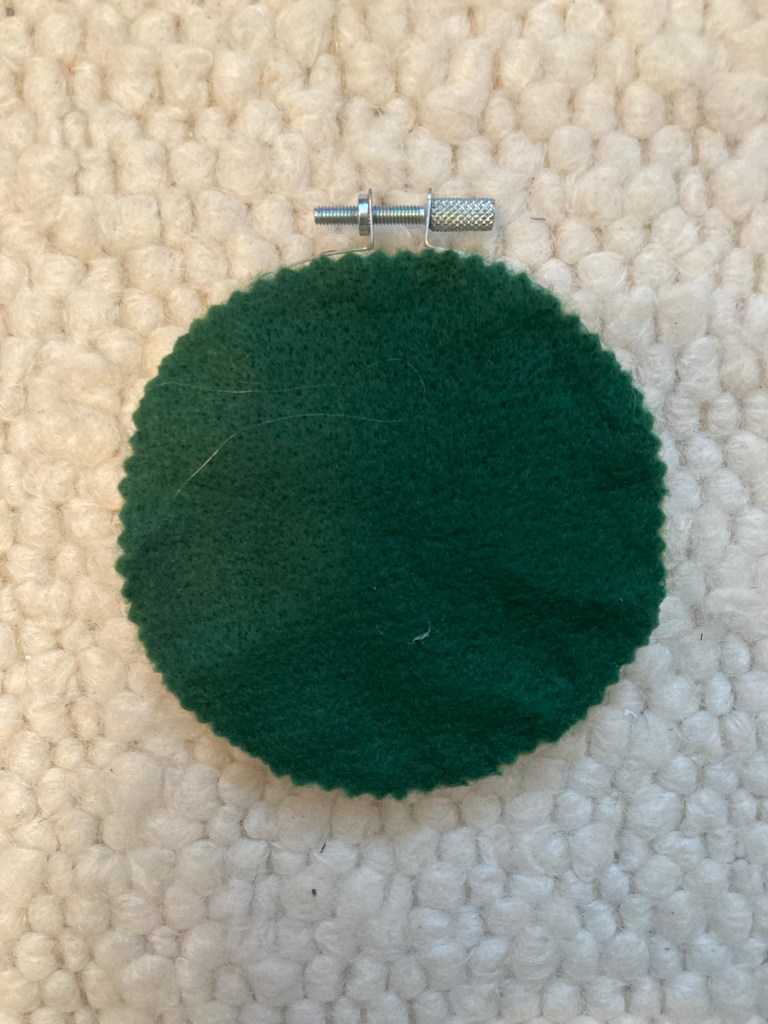
I hot glued some felt to the hoop to cover my workings in the back.
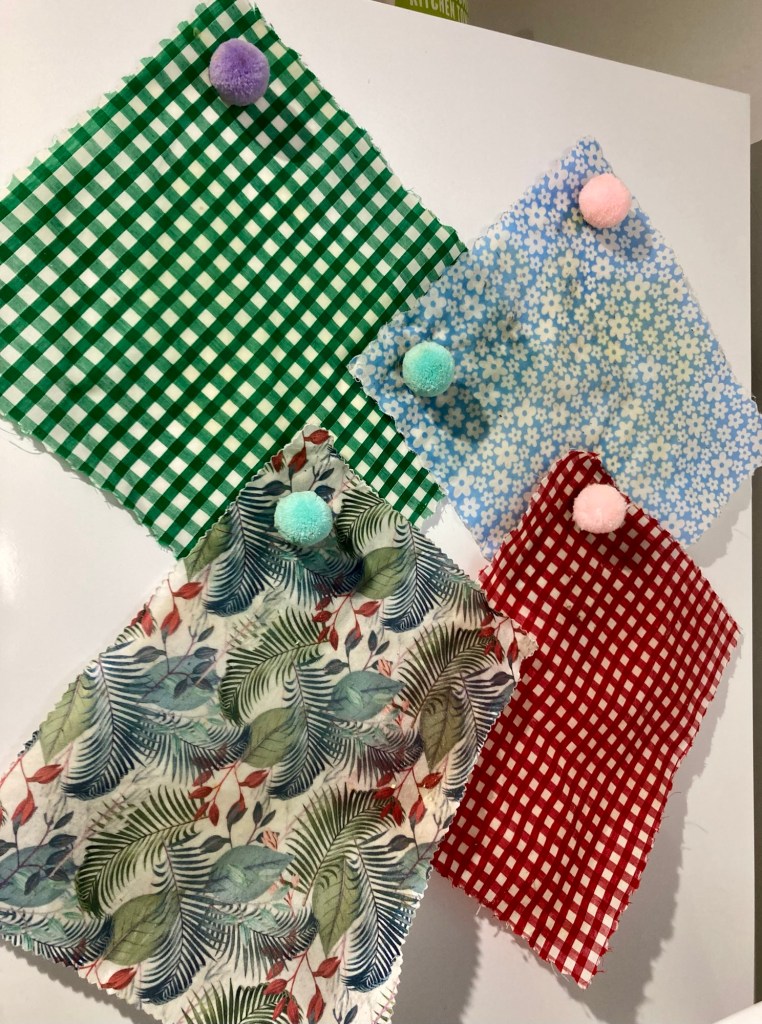
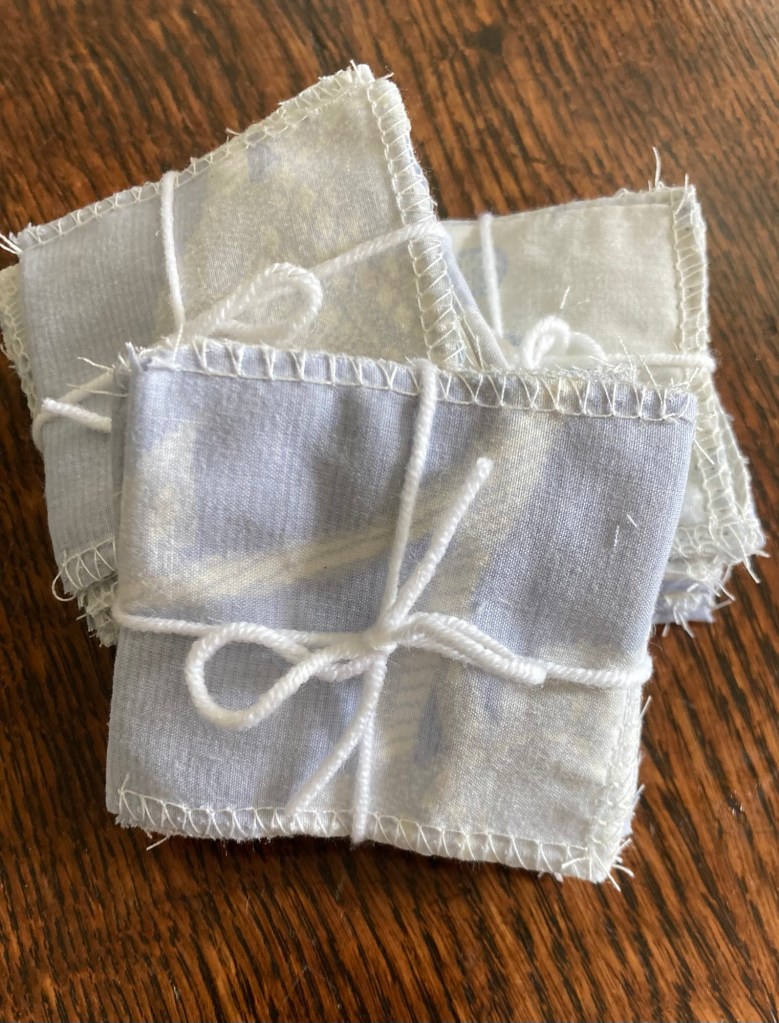
I am determined not to add to my fabric stash so am using up bits and pieces in small projects.
Scraps of fabric have been waxed to provide clingfilm alternative waxed wraps, these live on the fridge ready for use. I used beeswax pellets as solid bees wax needs messy grating before it is ironed on the fabric.
Then when reducing the size of a king size duvet cover to fit a double bed I ended up with surplus strips of fabric.
As the overlock machine was out I decided to fold the strips in four and overlock them into squares for use as reusable cotton face wipes. Enough extra bundles were made to go in the present drawer with suggested ‘recipes’ for diy facial cleanser.
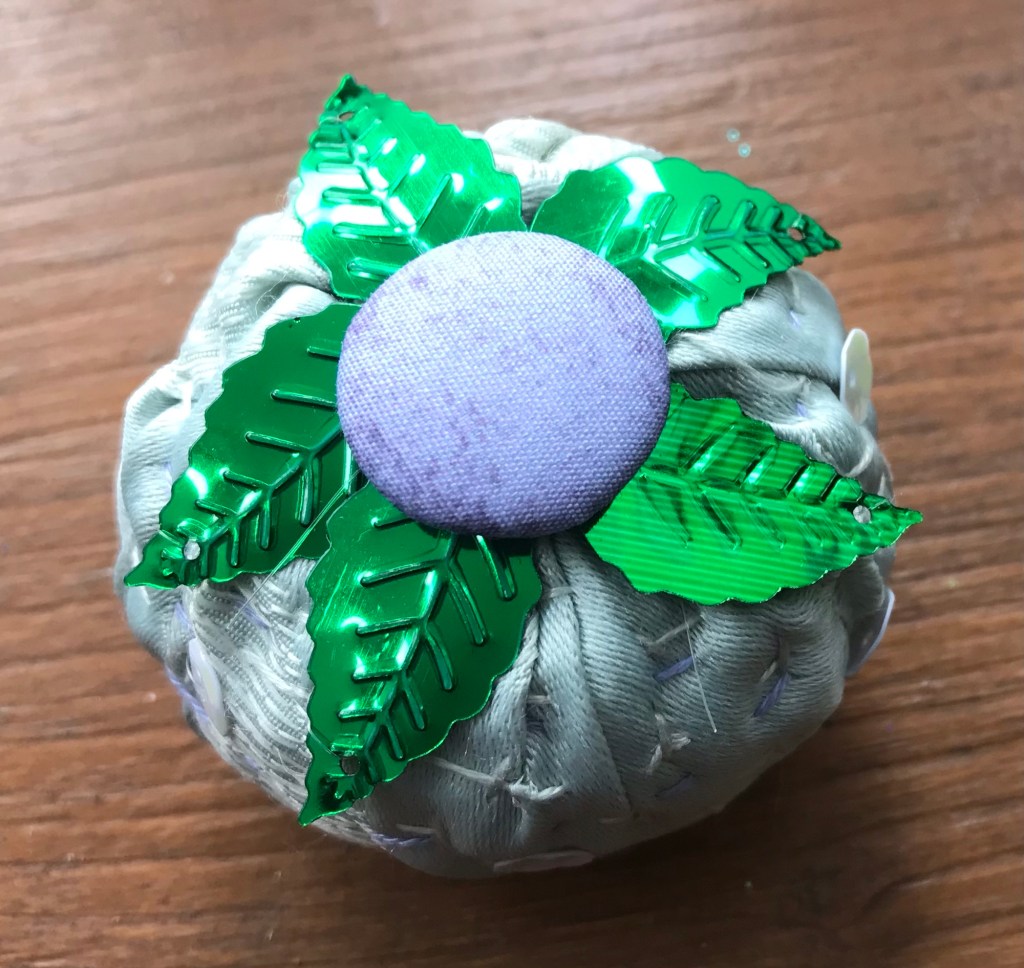
A quick festive make.
Cut a circle of fabric about 4”.
Running stitch around the diameter. Pull the ends of the thread so the circle closes into a ball. ( a Suffolk puff)
Stuff the ball firmly with wadding then stitch closed the gap.
Slow stitch over the ball to decorate the fabric and cover the stitched gap with a button. The button will also serve as a hanger for cord.
Sequin or decorate to finish.
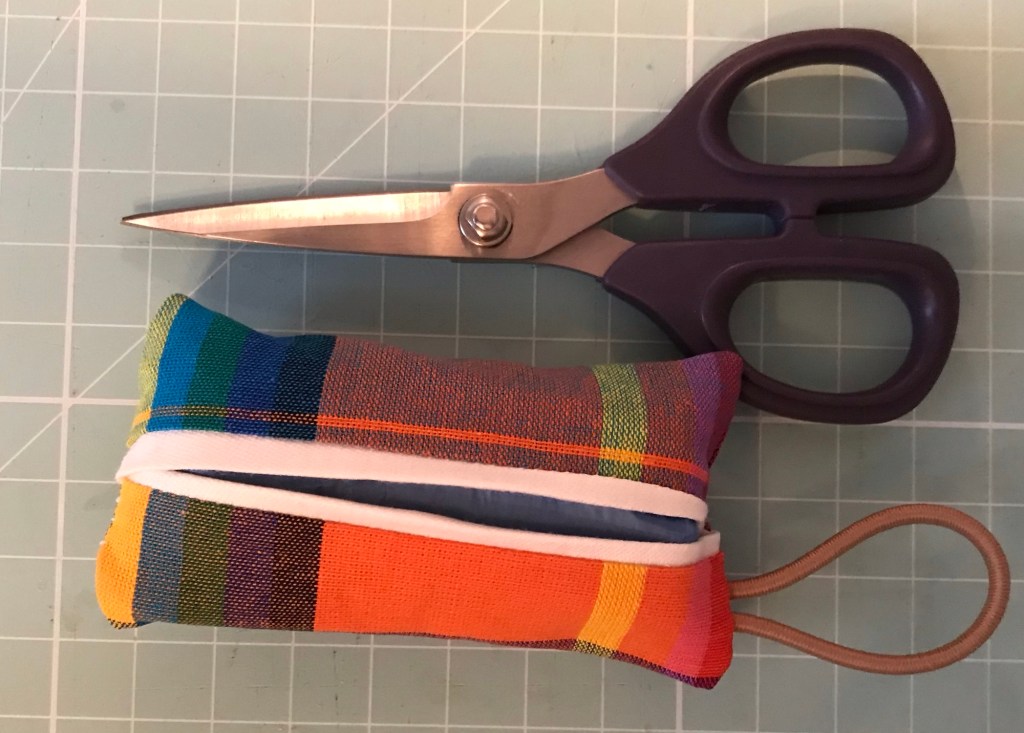
Easy makes based on the pocket tissue holder I make every year.
To fit the rolls of bags I have, I cut outer fabric at 4 and a half inches square and lining fabric of 5 inches wide by 4 and a half.
With right sides facing sew both sides.Feels wrong as the lining is wider, but gives a great finish.
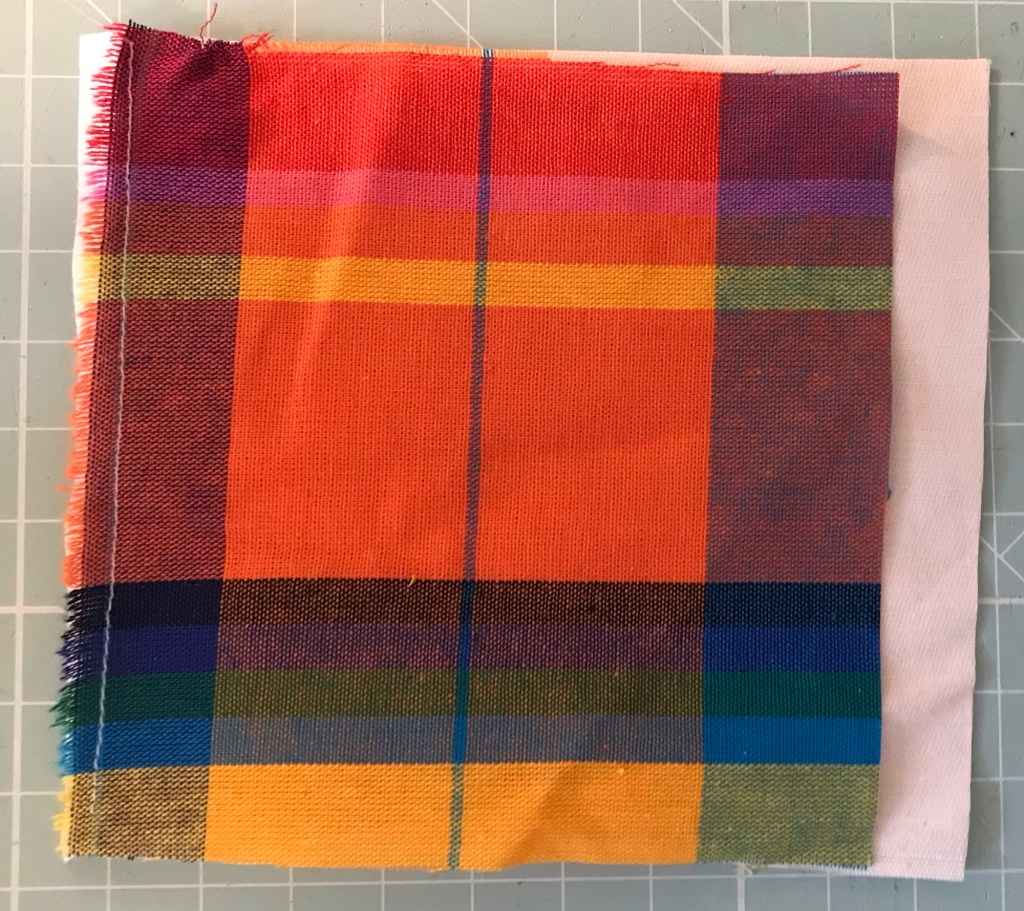
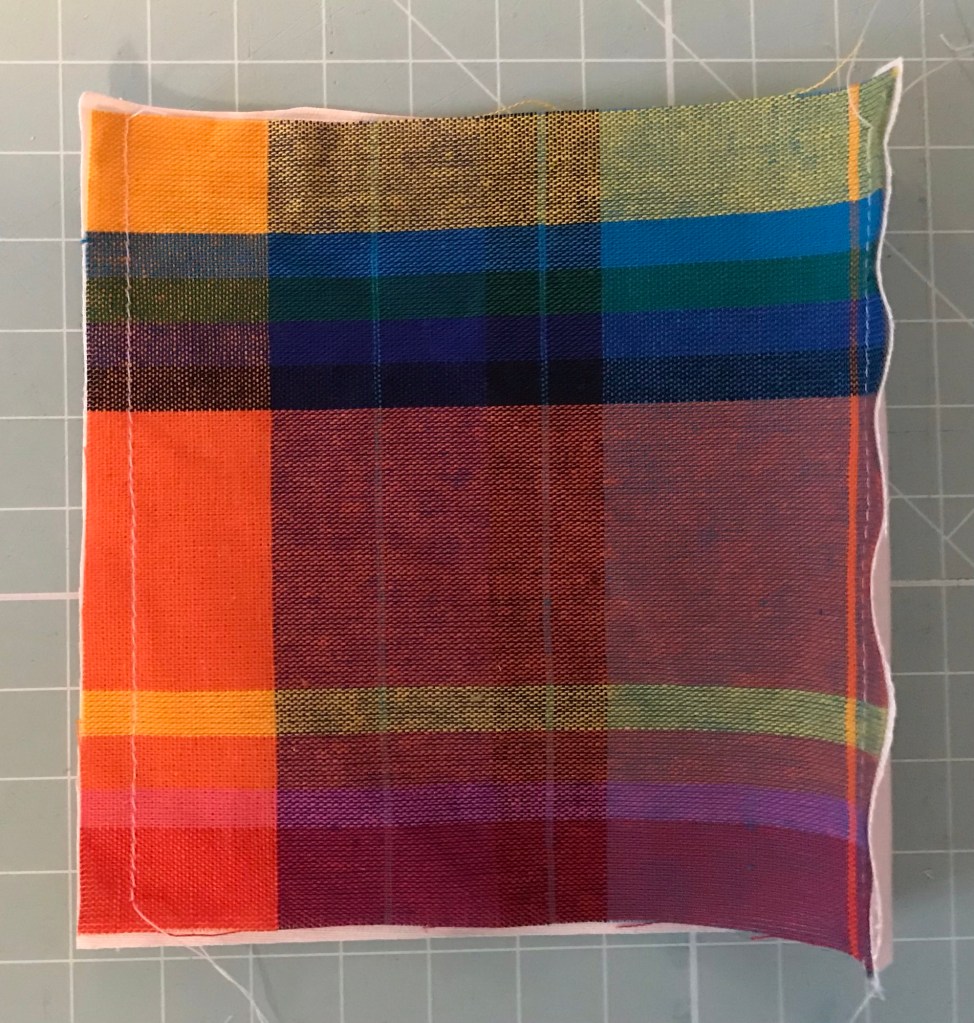
Turn right sides out then press so the extra lining is equal on both sides

Then fold the sides to the middle and pin in a fastener. I use a cheap pony tail loop.
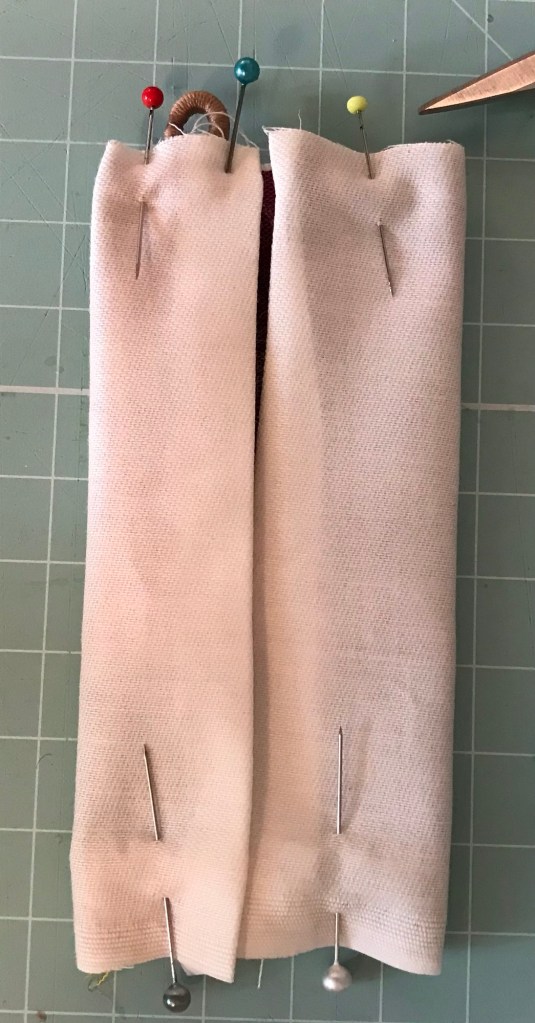
Zig zag the open ends, reversing over the middle as that is where most stress will be
Turn right sides out
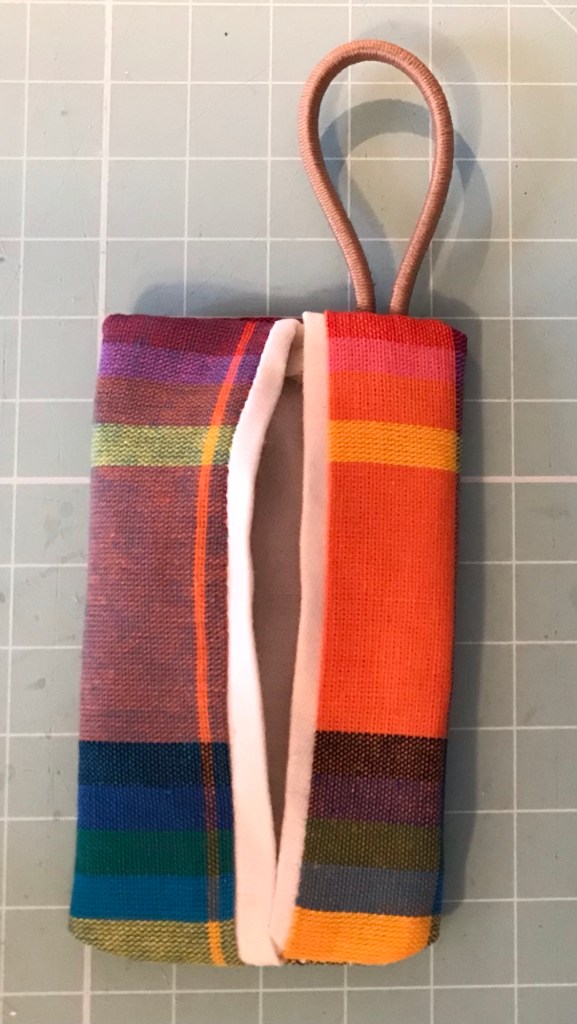
And pop in a roll. The loop can be twisted round the handle of a lead so you never forget to take bags out with you.
This uses tiny amounts of fabric*, is useful and also easy to make
*thanks Emma for the madras fabric which I love and am nursing along.
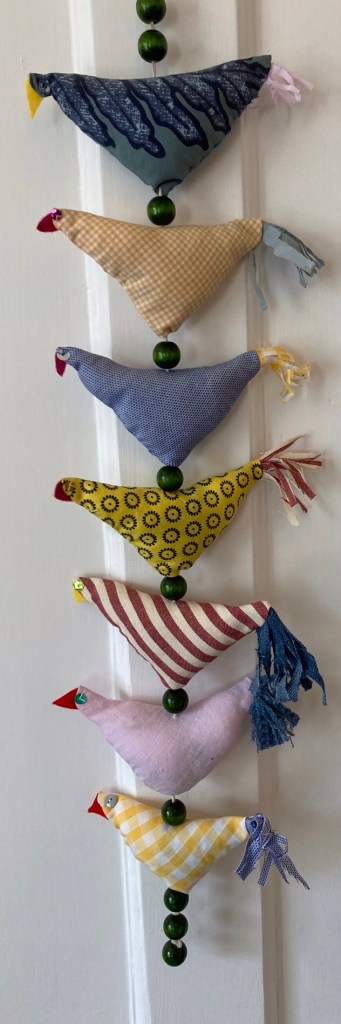
A quick make that doesn’t need too much accuracy
Apparently a traditional definition of prosperity in northern India was the ownership of a flock of hens. So hanging this type of decorative garland suggests prosperity to the homeowner.
Each chicken is a square of cotton folded to a triangle with beak and tail feathers sewn in. I followed a YouTube tutorial from Pincutsew which was very clear.
My triangles were 4 inches square and I stuffed mine with lavender as well as fibre, so they can roost in a wardrobe if not on display.
My beaks were felt and I added sequins for eyes to pretty things up.
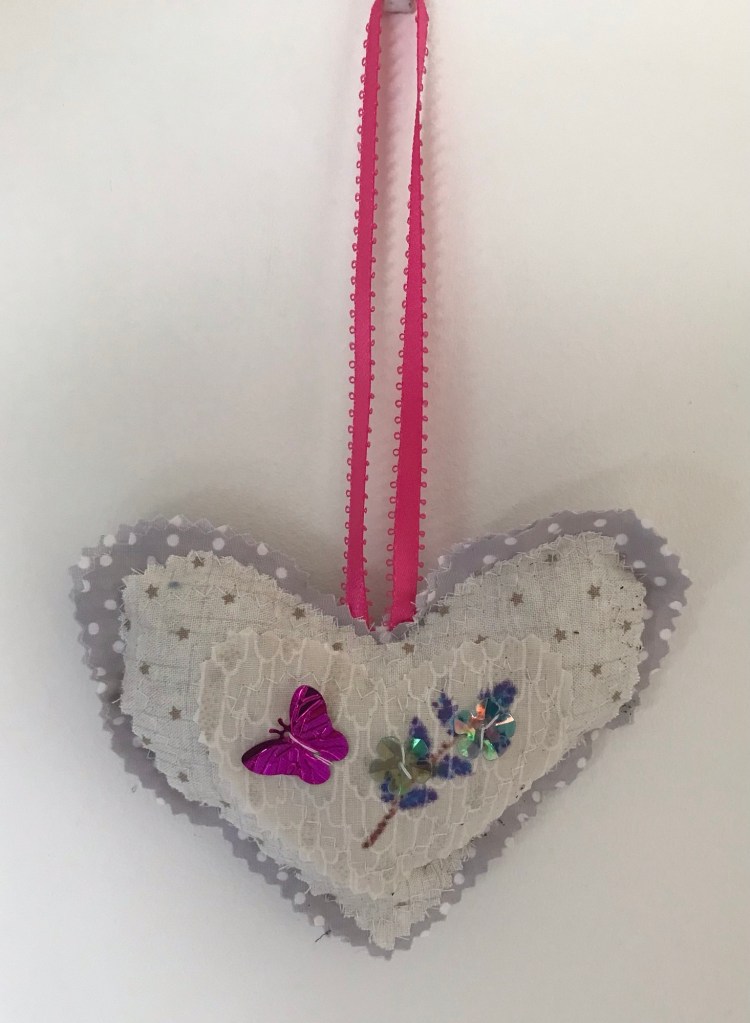
The quick way to make lavender bags is to cut the bag shape with pinking shears and with right sides out, stitch round the outline leaving only a stuffing gap.
Here I layer some decoration on the front (two layers of hearts sewn on, a fabric pen floral and some decorative sequins) and sandwich in a ribbon loop before stitching and stuffing. I use a zig zag on 2.5 width to echo the pinked edging and keep the rustic look.
I use a combination of fibre and lavender to get a plumpness but it means I still have plenty of lavender left.
As everything is donated or thrifted and we grew the lavender this is a truly frugal craft.
 janecrafts