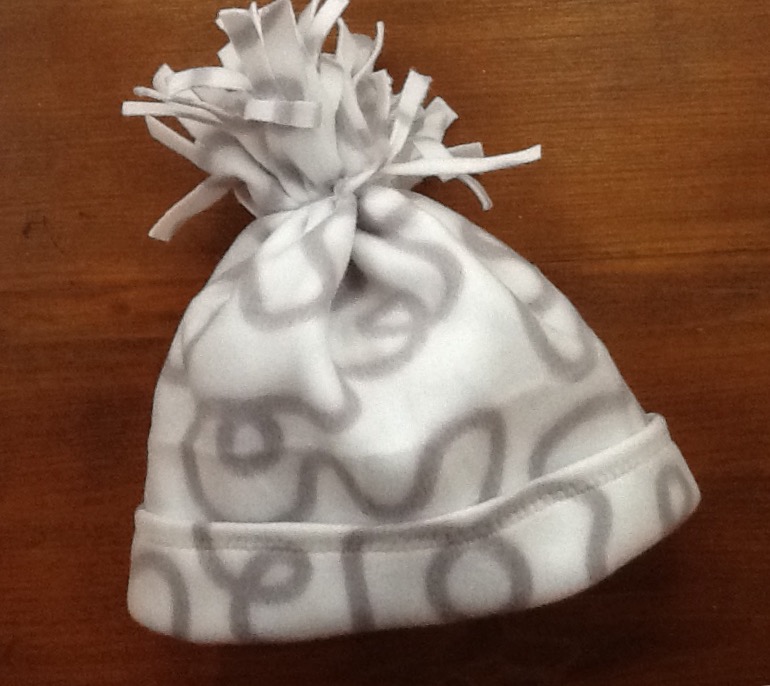
‘It looks shop bought’ beanie hat

Maybe not the most flattering hat but certainly one of the warmest.

made from fleece – that ikea throw seems never ending

loads of tutorials you can follow but it is a simple sew:

essentially draw your pattern as a rectangle with the long side measuring the circumference of the wearers head and the short side being half of the distance measured ear to ear ( plus brim and whatever length of fringe you want)

add seam allowances to long and short sides before cutting a double layer of fleece. I chose to have inner and outer the same fleece but contrast works well

cut the fringe to your chosen length along one long side then sew the other long side together

sew all the short sides together, stop just short of the fringe, to form a tube then turn inside out so the seams are hidden

do a decorative top stitch around the non fringed long side, bear in mind that this is on the brim so the bobbin side of your top stitch will be on display

turn the brim up and stand the hat on a table

gather the fringe in a bunch in your hand as though about to form it in a pony tail and tie a thin off cut of fleece around the bunch. Trim the off cut so it blends into the bunch

wear with panache!


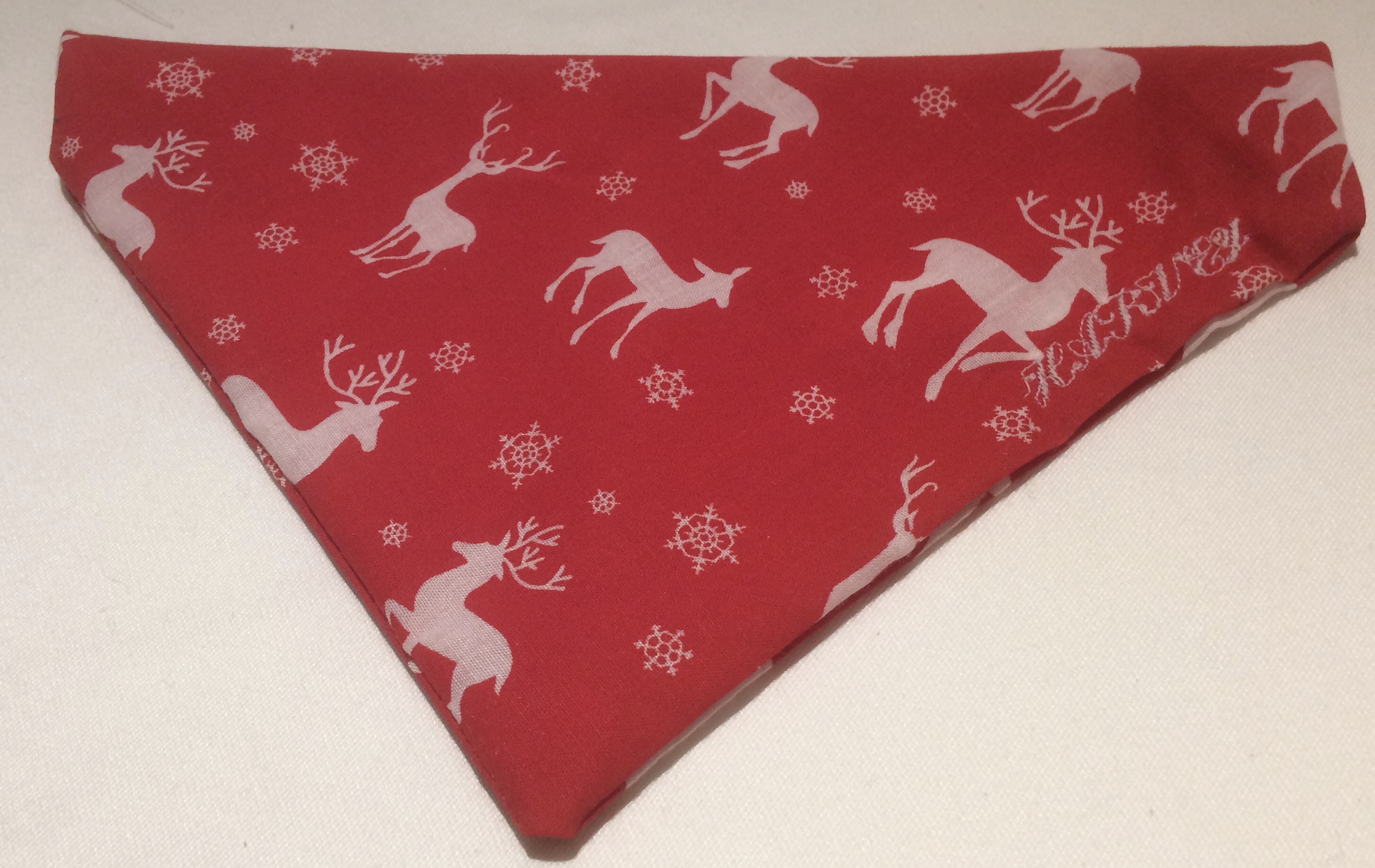
Quick doggy bandana

Just two minutes to make and sooo cute.

Cut a square of fabric so that the diagonal is the same length as your  dog’s collar. Fold the fabric, right sides together, on the diagonal and press. Unfold the fabric and leave right side down.

At either end of the diagonal and fold a triangle about 5cm back to the middle so when you refold on the diagonal you get this shape, albeit inside out

sew the raw edges from just below one side fold round to just below the other and then turn right sides out through one of the gaps

done , just thread the collar from gap to gap and it is ready for wearing

if you want a more tailored finish you can run a line of stitching parallel to the top fold to create a channel for the collar

if you have a friend with a posh sewing machine why not add a little monogram or name as here …

Heat transfer vinyl

Much easier than I expected

I bought the vinyl from Tunnel  Vision and downloaded the visual from lovesvg.com before adding the personalised text on the ScanNCut. I then flipped the virtual visual to give a mirror image and put the vinyl shiny side (ie carrier side) down on the cutting mat before cutting with blade 4 and pressure 1.

the excess vinyl was peeled off the carrier and the remainder (the vinyl I wanted) placed dull side down on the T-shirt (peacocks) and ironed to fix it.  Once cooled the carrier sheet peels off leaving just the image in place.

now, what else can I cover in vinyl?


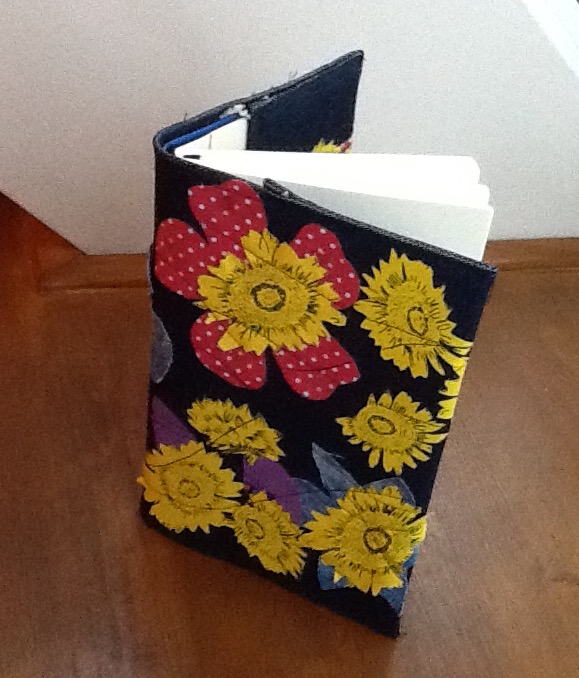
Faux Appliqué book jacket

A corporate note book of quality paper now wrapped in a jacket to keep it safe.

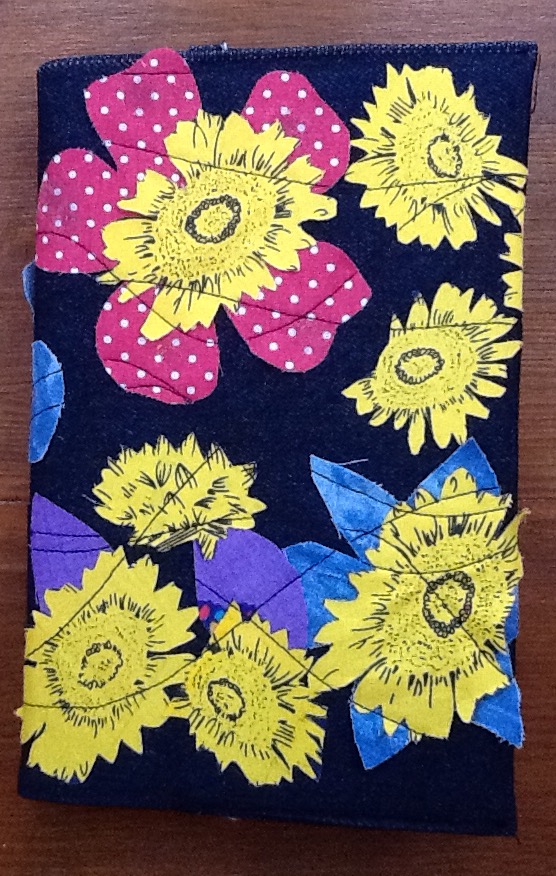
I backed some floral fabric with heat and bond, cut out the flowers then ironed them on a rectangle of denim. I then stitched over the flowers to give a loose quilting effect.

I hemmed the denim so that the height of the fabric matched the book but the width was about six inches wider than the book when opened flat. I then folded matching ends around the cover to make tight fitting flaps. These were slowly top stitched, top and bottom, quite a few layers of denim now, then the book was bent back on itself to slide into place.

Tip: make snug as the material will stretch for a tight fit which is better than bagging.i

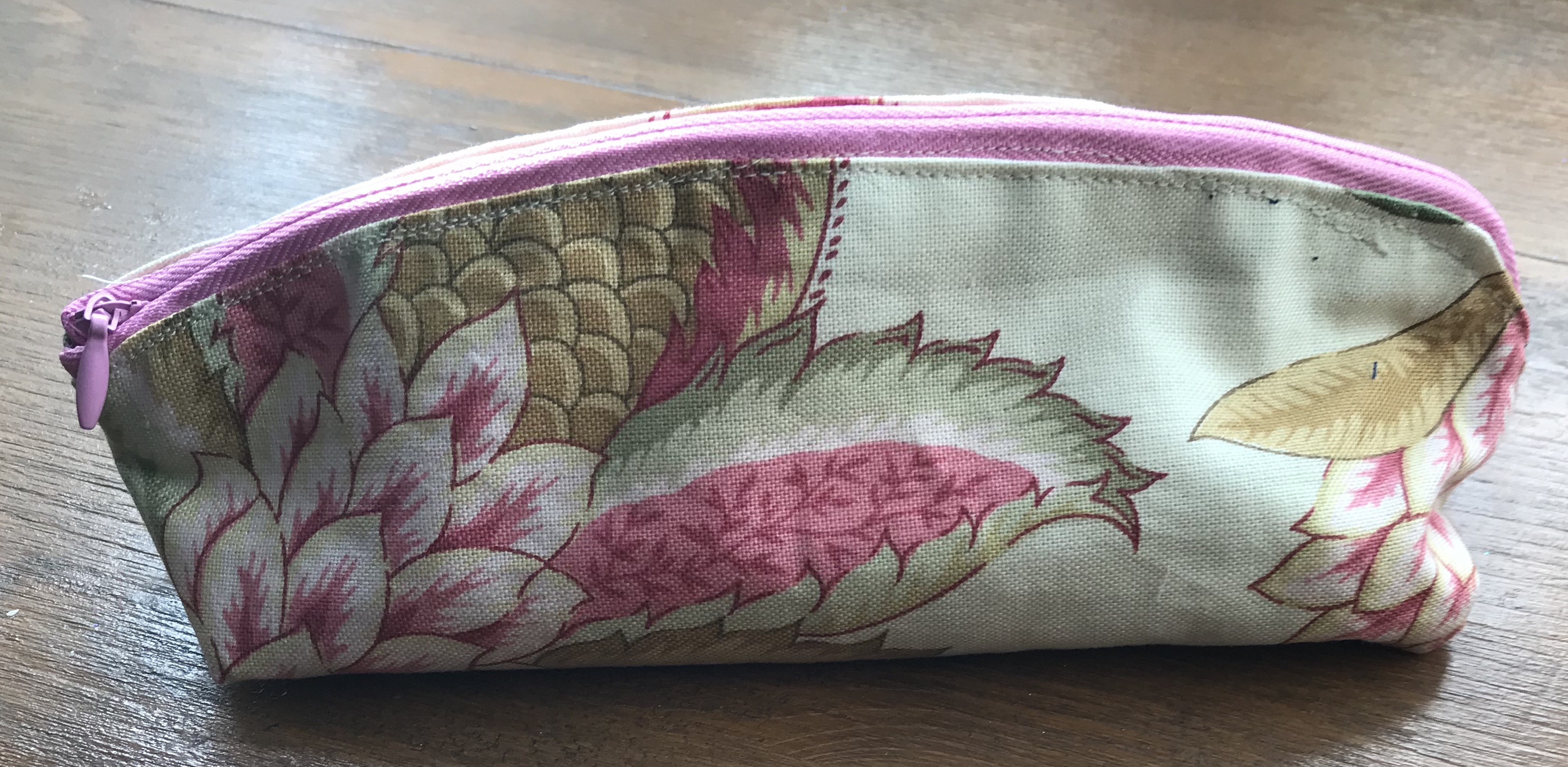
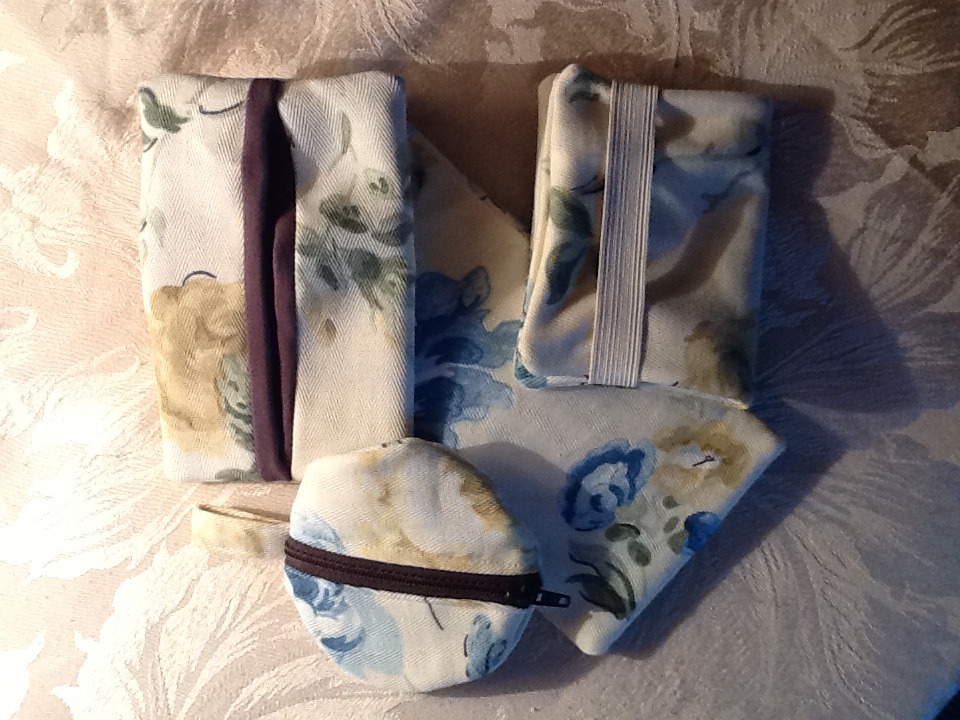
Handbag accessories kit, from just one fat quarter

A batch of mini sews, together make a little handbag set

first a round earbud holder, two 4″ circles of outer fabric and two of lining, a 2″X 1.75″ strip folded to make a tab and a 5″ zip.

next a mini tissue holder: a 7″ X 6″ piece of fabric and a 8.5″ X 6″ for the contrast lining

then a loyalty card holder: 4 pieces of 4.75″ X 6.75″ fabric ( one of them interfaced) and one piece of .75″ wide elastic about 5″ long

and a glasses case that takes two 7″ X 4.5″ pieces of fabric and lining in two 7.5 X 4.5″ pieces, both outer pieces interfaced

finally ( not pictured) a lip balm key ring holder 1.75″ X 8″ outer and the same of lining

all sews from popular tutorials and covered in earlier posts – only the earbud holder is new here

Scraps leftover  from the fat quarter (which was actually a freebie from an upholstery fabric samples book)  and lining from the spares box so just the zip to purchase for the next set I make.

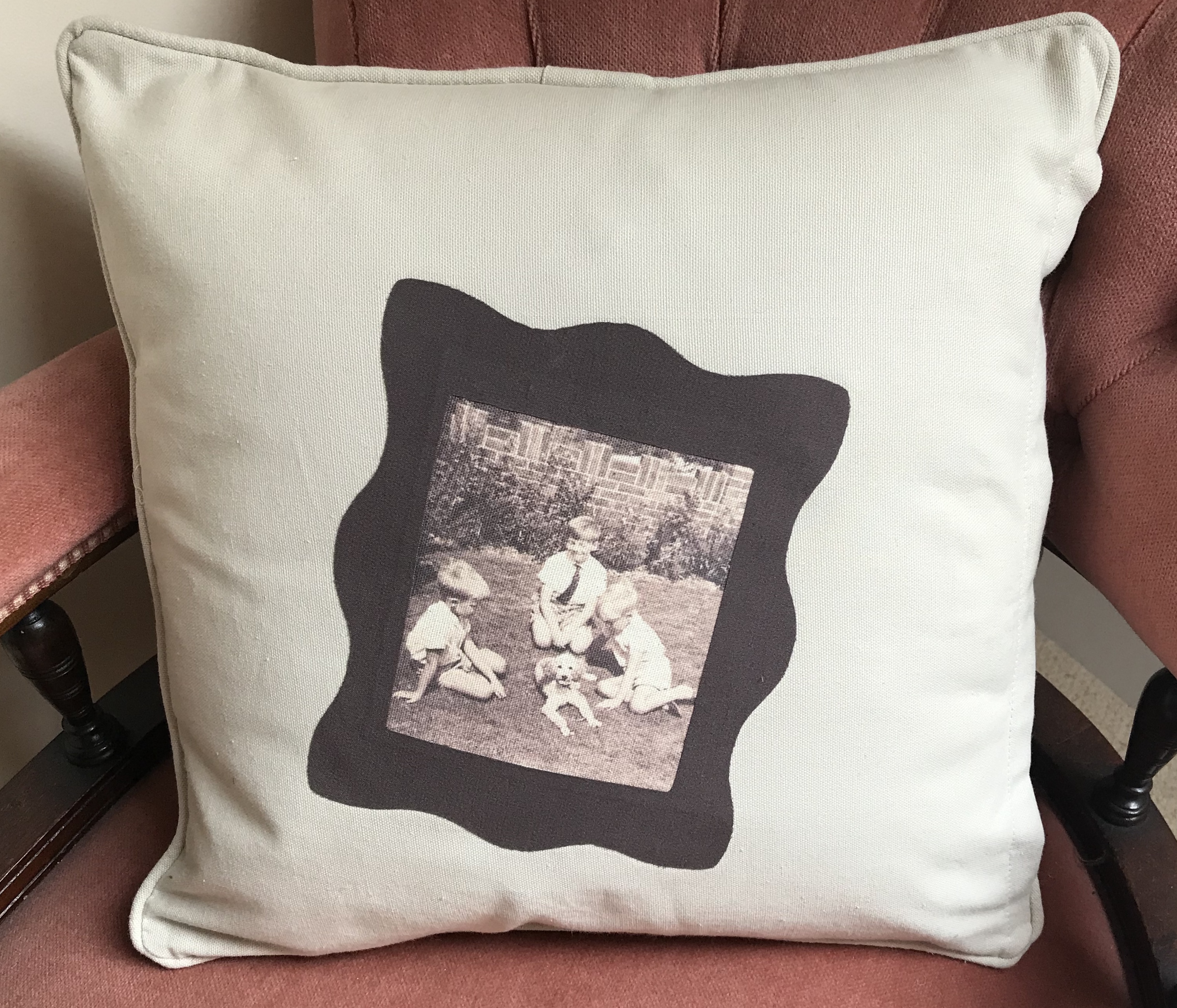
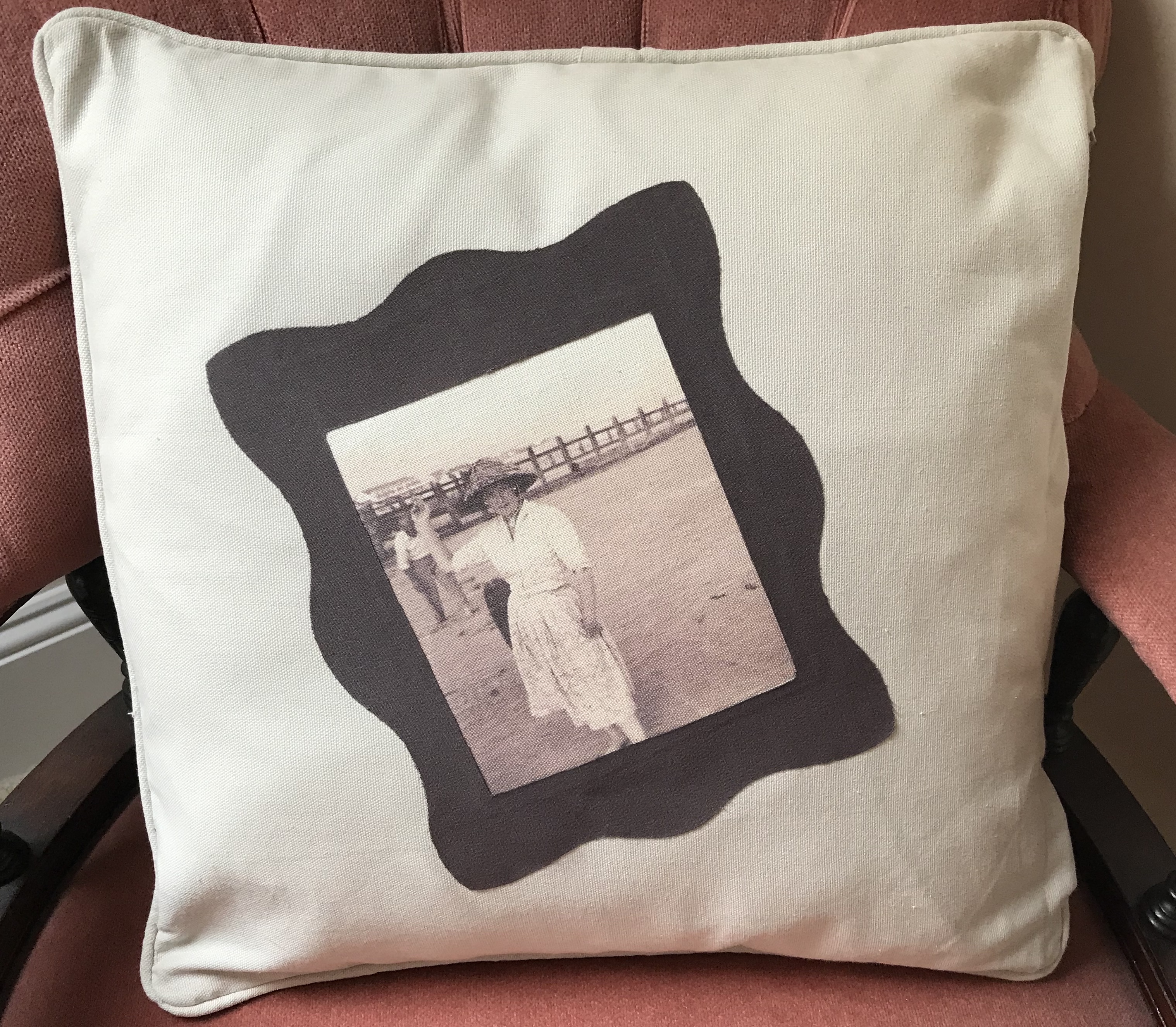
Personalised photo cushions

A crafty trick to personalise two plain cushions…

We printed two old photos on to xcut adhesive fabric (in sepia tones to match the linen and ‘frame’). This goes through a standard ink jet printer and has a canvas/linen finish.

The adhesive isn’t strong enough for practical use, it kept lifting at the edges, and yet is too thick to machine sew through so I cut a frame from heat and bond backed fabric, which just overlapped the edges of the photo, and ironed that over it. Now the cushions can be sat on or plumped and stay in shape.

The frame was a scan n cut library shape but could well have been cut by hand. The cushions are b&q standard but the final effect really uplifts them.

These won’t be washable but make a lovely gift.

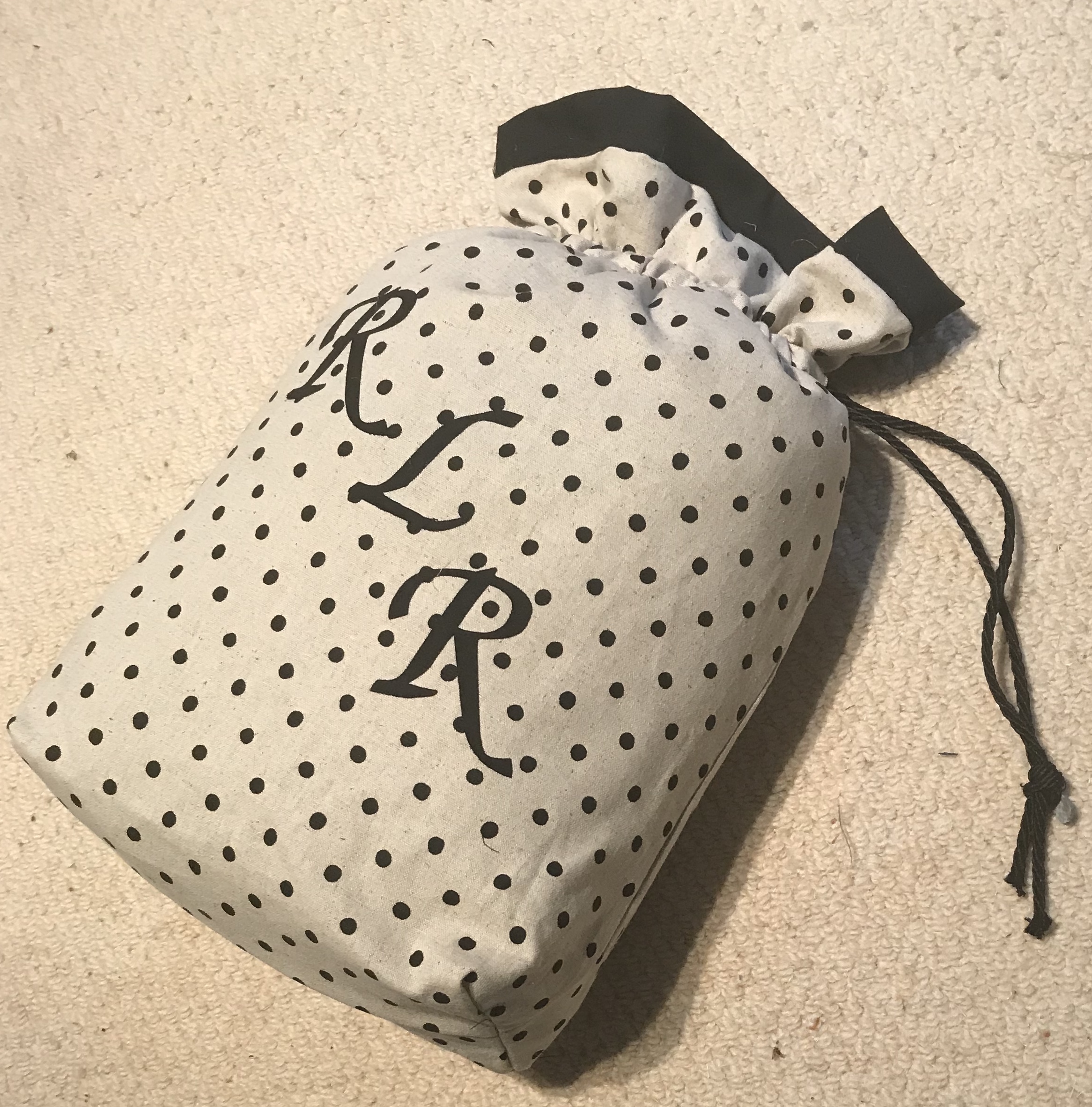
Robust drawstring bag

This bag has the drawstring channels stitched on the outside so they create a nice ruffle top

outside fabric one piece (mine was 22 x 9”), lining fabric two inches longer to create the contrast border, two strips of outer fabric about two inches narrower than the width of the bag and three inches high, scrap of contrast fabric backed with heat and bond for appliqué monogram and one metre cord

method: press raw edges of strips under then fold in thirds to create thin channel to thread cord through,

fold outer fabric in half and pin strip to outside about two inches from upper edge on each side – you want there to be an equal ish gap at either side of the bag. Sew top and bottom of both strips in position, leaving sides open

If sewing appliqué monogram, position and stitch now

now turn fabric inside out and seam both sides closed, if you want a boxed bottom cut a 2 inch square  out of each bottom corner and then bag it out

seam lining fabric sides , leave a gap for turning, use same seam allowance as for the outer, and box bottoms or not to match your outer

with right sides of bag and lining together pin upper edges together, match seams. The lining will be a bit baggy as it is longer than the outer, that is deliberate but the top edge of lining and outer should match as you pin it. Sew around the top.

reach through the turning gap and pull the inside out, then push the lining inside the bag so the bases match and the longer lining top poking out. Press. Reach inside and sew up the turning gap in the seam

top stitch around the top, use decorative stitch or hide in the seam if you prefer

cut cording in half, thread from each side all the way round and knot ends to secure

iron appliqué at end if you are using iron on

job done
 

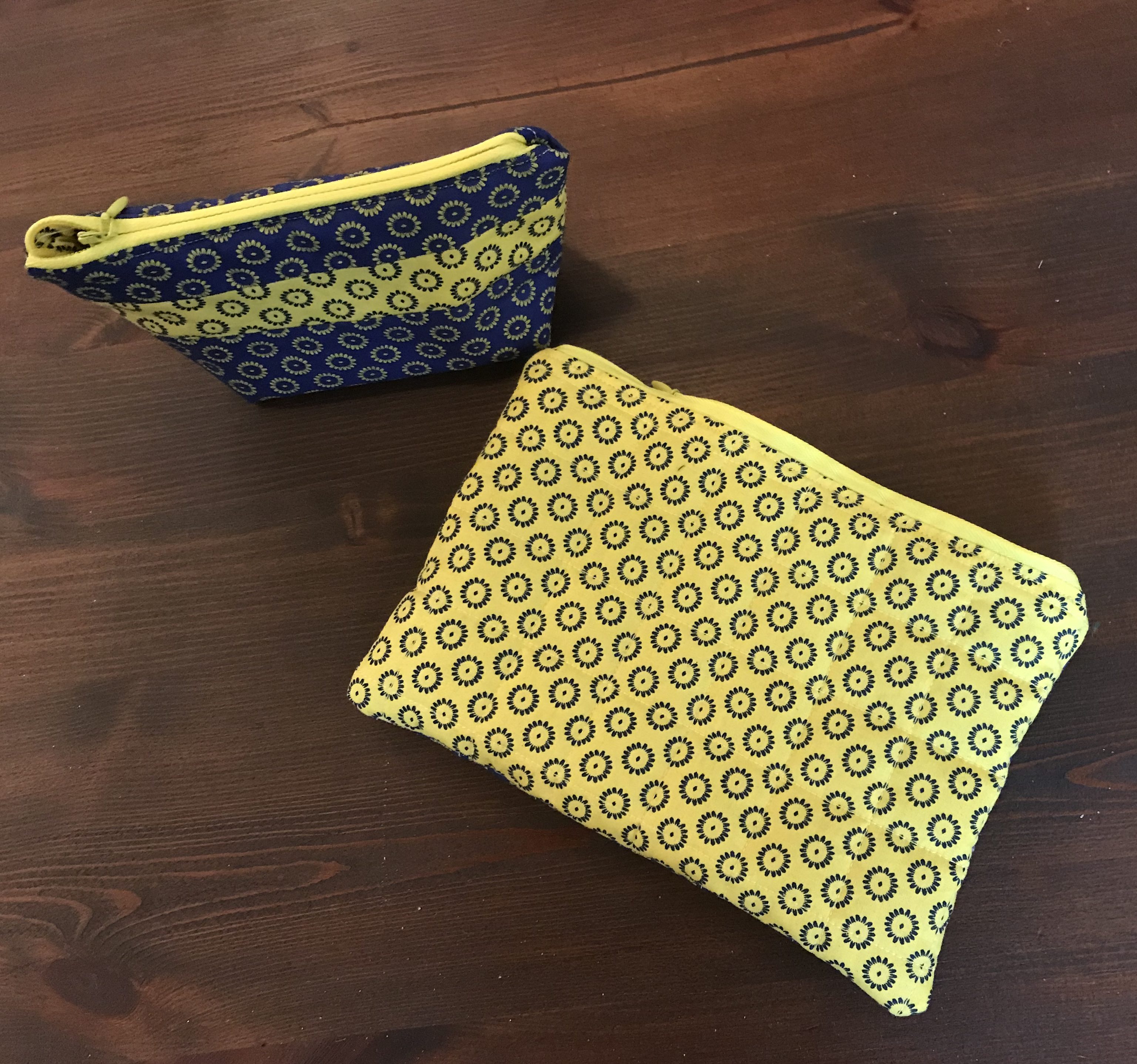
Handy lip balm key ring holders

Scrap buster quick gifts to make a couple of key rings that hold convenient ‘Burt’s bees’ lip balms

Method: cut two rectangles of fabric, contrasting if you want a different lining or the same if you don’t. My rectangles were 1 3/4 inches wide by 8 inches tall. Sew face together around three edges (leave one of the widths open) with a tiny seam allowance then turn inside out. Poke out the corners. Press if you can.

With the open seam at the top, and whatever you want to be the lining face down, fold up about 2 1/2 inches from the bottom, just enough to form a pocket for the lip balm. Sew each edge of the pocket, again with the smallest seam allowance you can manage. Check the balm will fit snugly or seam with a bit bigger allowance before you flip inside out so the pocket seams are concealed.

Now take the open edge and fold 2 inches over a key ring, turn the raw edge under again and top stitch so that the raw edge is hidden. Make sure you keep the key ring well away from the machine needle or ladder stitch by hand if too fiddly for machine work.

job done!


Up cycle peg bag

scan n cut to decorate my tablecloth to peg bag project

the old oilcloth tablecloth has been taking up space in my fabric pile and all I can think of using it for is peg bags, any ideas?

I used a smallish plastic hanger ( note to self remember to keep hangers when next buying stuff in m&s as stash now depleted) and traced around the width of the hanger on the reverse of my oilcloth. I gave myself a half inch seam allowance and some wriggle room as the oilcloth doesn’t stretch.

The fabric length was cut at one and a half times the planned length of the bag (this gave me the back and folded up to make the bottom of the bag front.  When this piece was cut I folded it in half lengthwise to check it was symmetrical

To get the top front of the bag a separate piece of fabric was cur to match the width and shape of the back piece but length to just more than half of the planned bag size.

I planned the cutting  so the cut pieces finished on the bias bound edge of my tablecloth. This saved a hemming step. (That is why the right edge of my front does a little bend in the picture, I thought it would look stylish, actually it just looks wobbly).

The two pieces were stitched wrong sides together leaving a small gap to put the hanger through. I then Turned them  right sides out and creases were finger smoothed out (even a cool iron melted a prototype).

I cut shapes from external use vinyl on the scan n cut to decorate (and cover the iron damage on my prototype) and trust the project will enjoy a good second life somewhere