Reuse, recycle…

I am determined not to add to my fabric stash so am using up bits and pieces in small projects.

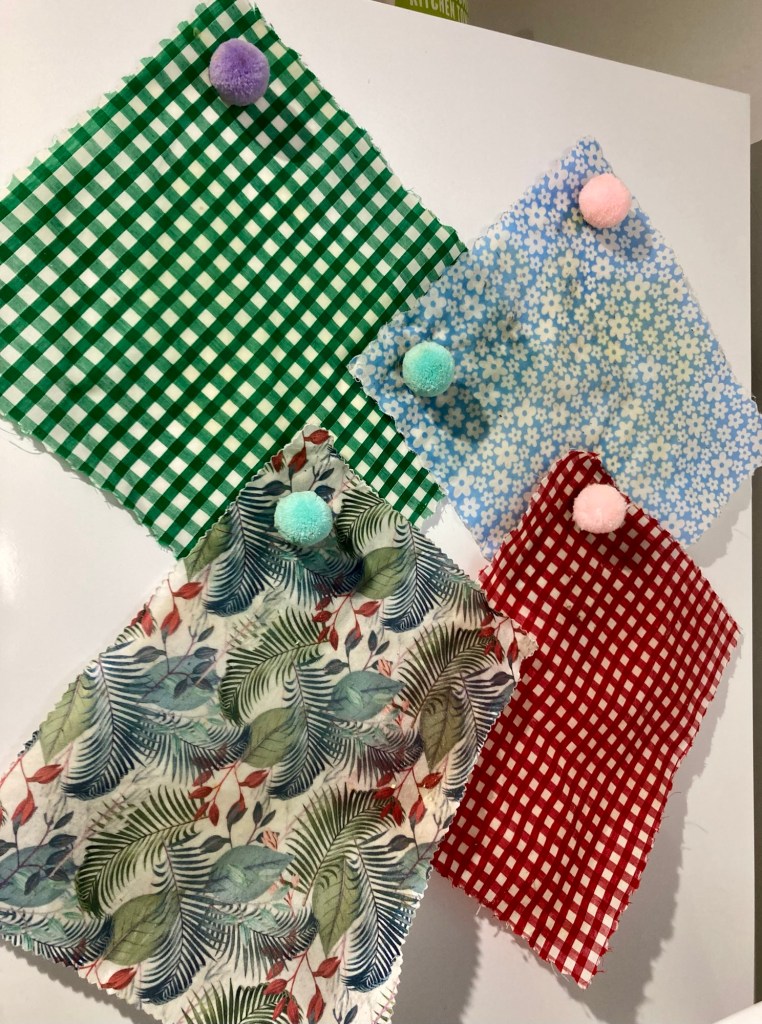
Scraps of fabric have been waxed to provide clingfilm alternative waxed wraps, these live on the fridge ready for use. I used beeswax pellets as solid bees wax needs messy grating before it is ironed on the fabric.

Then when reducing the size of a king size duvet cover to fit a double bed I ended up with surplus strips of fabric.

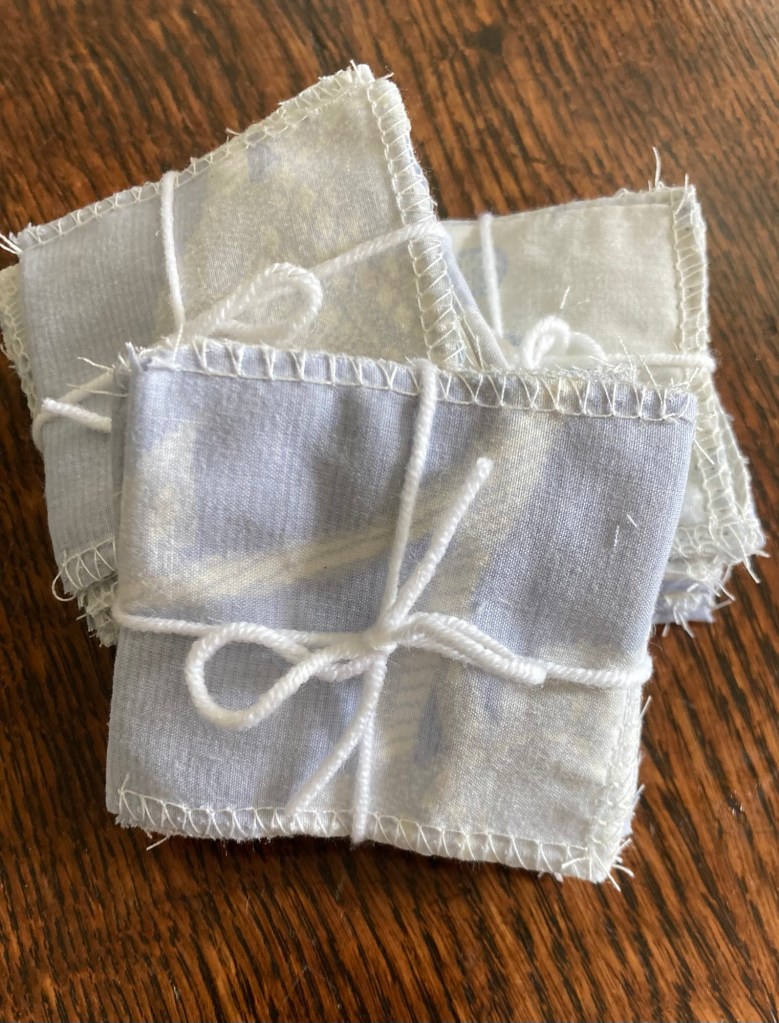
As the overlock machine was out I decided to fold the strips in four and overlock them into squares for use as reusable cotton face wipes. Enough extra bundles were made to go in the present drawer with suggested ‘recipes’ for diy facial cleanser.
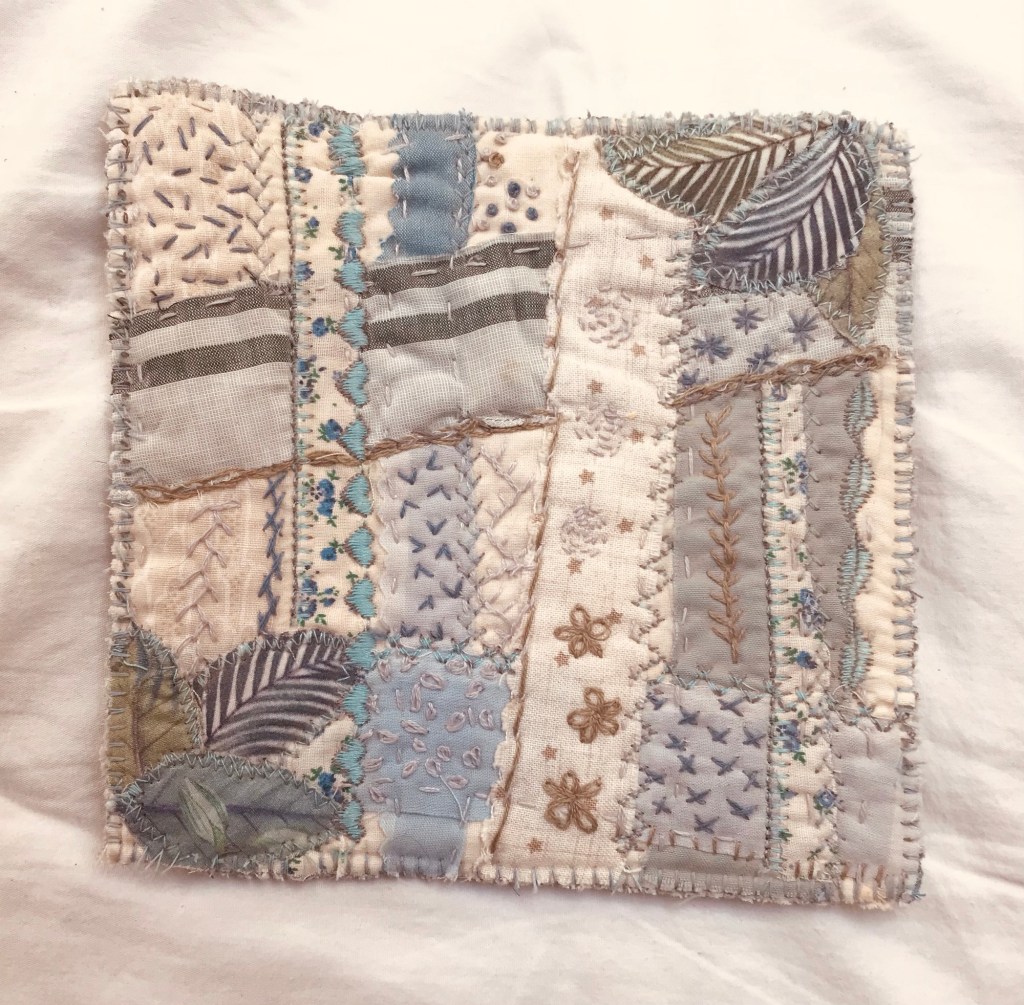
Scrap cushion

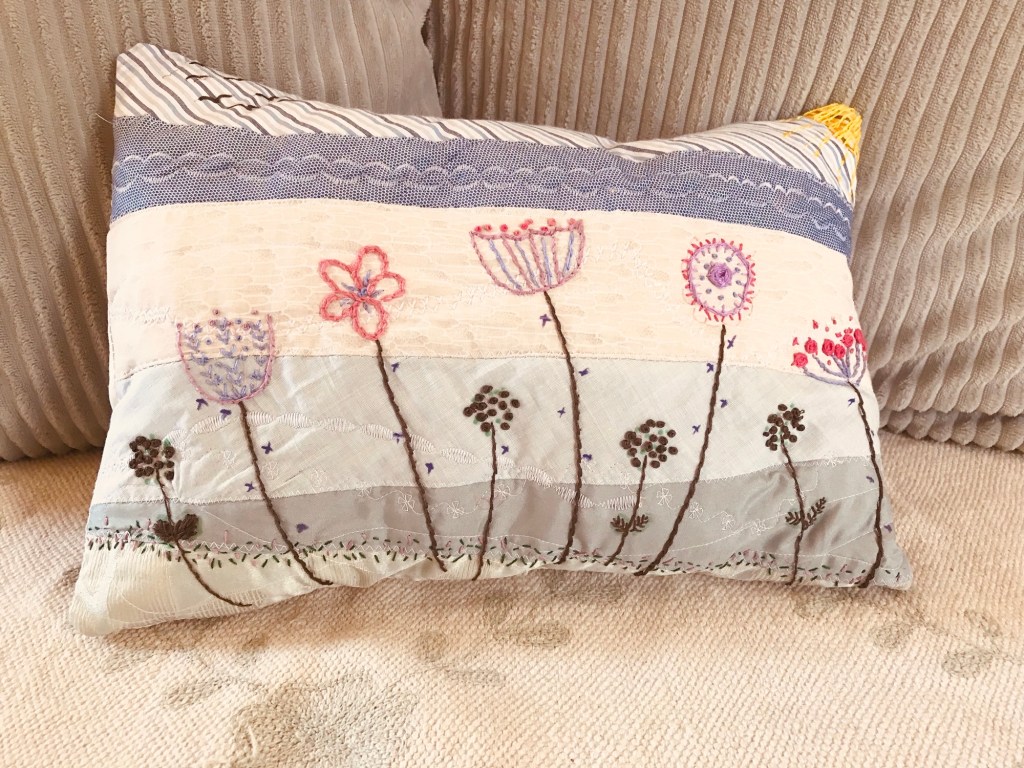
This was going to be an appliqué beach scene so started with strips of background.

I then lost patience with the number of unfinished projects hanging around and embroidered some large scale ditzy flowers instead, added some slow stitch and fabric paint detail and turned it into a small pillow instead.

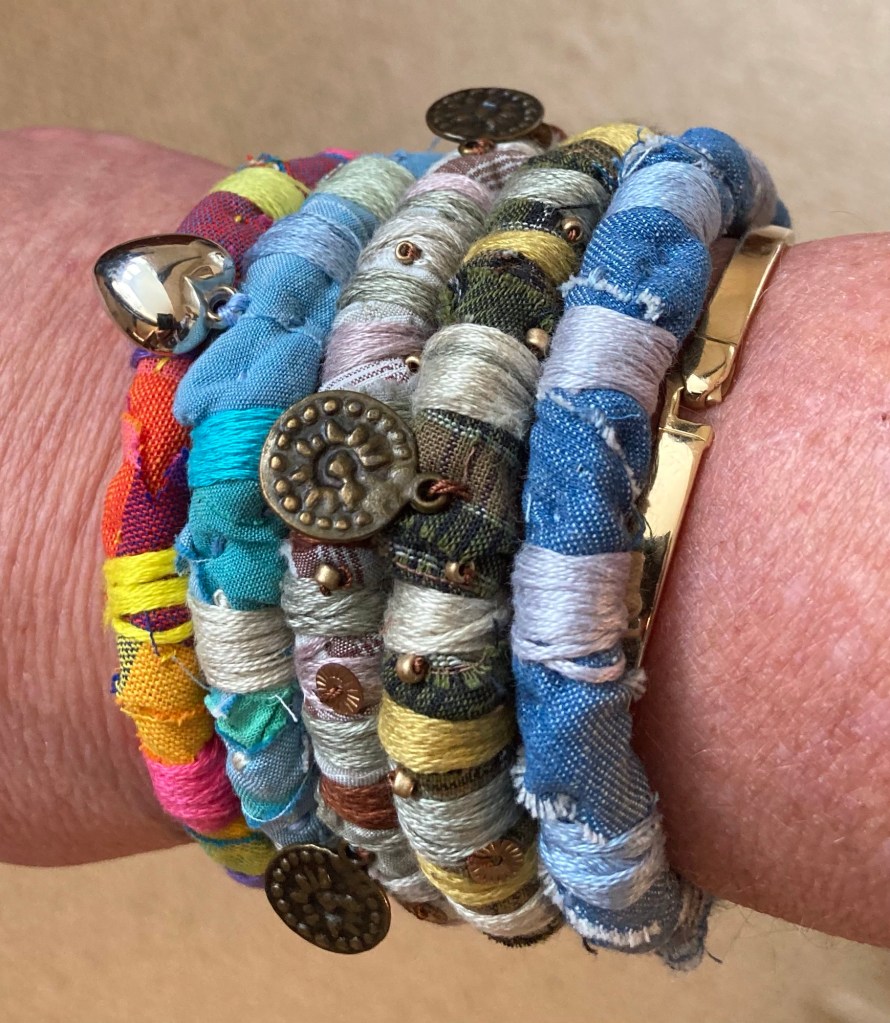
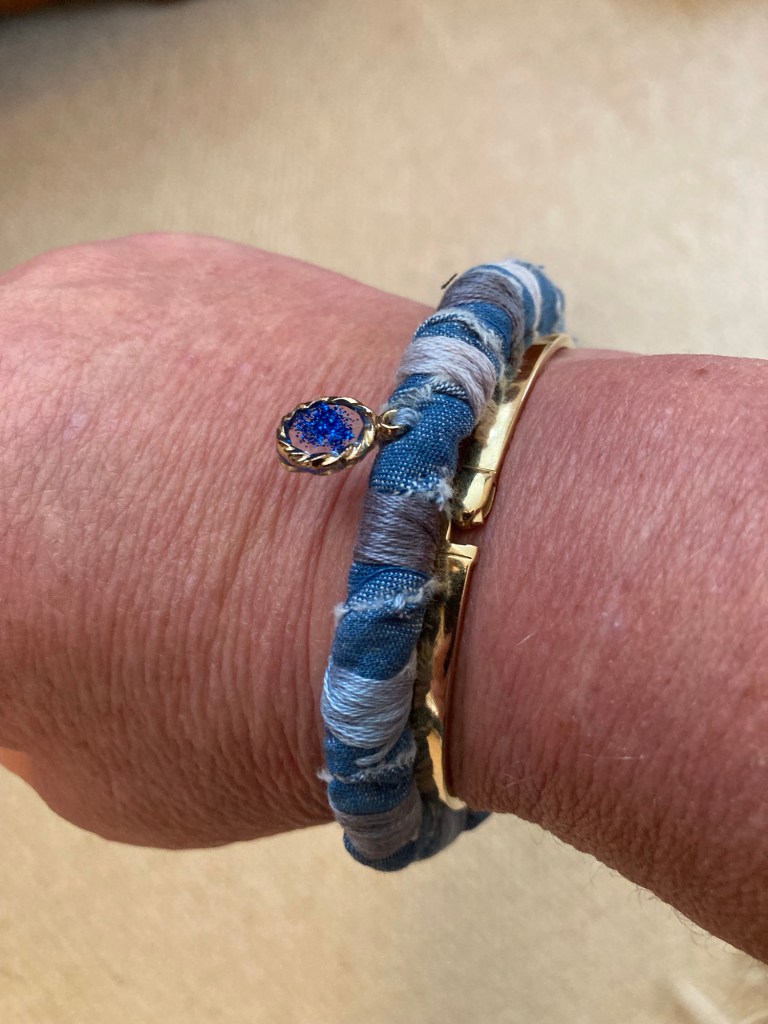
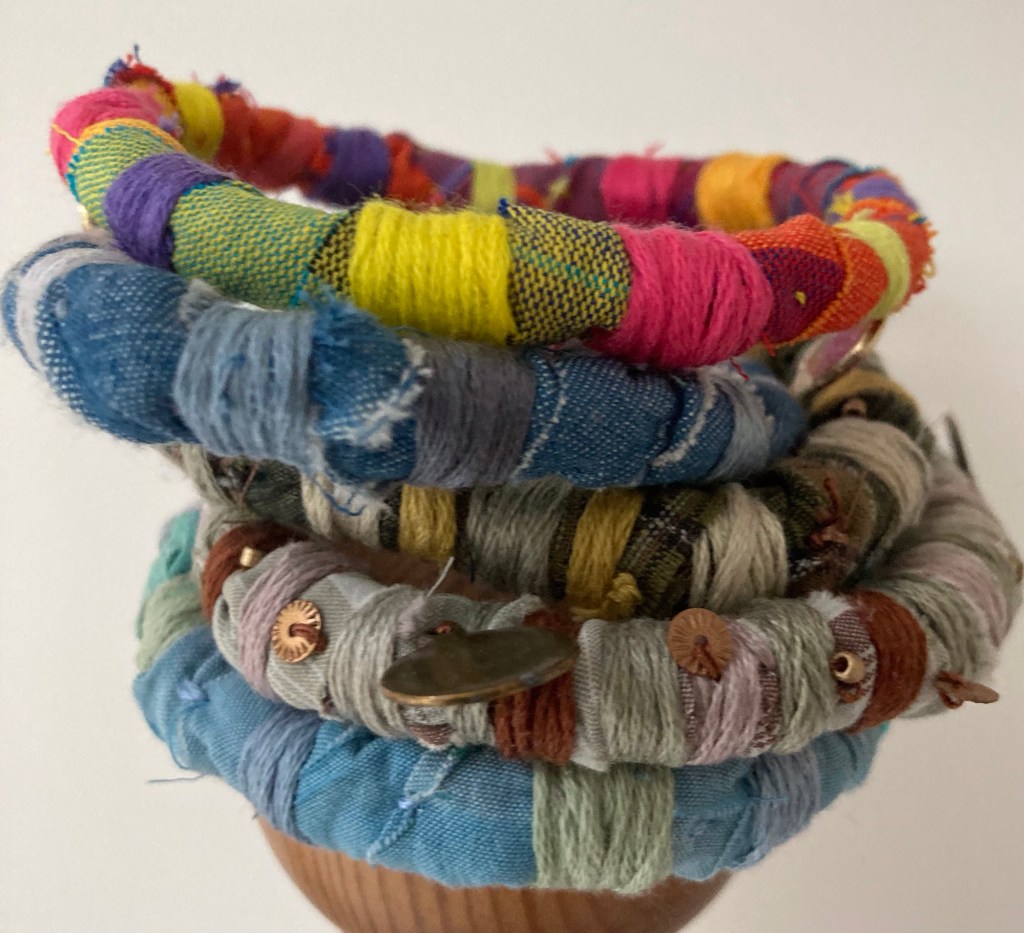
Boho bracelets

Easy to make and use tiny scraps these are fun

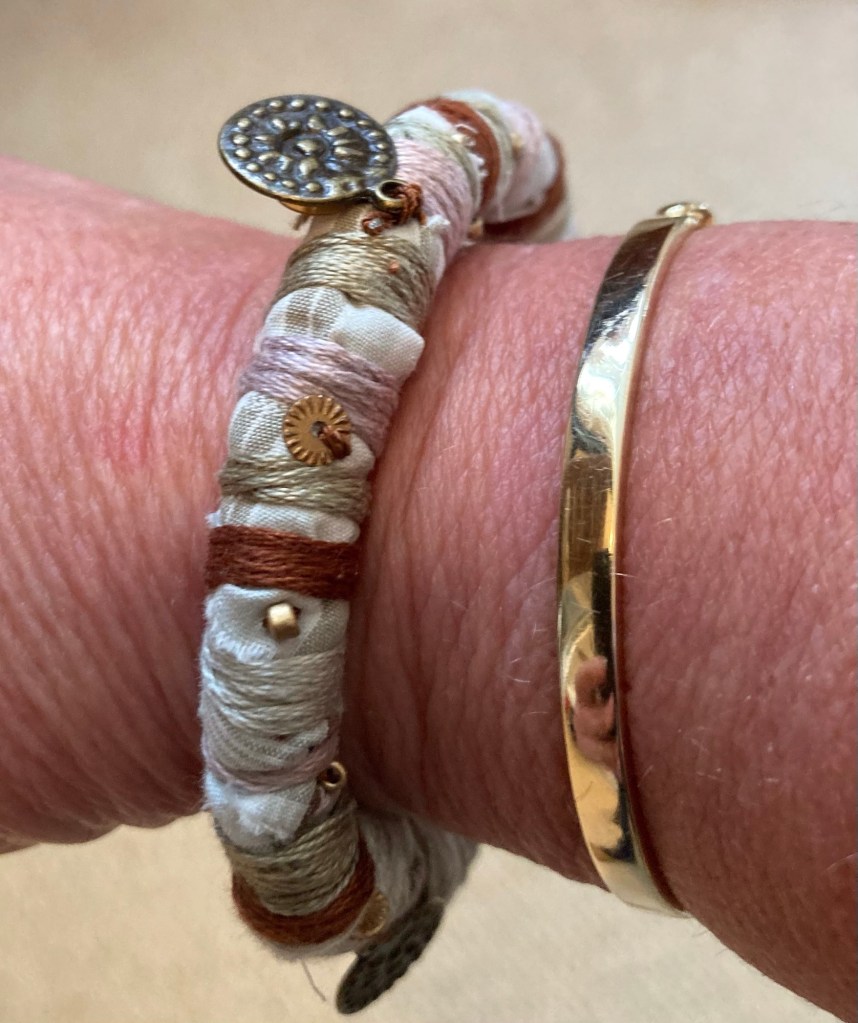
I use 9 1/2 inches of cotton clothes line/ macrame cord and tack it into a bracelet shape. Slimmer hands might only need 9 inches.

I then wind 1/2 inch wide strips tightly around and slow stitch them in place using 6 threads of embroidery thread which also strengthens the join of the base cord.

Sometimes the thread is contrasting the fabric, other time I keep it plain. I have also used invisible thread.

I then wind more embroidery thread over the strips as a decoration and further strengthener.

For a final touch some bracelets have beads or charms added. I have used up lots of stray items this way. Just needed to. Remember to keep the embellishments outside the bracelets so they don’t rub your wrist.

Each takes about 30 minutes to make. I now have a stack to coordinate with different outfits.

Quick chair recovering

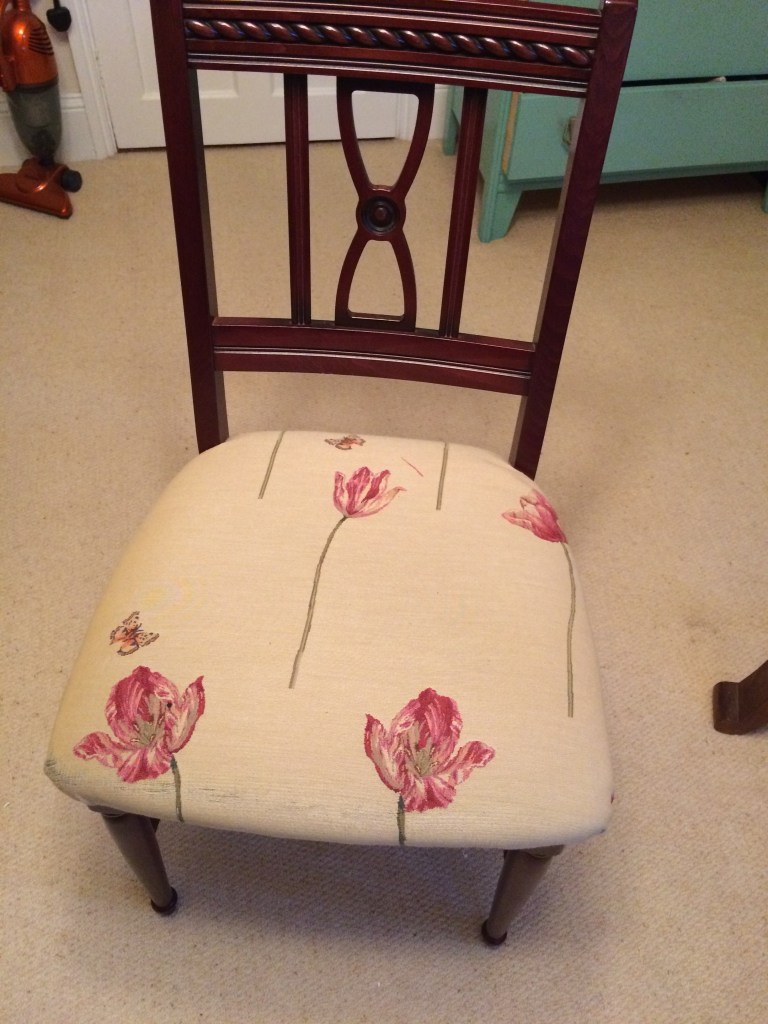
Before, fabric worn at front of seat
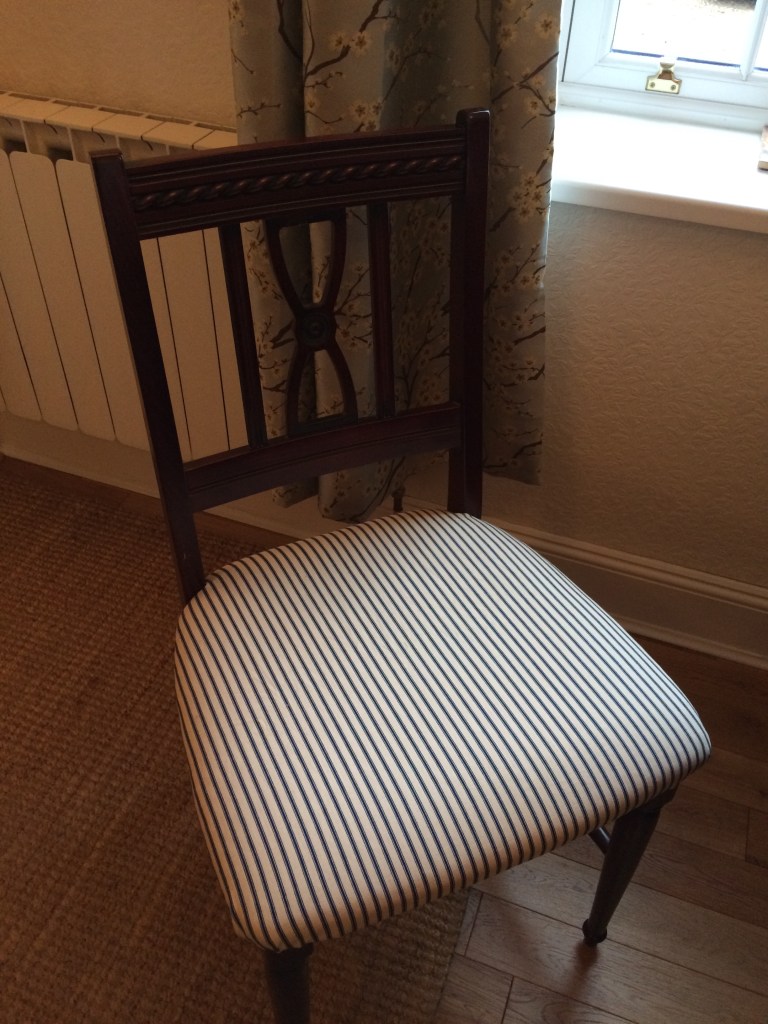
After, refreshed.

After my first reupholstering 9 years ago, these charity shops chairs needed refreshing.

Quick and simple upholstering involves removing the staples from underneath, using the old fabric as a pattern to cut new and then restapling.

I find the staple gun a bit fierce but if the fabric is pulled tightly and you work from opposite sides to avoid wrinkles this is an easy project.

Heat transfer vinyl

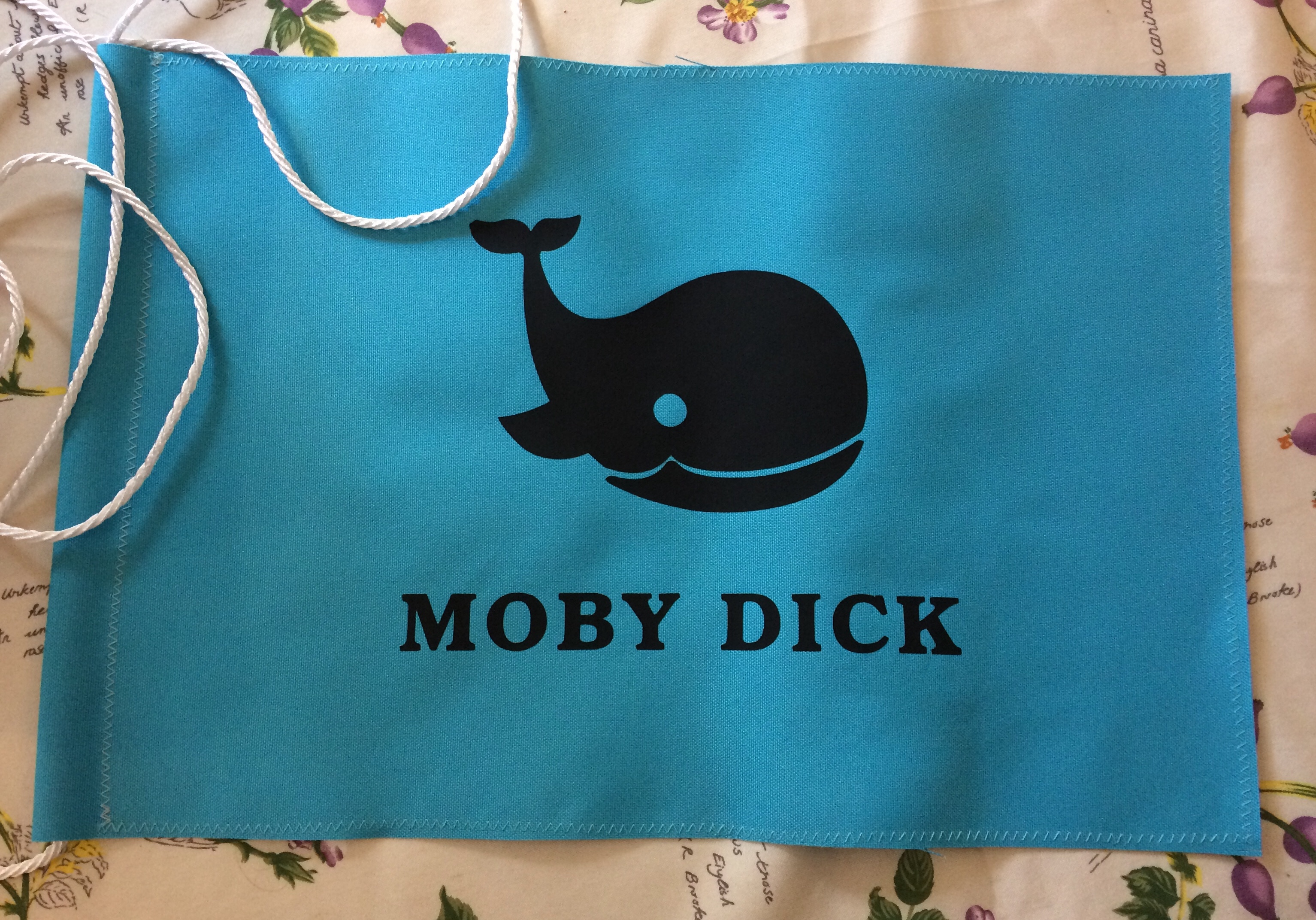
Remnants from a ‘remake the outdoor blinds’ project have been transformed, thanks to heat transfer vinyl …

This premium vinyl is much better than the economy version I have used before and I am surprised how well it melds into the canvas fabric. Let us see how the boat flag survives its outdoor life.

The other projects created from this crafty session with the trusty scan n cut (the whale is a standard supplied svg) will remain a Christmas surprise for the lucky few!

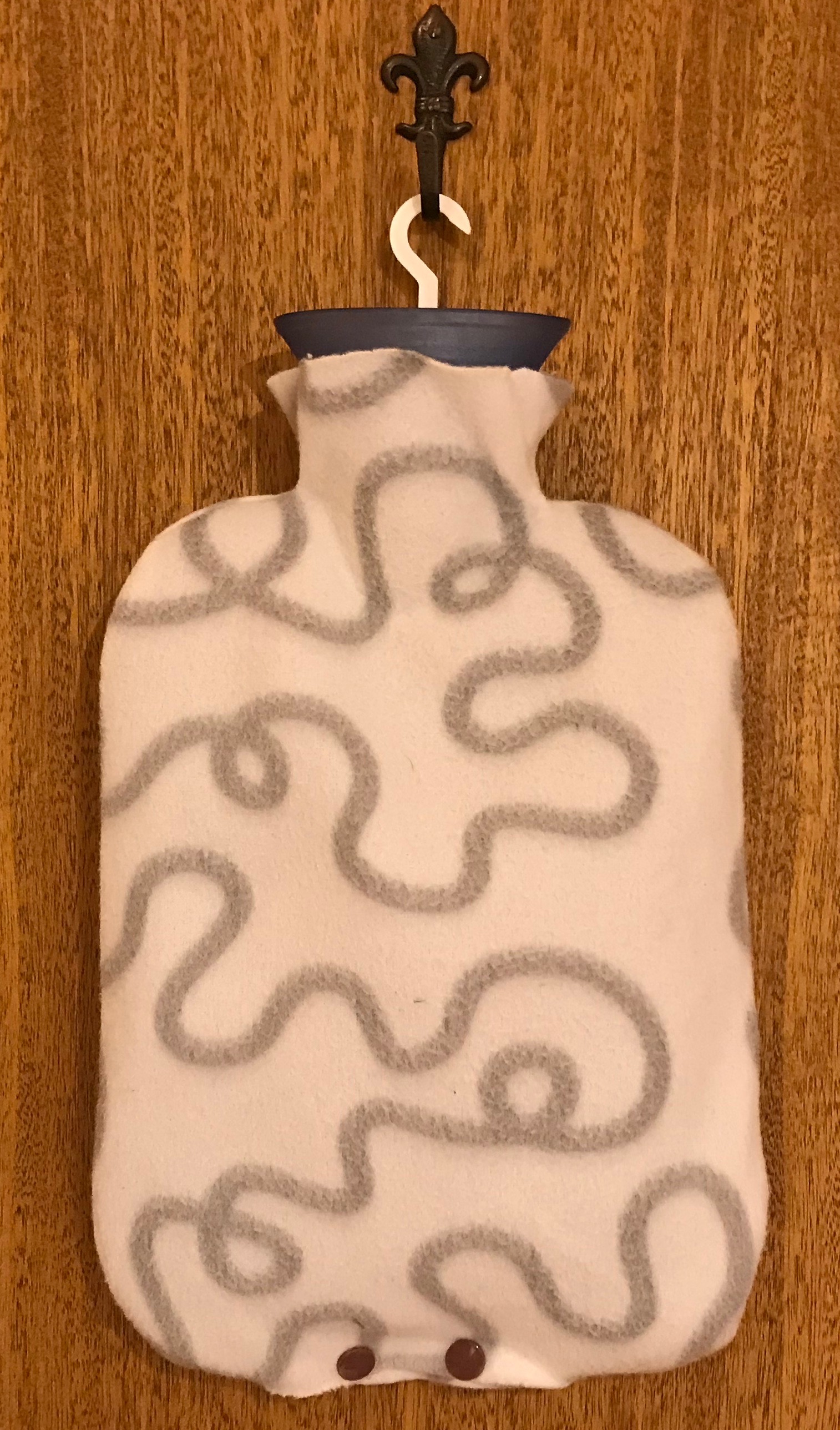
quick and simple hot water bottle cover

So quick yet makes such a difference…

I laid the bottle on the fabric, traced round it leaving a half inch seam allowance then cut out a matching pair of fabric pieces.

With wrong sides facing, I sewed the sides from neck to bottom before flipping fabric right sides out and sliding in the bottle.

On one version I hand stitched the bottle in permanently, on the pictured version I used kam snaps to close up the bottom. With IKEA fleece I don’t have to worry about hemming the exposed edges.

This is a huge success as it keeps the bottle water hot for longer and is nice and cuddly too. Great return on the time spent on this one.

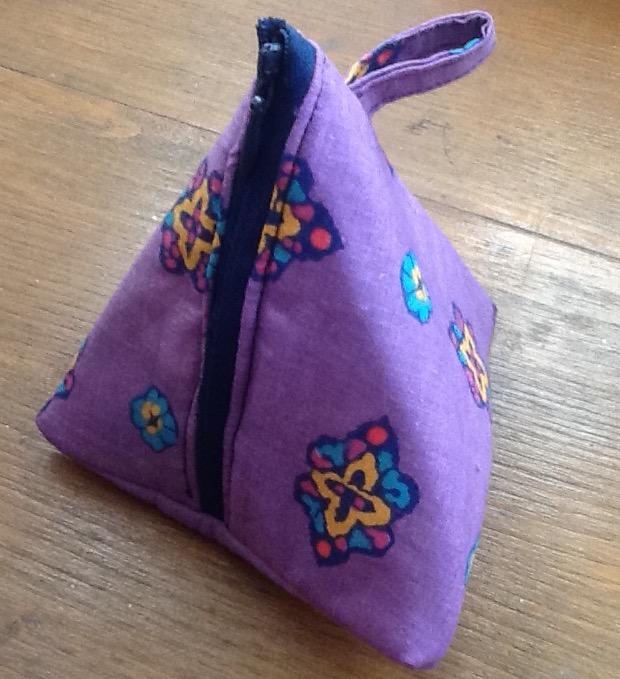
Pyramid pouch

Easy zip sew.

fabric 10” x 5” with matching lining piece and batting or fleece, zip at least 5” long

optional 4×2” fabric folded lengthwise in quarters and top stitched to make loop

method;

1. fix fleece/batting to outer by fusing or quilting

2. Pin zip between one short end of outer ( pretty side of fabric facing top of zip) and lining fabric  and then sew in place using zipper foot. Repeat other short end to form a tube.

3. turn fabric tube with outer side showing and top stitch either side of zip to keep fabric away from the teeth

4. switch to normal foot, turn tube inside out with zipper positioned half way, if using pin loop inside and sew bottom edge of tube closed then trim seam close – also trimming excess zip – then zig zag over seam edge to tidy

5. twist fabric so zip is the side of tube. Pin or clip remaining raw edge and open the zip (or you won’t be able to turn fabric) then straight stitch, trim seam close to stitch- cutting off zip excess again- then zig zag up to, but not across, zip teeth

6. turn right sides out.

Done!

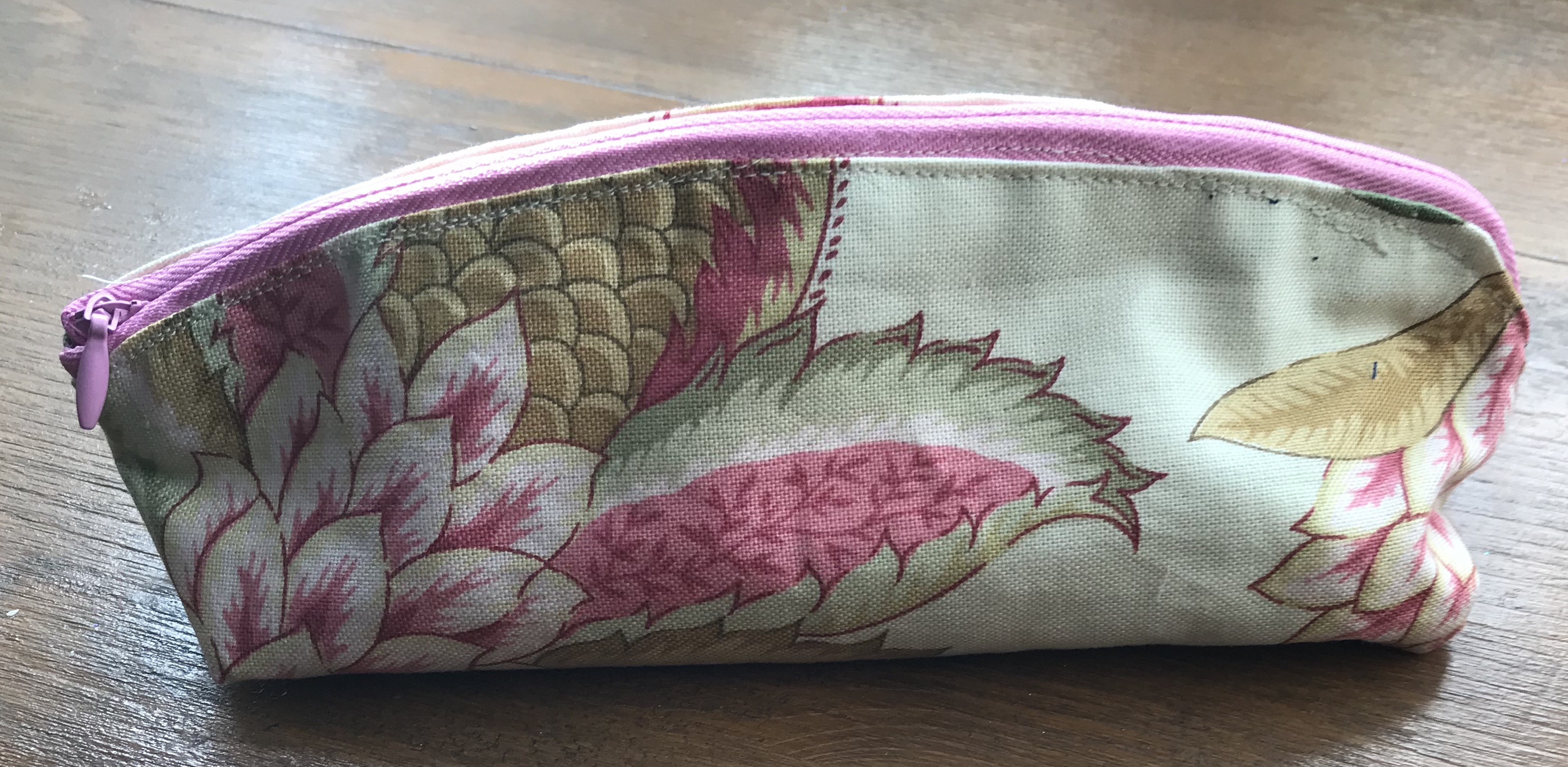
Curved zips and French seams

A learning project.

following the instructions from a borrowed fat quarter project book this was designed to be a pencil case but will now hold sewing notions as it isn’t quite good enough to give

the zip was hand basted to the curved seams and should have been hem stitched but I cheated and top stitched it with my zipper foot, I then put bag inside the lining and attempted to top stitch again over the same line, no joy but it doesn’t show tooo much

the box bottoms were French seamed which makes sense for this sequence of construction – and for the intended pencil case use and abuse of the lining, but can’t see myself abandoning my simpler form of zip bag making permanently

and the fabric was a page from an upholstery samples book that was scavenged for me, if just cotton might have needed quilting or stabilising