Brown paper packages for christmas

img_0182

I am using brown paper for lots of my wrapping this year with scan n cut embellishments and stamping for most parcels, but these simple sewn packets are a joy to make and look very classy

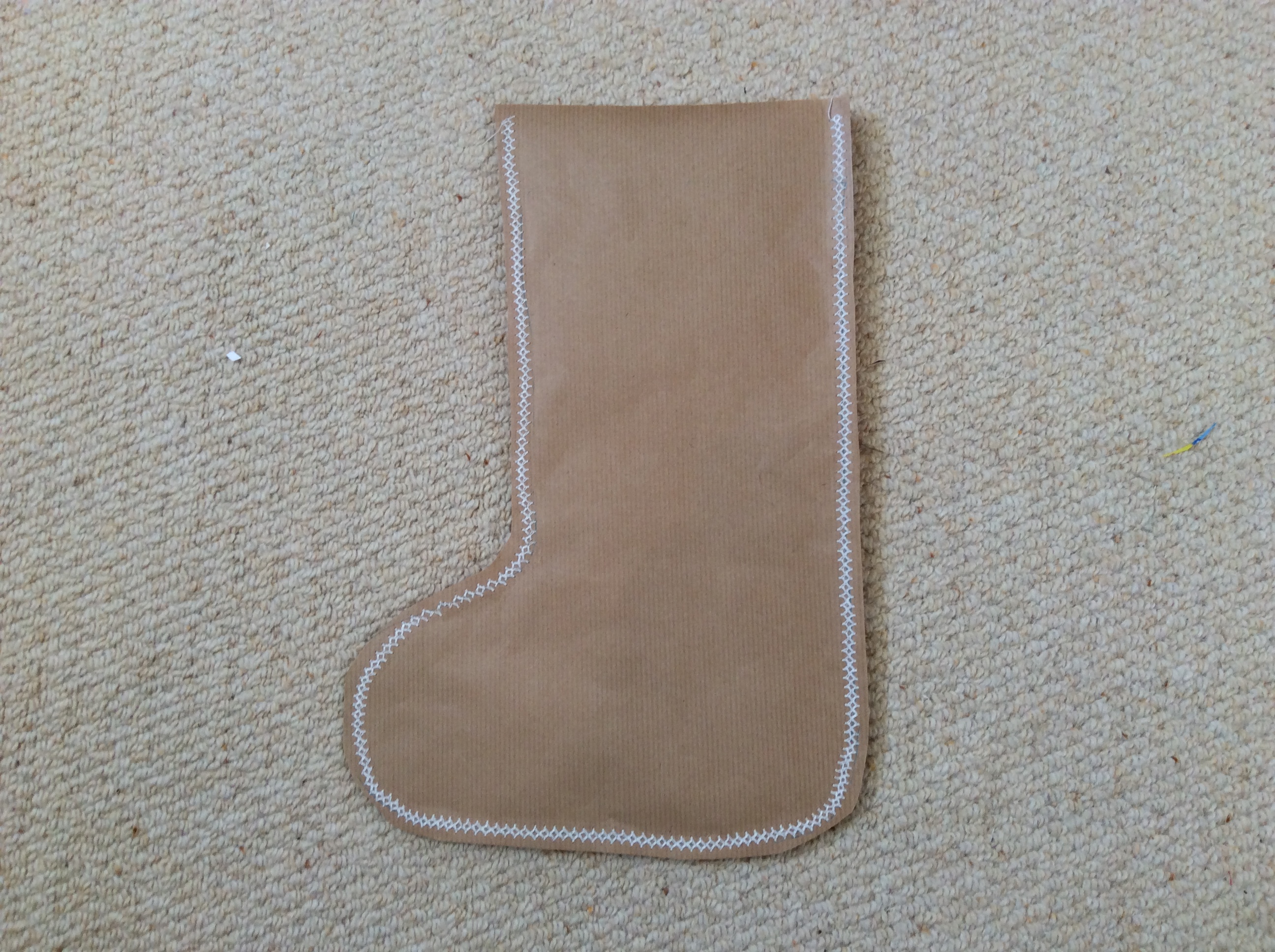
fold your paper in half then trace the shape you want to end up with one side ( I used a frixion pen in case I needed to erase it but light pencil would do as well).

then choose a decorative stitch to sew around all but one side of your image. I used a white thread here but Am inspired to try lots of threads from the sewing basket now.

I had my walking foot on the machine so nothing slipped but you might want to help the paper through if using a standard foot

trim the paper close to the stitch line to tidy it up (pinking shears would add a good effect, but too much use on paper might not be good for your expensive scissors)

pop in the present then sew up the final side

tip: make the packet larger than the contents or you will struggle to sew the final side closed and don’t want to sew through the contents

if you want to decorate the paper or write on the addressee details you will need to finish it all before you put the gift inside

some people keep old machine needles for their paper projects, I will just dispose of this needle before I start my next fabric project as the paper will blunt it.

Plastic bag holder

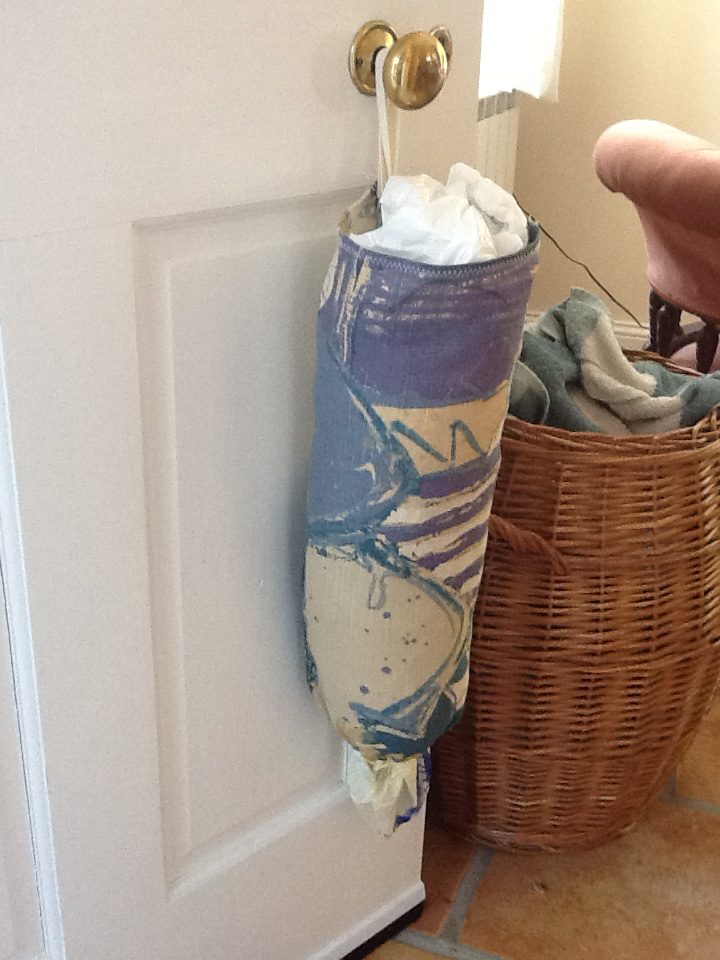
imagea quick sew to tidy up all those stray bags that still come back from shopping expeditions

a fat quarter or 18x 22 inch rectangle of material

8 inches of elastic , 1/2 inch wide is fine

8 inches of tape or ribbon

fold over 1 inch on a short end of the rectangle, which we will now call the bottom, and fold it over again then press and straight stitch at least 1/2 inch away from the top fold so you have made a casing for the elastic

fold over 1/2 inch once on the top edge of the fabric, fold again and press then stitch that so you have a neat hem at the open top where you will add bags in

fix a large safety pin to one end of the elastic and thread it through the casing, when it emerges pin the ends of the elastic together to form a circle

with right side of the fabric on the inside, fold the sides are together and seam from top to bottom to make a tube. While doing the seam make sure you sew the elastic ends  together maybe back stitching over the elastic for security

Fold the tape in half and stitch in place near the top of the side seam to make a loop for hanging

trim loose threads and excess seam maybe using pinking shears for neatness, turn right sides out and stuff with all those loose bags


Kitchen stitchery

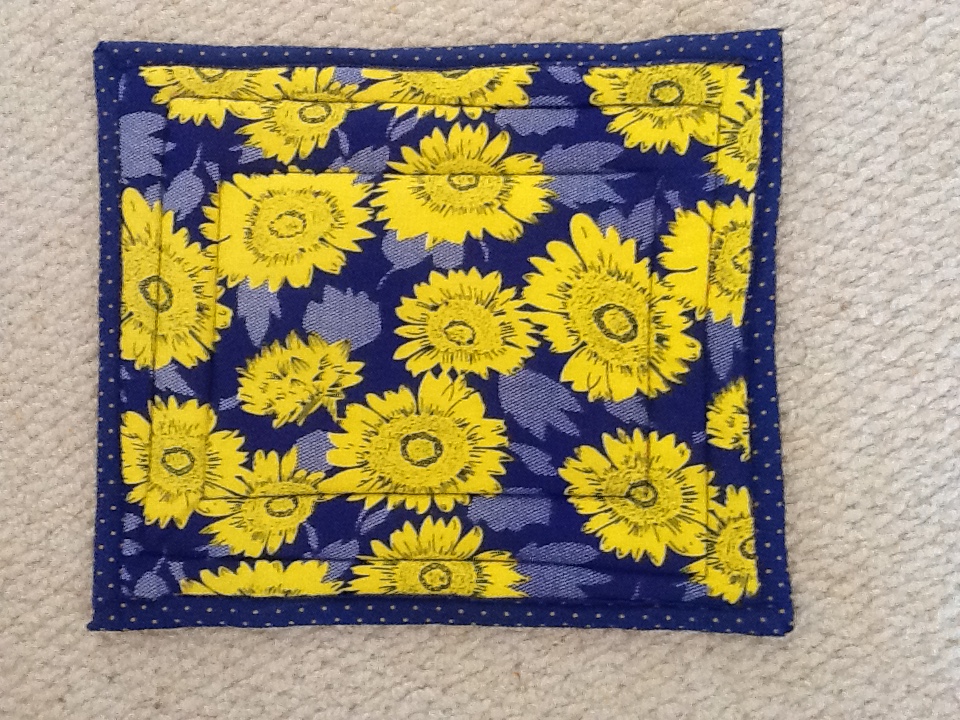
imageA set of fat quarters are going to provide inspiration for a ‘suite’ of kitchen kit. First off this hot pad with insulbright heatproof wadding and an extra layer of batting sandwiched between two contrasting fabrics.

Cut bottom fabric 3 inches wider and longer than the top piece so you can fold this over rather than bias bind the raw edges, cut insulbright and optional batting to same size as top piece

stick the insult right and batting between the two fabrics with removable fabric spray (stick and spray) with the bottom fabric  – face down -aligned so there is a 1.5 inch border showing all the way round

quilt the pieces together. I stitched a rectangke 1 inch and 2 inches in from the edge all  around

Fold and press the 1.5 inch frameof fabric in half so there is now .75 inch frame showing all around. Fold this over to the top fabric as though it was bias binding  and pin or clip it in place.  At the corner fold the fabric as though doing hospital corners on a bed , although you can trim away some of the bulk as you fold and pin each corner to mimic a mitred corner

top stitch around the edge to secure the frame in place

now shall I do mug rugs or coaster to go with this?

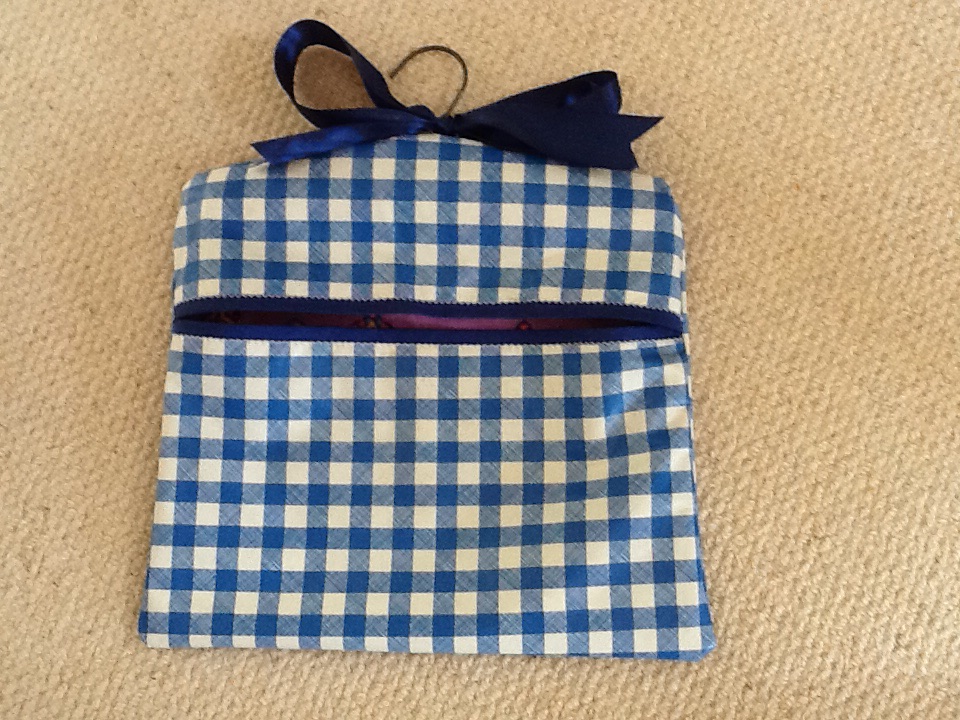
Peg bag

imageAn old tablecloth remnant has become useful again

wooden coat hanger (we didn’t have any children’s hangers so Edward cut an old padded hanger down by about an inch each end

Materials- water resistant outer fabricwide as the hanger plus seam and about twice as long, lining same size

method; draw around the hanger on to reverse of fabric to create a pattern for the back and extend the sides down to make a square ish shape , cut a half inch outside the line for a seam allowance

lay the remaining outer fabric on top and cut a top front panel and bottom front panel to match. I used the tablecloth binding as the mouth of  the bag but otherwise would have added a half inch to the bottom of the top panel and top of the bottom panel for a seam allowance

cut lining fabric to match each of the three pieces

blanket stitch about one inch in the centre of the back and top pieces where the hanger will go through

place front panel lining and outers right sides together and seam where the mouth of the bag will be ie top of the bottom and bottom of the top, flip out and press lightly

place back panel lining face down, back panel outer on it face up, front panels face down  with partially fixed lining on top- clip in place and seam from edge of blanket stitched top all the way round back to the other side of the top

turn, wriggle the hanger in place and decorate with ribbon to finish

bathroom bandana

image

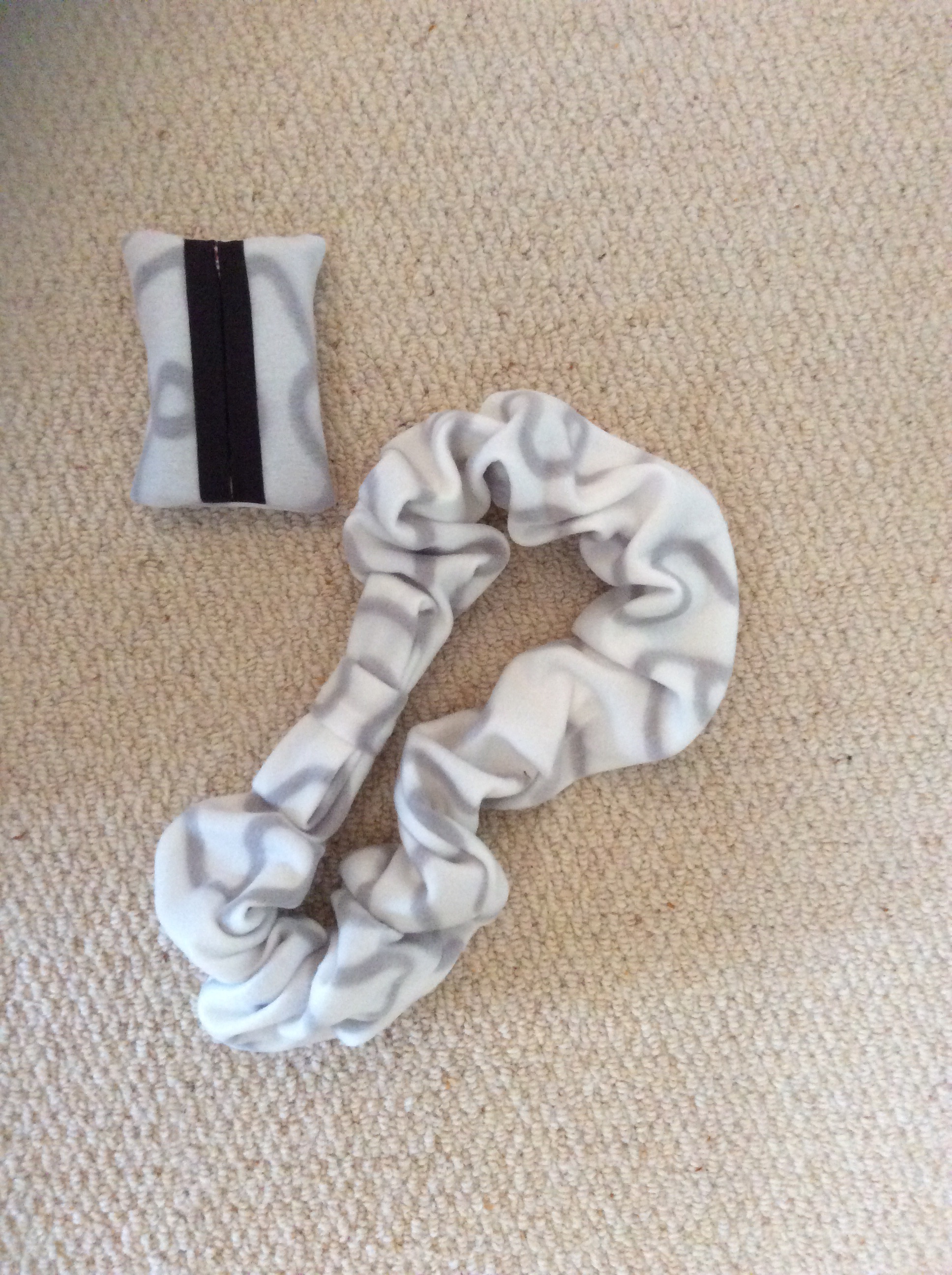
I briught back two pretty ikea fleeces from Anna and VIlle’s wedding with the promise of transforming them

so far, tissue holder from previous pattern

and new

bathroom bandana- keeps your fringe off your face for a face pack

Elastic that is one or two inches wide cut  one inch longer than the snug circumference of your head

strip of fleece six inches wide and double the length of the elsstic

For the bow, strip of fleece four inches wide eight inches long And a strip of fleece two inches wide four inches long

sew each fleece strip into long tube using straight stitch and narrow seam, turn each tube to hide the seam

thread elastic through the long tube and , keeping the fleece edges away from the needle, zig zag the one inch overlap to form a circlet, slide one end of the fleece tube inside the other then zig zag the overlap closed, try to centre the elastic in the tube and go slowly as it is bulky

fold the edges of the next size tube in half to create a bow shape with the raw edges facing the overlap raw edge of the circlet, tack in place, wrap the little tube tightly over this and straight stitch the back to fasten it all and finish the bow

No logo fleece

image

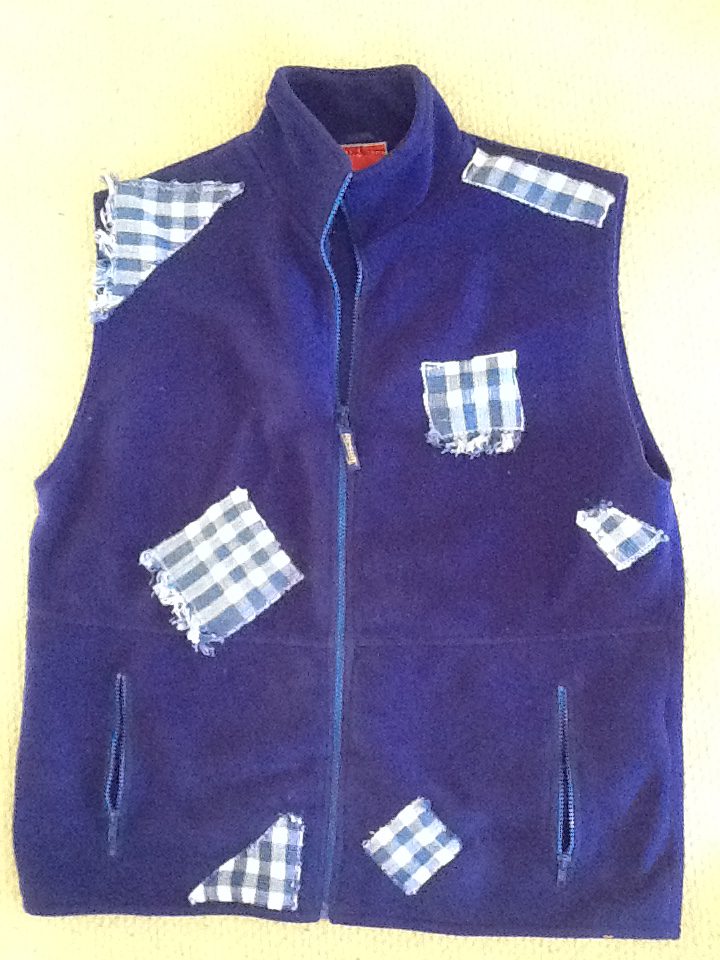
Covering a logo on a dog walking fleece looked a bit odd with just one patch. So I have begun layering on patches in random places to balance up the cover up. Simple blanket stitch and or zig zag to fix on each patch and, yes, the walking foot is essential for this.

an ongoing project I plant to add decorative stitch lines and more patches until it looks ‘right’.

Book cover

image image

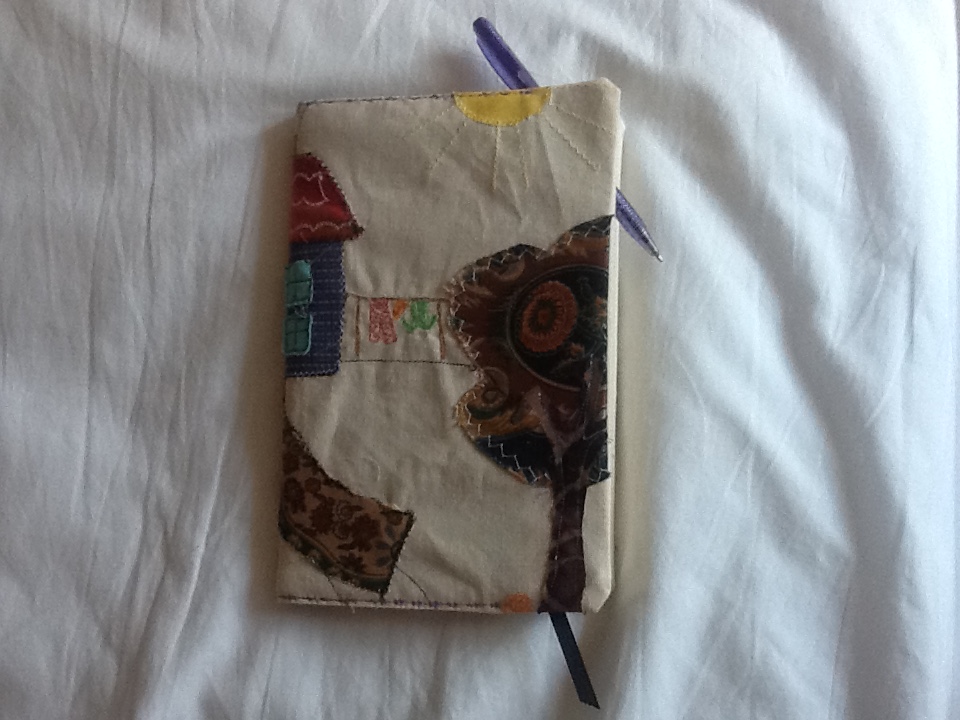
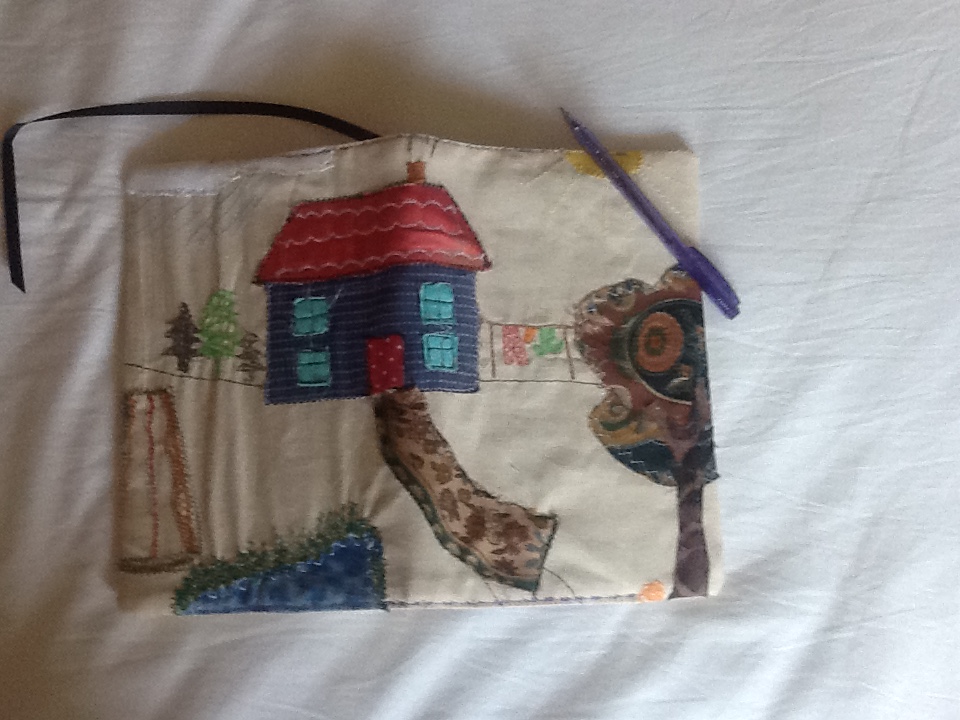
take a quality corporate notebook and personalise it with a piece of beginner’s applique that I didn’t want to throw away…

cut applique and lining fabric one inch bigger on each side of the fully opened book. Cut two panels of pocket fabric the same height as the other pieces and double the width of the pocket you want. Fold each pocket piece and sandwich between lining face up and cover face down with raw edges to side so they will get caught in the seam.

hem all the way round leaving a gap for turning, a walking foot is useful here. Turn out and flip pockets to inside. Iron well. Fit book inside to see how much wriggle room you have. Tighten up the wriggle room with a decorative top stitch around the edge. I just did top and bottom, this also closes the turning gap..

so much fun I did another one with crazy quilting but this time made it wider than the book and just 1 inch taller, hemmed the edges all sides then folded back the two sides to make the pockets before blanket stitching them in place and turning right sides out. Ironed an applique on to use it up

image

image

Ribbon trimmed towel

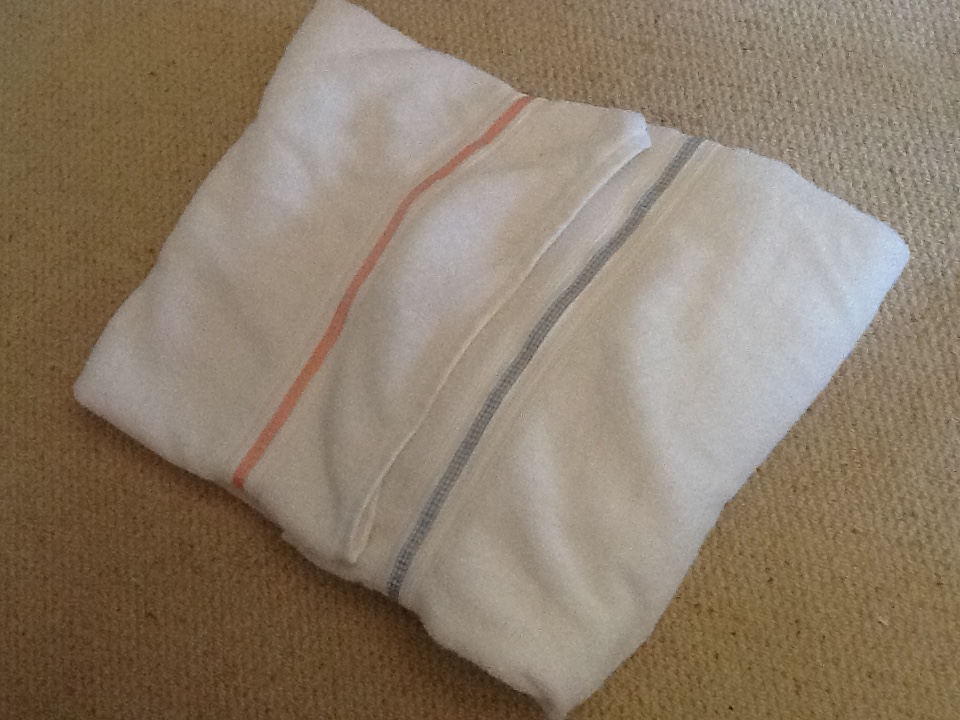
imageBack from holiday and itching to craft, but first I had to tidy the ribbon drawer. Thought these contrasting lengths would decorate a plain bath sheet – and reduce the stash a little.

I used a walking foot and a zig zag at 2.5 width along each edge of each ribbon and the job is done.

Hessian mats

image image

Hessian cut to fit a bedside table. A few strands plucked from each side to create a fringe. Then my sewing machine stitch selection is put through its paces to create a frame for the mat. No backing, no embellishments but a quick and useful mat in minutes.

Crazy quilted dust cover

image image

An attack on my scraps bag was needed so I I cut a piece of old tablecloth big enough to cover my scan n cut then crazy quilted scraps all over it. I included a piece of black work – yellow and navy  – embroidery started 20 years ago and added appliqué shapes, scraps of lace and ribbon and then used decorative stitches to tidy up some of the edges. A contrast bias binding finished it off (sewn back to front, whoops).


it may not be fitted and my scrap bag is still full but this useful little addition to my craft room is full of stitching memories, I love it.