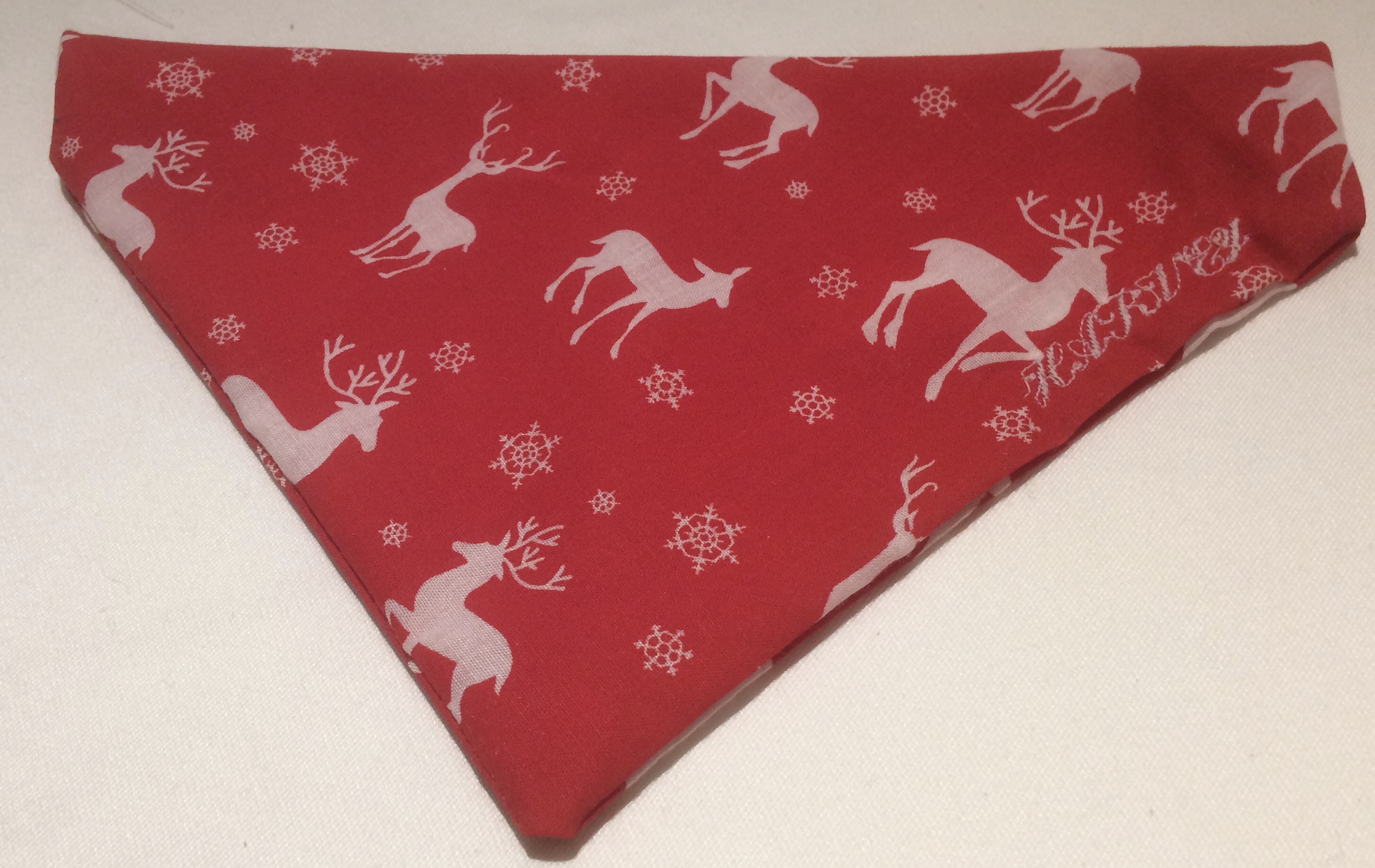
Quick doggy bandana

Just two minutes to make and sooo cute.

Cut a square of fabric so that the diagonal is the same length as your  dog’s collar. Fold the fabric, right sides together, on the diagonal and press. Unfold the fabric and leave right side down.

At either end of the diagonal and fold a triangle about 5cm back to the middle so when you refold on the diagonal you get this shape, albeit inside out

sew the raw edges from just below one side fold round to just below the other and then turn right sides out through one of the gaps

done , just thread the collar from gap to gap and it is ready for wearing

if you want a more tailored finish you can run a line of stitching parallel to the top fold to create a channel for the collar

if you have a friend with a posh sewing machine why not add a little monogram or name as here …

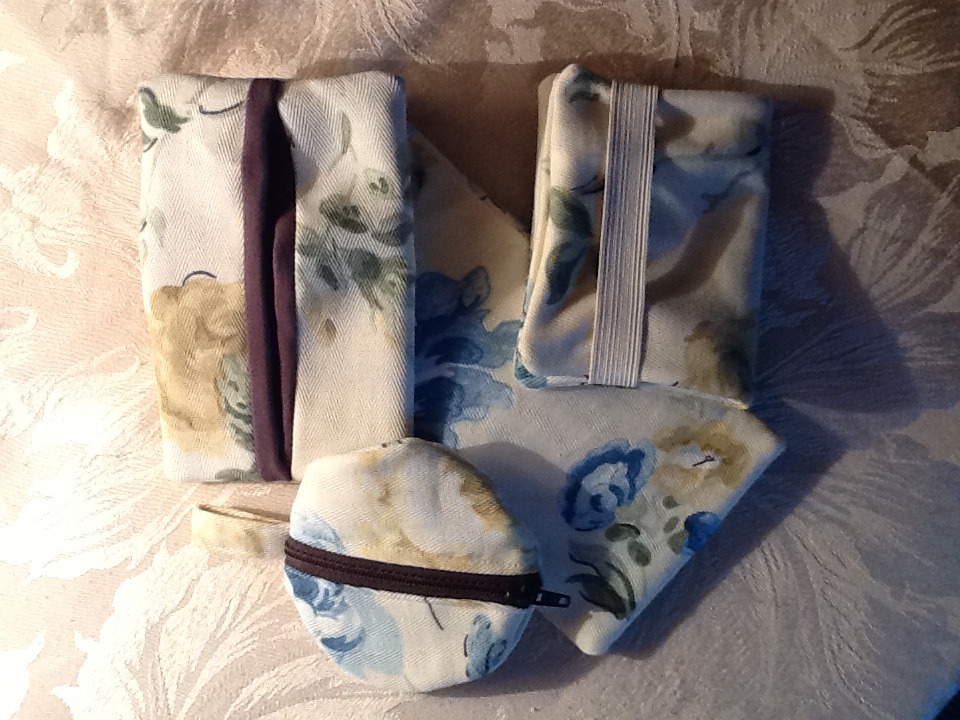
Handbag accessories kit, from just one fat quarter

A batch of mini sews, together make a little handbag set

first a round earbud holder, two 4″ circles of outer fabric and two of lining, a 2″X 1.75″ strip folded to make a tab and a 5″ zip.

next a mini tissue holder: a 7″ X 6″ piece of fabric and a 8.5″ X 6″ for the contrast lining

then a loyalty card holder: 4 pieces of 4.75″ X 6.75″ fabric ( one of them interfaced) and one piece of .75″ wide elastic about 5″ long

and a glasses case that takes two 7″ X 4.5″ pieces of fabric and lining in two 7.5 X 4.5″ pieces, both outer pieces interfaced

finally ( not pictured) a lip balm key ring holder 1.75″ X 8″ outer and the same of lining

all sews from popular tutorials and covered in earlier posts – only the earbud holder is new here

Scraps leftover  from the fat quarter (which was actually a freebie from an upholstery fabric samples book)  and lining from the spares box so just the zip to purchase for the next set I make.

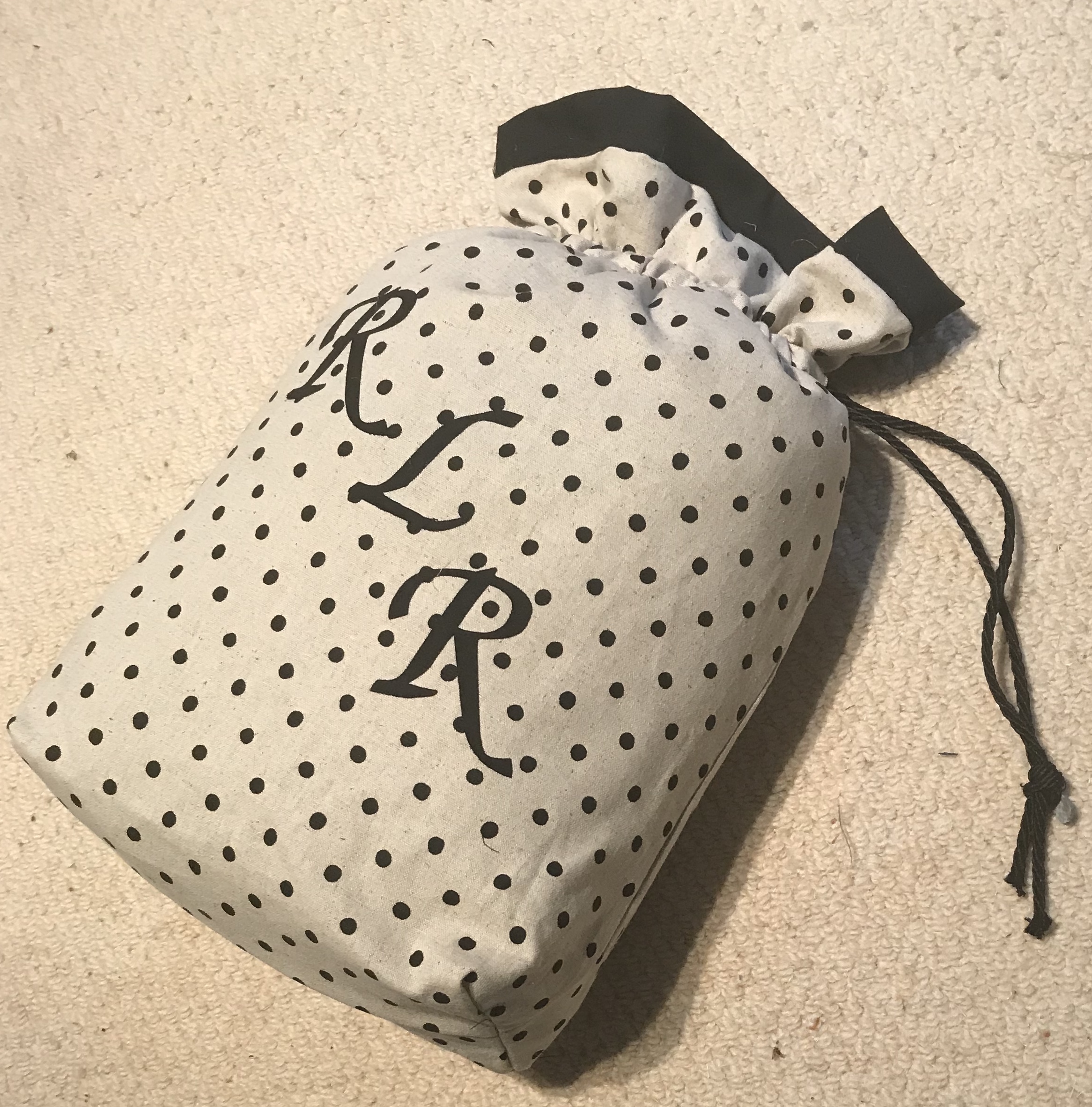
Robust drawstring bag

This bag has the drawstring channels stitched on the outside so they create a nice ruffle top

outside fabric one piece (mine was 22 x 9”), lining fabric two inches longer to create the contrast border, two strips of outer fabric about two inches narrower than the width of the bag and three inches high, scrap of contrast fabric backed with heat and bond for appliqué monogram and one metre cord

method: press raw edges of strips under then fold in thirds to create thin channel to thread cord through,

fold outer fabric in half and pin strip to outside about two inches from upper edge on each side – you want there to be an equal ish gap at either side of the bag. Sew top and bottom of both strips in position, leaving sides open

If sewing appliqué monogram, position and stitch now

now turn fabric inside out and seam both sides closed, if you want a boxed bottom cut a 2 inch square  out of each bottom corner and then bag it out

seam lining fabric sides , leave a gap for turning, use same seam allowance as for the outer, and box bottoms or not to match your outer

with right sides of bag and lining together pin upper edges together, match seams. The lining will be a bit baggy as it is longer than the outer, that is deliberate but the top edge of lining and outer should match as you pin it. Sew around the top.

reach through the turning gap and pull the inside out, then push the lining inside the bag so the bases match and the longer lining top poking out. Press. Reach inside and sew up the turning gap in the seam

top stitch around the top, use decorative stitch or hide in the seam if you prefer

cut cording in half, thread from each side all the way round and knot ends to secure

iron appliqué at end if you are using iron on

job done
 

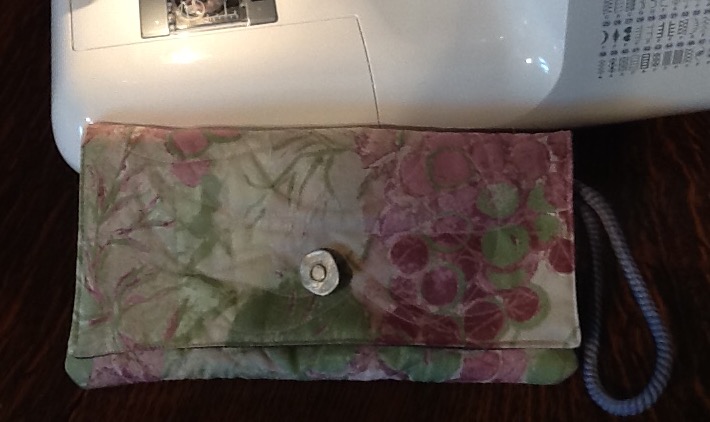
Clutch bag

Discovered a dozen magnetic bag clasps in my sewing box, so decided to use one and follow a Debbie Shore tutorial. I made this bag with three squares of fabric, it is a quick and easy project.

I cut two 11″ squares of the floral fabric and one of a plain lining material. I cut a matching square of wadding which I free motion quilted to the back of one of my floral squares and a half square piece ( 11 x 5 1/2″) which I quilted to half of my other floral piece. I had a 15″ piece of cord for the wrislet and a spare button for embellishment. Vintage brooches would be perfect for this sort of bag embellishment.

Debbie’s tutorial is, as always, easy to follow. I top stitched at the end to give it a bit more finish.

Next time I will put some stabiliser on the lining and maybe round or angle the corners on the top flap. I might even put a pocket in the lining as this is such a quick and easy project.

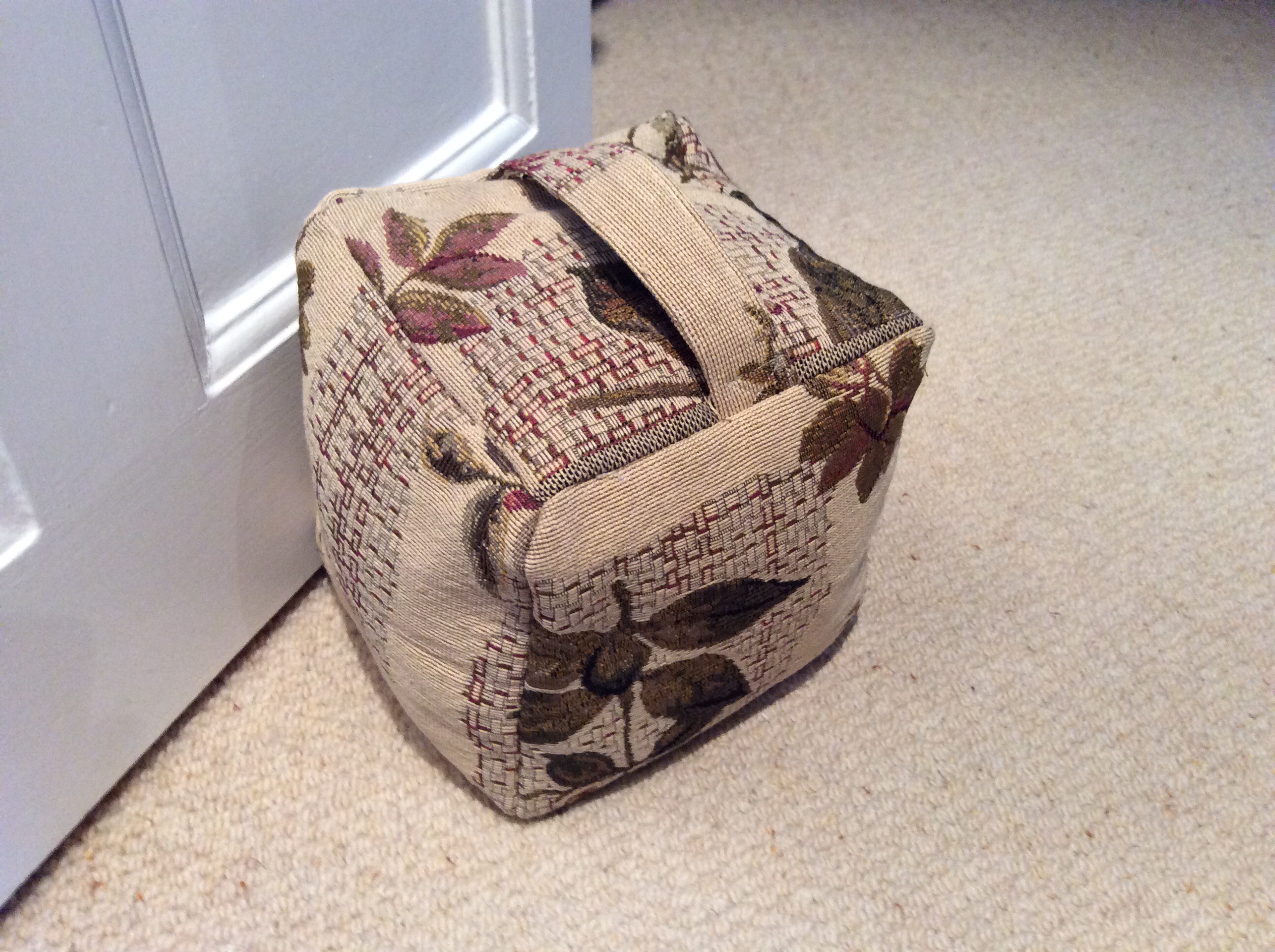
Cube door stop

image

Am trying to use up some scraps of upholstery fabric so cut six squares  and a strip for another door stop.

if you make with lighter weight material you will need heavy duty interfacing

method: fold the strip- about the same length as the side of a square –  edges to middle and then fold in half and straight stitch along the length on either edge to create a handle. Position the handle on top of the centre of one of the squares and sew the ends firmly with a quarter inch seam. This seam will be hidden later.

take four squares to form the sides of the cube. With right sides facing and a half inch seam,  fix them in a box shape then pin the top square facing downwards carefully to form the cube lid.

seam  the top to the sides, go slowly round the corners to catch all the bulk and keep a consistent half inch seam to fix the handles in place

check your work before pinning the bottom square in place, still wrong sides facing. Seam as the top but leave a gap for turning. Leave at least three fingers for your turning gap as the fabric is bulky.

check the seams at the corners and maybe go round again as the finished cube has quite a lot of weight to bear

turn Right side out through the turning gap in the bottom. stuff at least  two thirds of the cube with pillow stuffing (it will take more stuffing than you expect and you don’t want it saggy from understuffing) and then fill up with gravel, lizard litter or rice. Hand stitch the gap closed to finish.


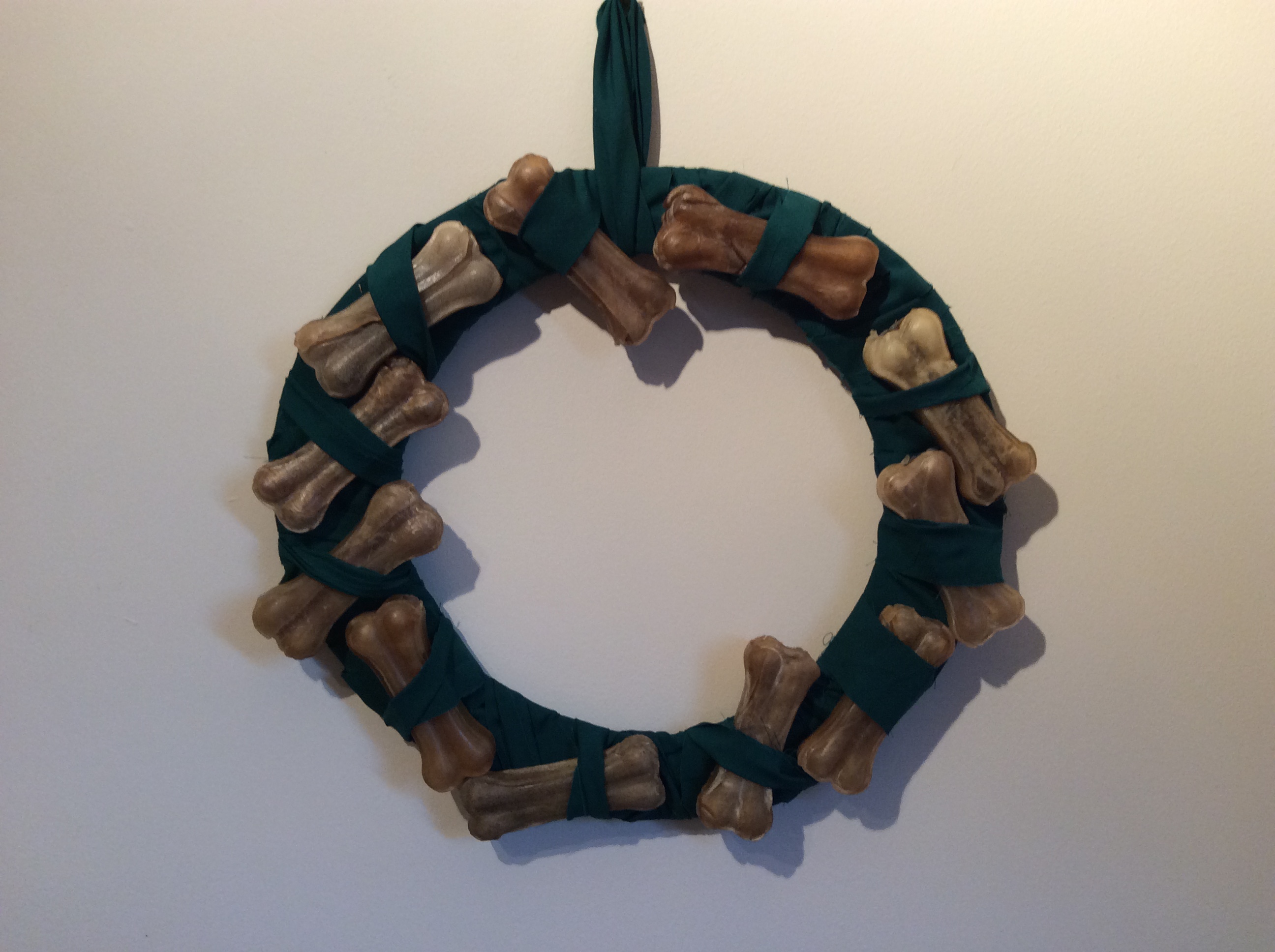
Christmas wreath for friends with pets

img_0183

A bonio bonus as we now have a dog and have many friends with dogs that we want to include in Christmas fun.

I cut the hoop form from cardboard packaging using a dinner plate as a guide for the outside and a side plate for the inside of the ring then wrapped long strips of fabric round and round to cover the cardboard.

I then took bias binding, (this one is of the same as the base fabric) and left a long tail before wrapping the rawhide bones firmly in place around the wreath. Once all the way back to the beginning of the circle, I tied a knot with the beginning tail and then made a hanging loop with the spare length of binding.

later versions use more colourful tape on hessian backing and different types of treats are bound in but all were made without glue, string or embellishments just in case the dogs get unsupervised access to the wreath.


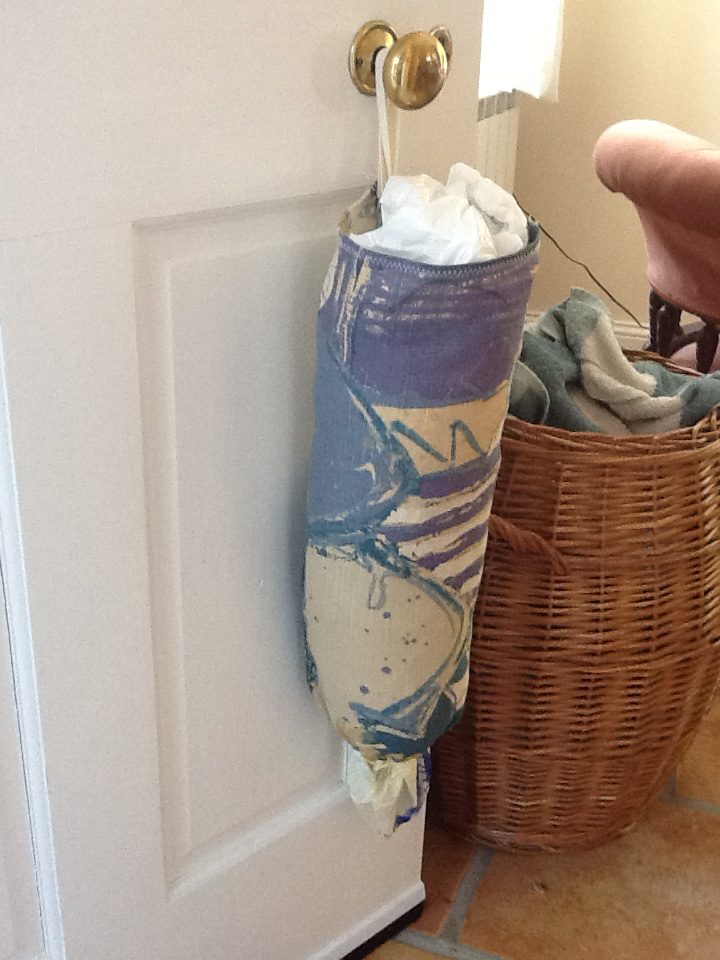
Plastic bag holder

imagea quick sew to tidy up all those stray bags that still come back from shopping expeditions

a fat quarter or 18x 22 inch rectangle of material

8 inches of elastic , 1/2 inch wide is fine

8 inches of tape or ribbon

fold over 1 inch on a short end of the rectangle, which we will now call the bottom, and fold it over again then press and straight stitch at least 1/2 inch away from the top fold so you have made a casing for the elastic

fold over 1/2 inch once on the top edge of the fabric, fold again and press then stitch that so you have a neat hem at the open top where you will add bags in

fix a large safety pin to one end of the elastic and thread it through the casing, when it emerges pin the ends of the elastic together to form a circle

with right side of the fabric on the inside, fold the sides are together and seam from top to bottom to make a tube. While doing the seam make sure you sew the elastic ends  together maybe back stitching over the elastic for security

Fold the tape in half and stitch in place near the top of the side seam to make a loop for hanging

trim loose threads and excess seam maybe using pinking shears for neatness, turn right sides out and stuff with all those loose bags


Kitchen stitchery

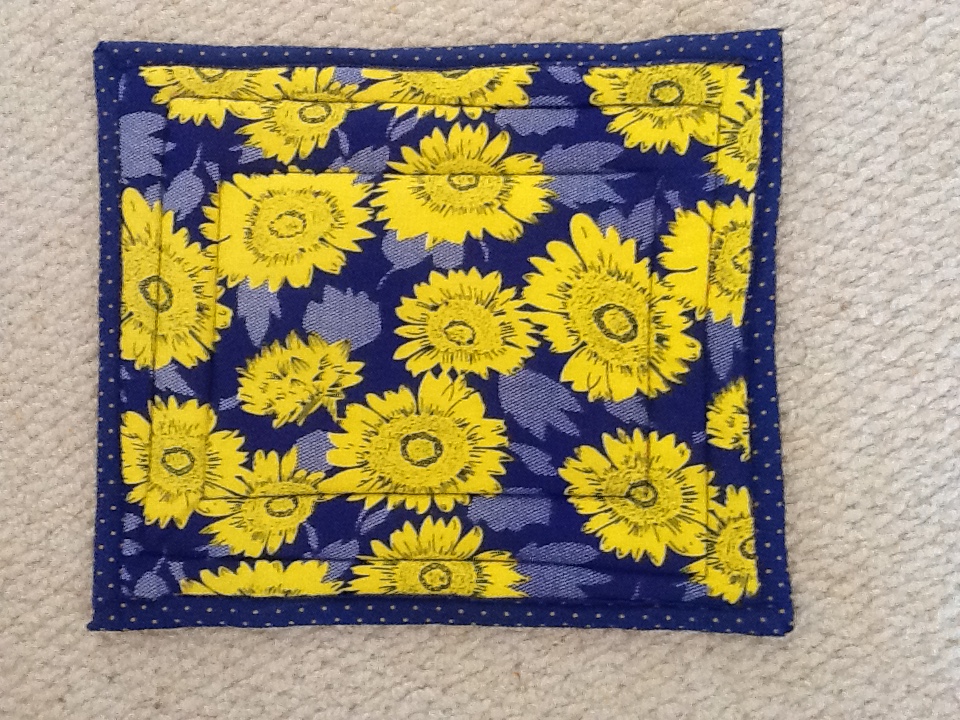
imageA set of fat quarters are going to provide inspiration for a ‘suite’ of kitchen kit. First off this hot pad with insulbright heatproof wadding and an extra layer of batting sandwiched between two contrasting fabrics.

Cut bottom fabric 3 inches wider and longer than the top piece so you can fold this over rather than bias bind the raw edges, cut insulbright and optional batting to same size as top piece

stick the insult right and batting between the two fabrics with removable fabric spray (stick and spray) with the bottom fabric  – face down -aligned so there is a 1.5 inch border showing all the way round

quilt the pieces together. I stitched a rectangke 1 inch and 2 inches in from the edge all  around

Fold and press the 1.5 inch frameof fabric in half so there is now .75 inch frame showing all around. Fold this over to the top fabric as though it was bias binding  and pin or clip it in place.  At the corner fold the fabric as though doing hospital corners on a bed , although you can trim away some of the bulk as you fold and pin each corner to mimic a mitred corner

top stitch around the edge to secure the frame in place

now shall I do mug rugs or coaster to go with this?

bathroom bandana

image

I briught back two pretty ikea fleeces from Anna and VIlle’s wedding with the promise of transforming them

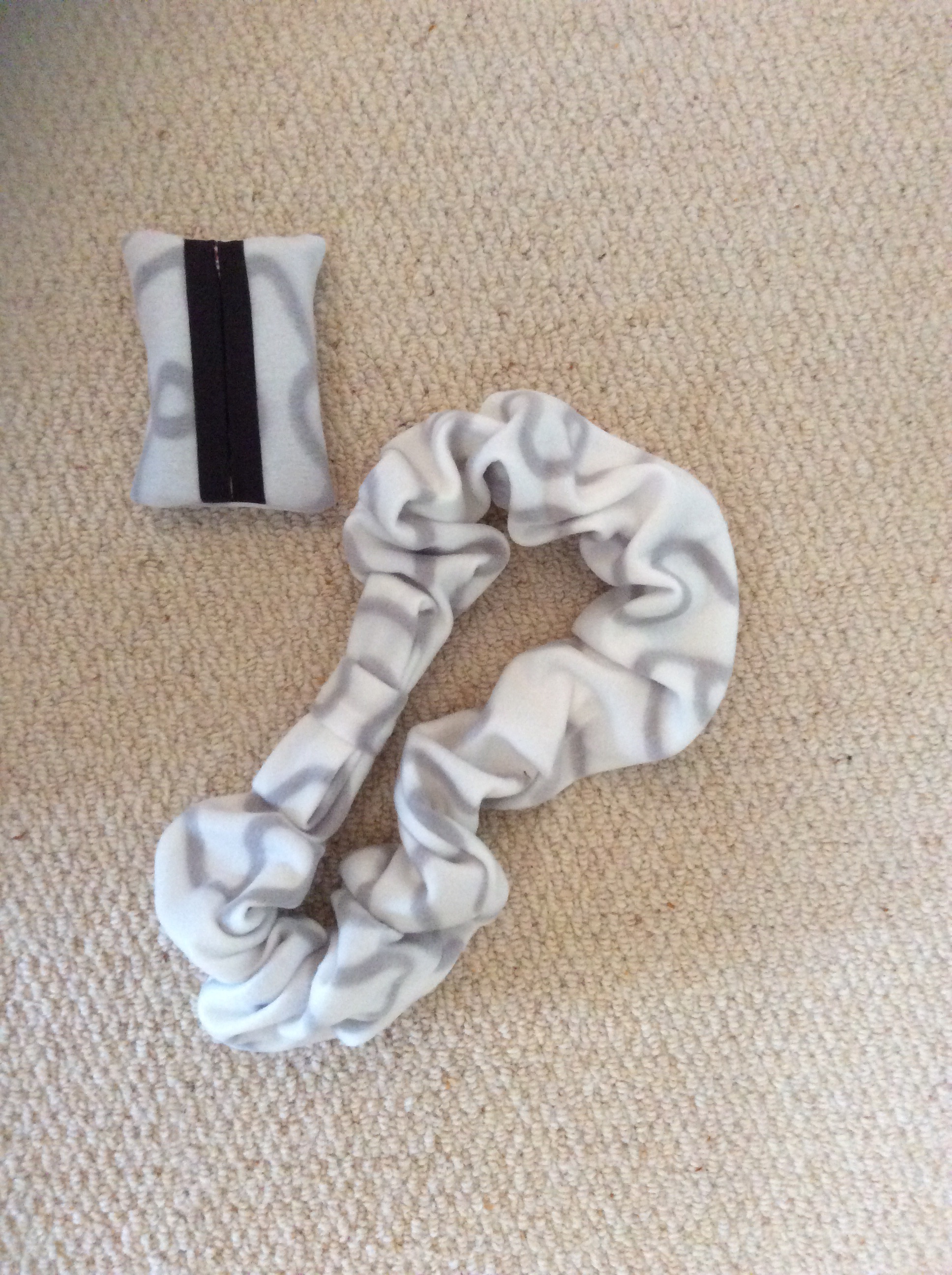
so far, tissue holder from previous pattern

and new

bathroom bandana- keeps your fringe off your face for a face pack

Elastic that is one or two inches wide cut  one inch longer than the snug circumference of your head

strip of fleece six inches wide and double the length of the elsstic

For the bow, strip of fleece four inches wide eight inches long And a strip of fleece two inches wide four inches long

sew each fleece strip into long tube using straight stitch and narrow seam, turn each tube to hide the seam

thread elastic through the long tube and , keeping the fleece edges away from the needle, zig zag the one inch overlap to form a circlet, slide one end of the fleece tube inside the other then zig zag the overlap closed, try to centre the elastic in the tube and go slowly as it is bulky

fold the edges of the next size tube in half to create a bow shape with the raw edges facing the overlap raw edge of the circlet, tack in place, wrap the little tube tightly over this and straight stitch the back to fasten it all and finish the bow

Up cycled phone cover

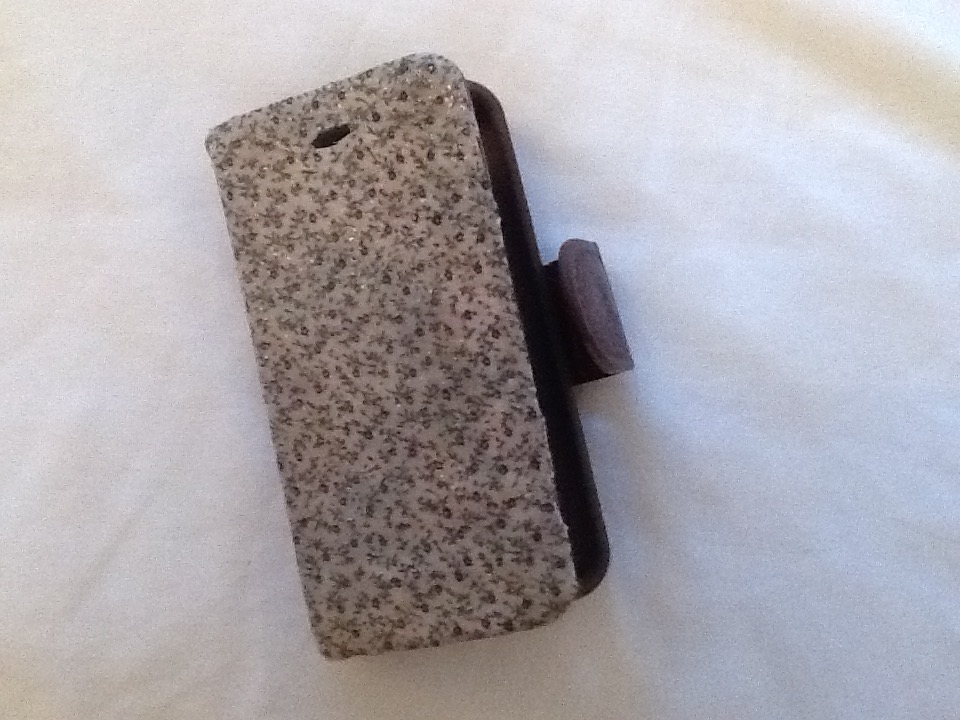
image imageI loved my fabric phone cover but it did look tatty so I gave in and bought another (only a cheapo one though as I am going to craft that too) while I played with my old favourite.

so simple:

fabric larger than the cover when unfolded

mod podge , classic not even fabric one

sharp scissors and a biro

Unfold the cover and lay it as flat as possible over the wrong side of he fabric then trace around the edge and mark through the holes (3 on the iphone)

remove the leather trim or embellishment from the old cover so there is a flat surface

cut out the fabric leaving a generous border for now and trim out the lens hole etc fairly neatly but under rather than over cut

coat the old cover with a layer of mod podge then smooth the new fabric in place. Start by positioning the lens holes and the rest can be stroked in place. Add a couple more coats of mod podge -letting it dry between coats. When the fabric feels papery trim the edges more precisely and neaten up the lens holes by rubbing the point of a crochet hook or similar inside them

fold and unfold the cover a couple of times to check the fabric gives and maybe let the glue cure a day or so before you use it

i will let you know how durable this is, but have plenty of scraps to do a refit next time