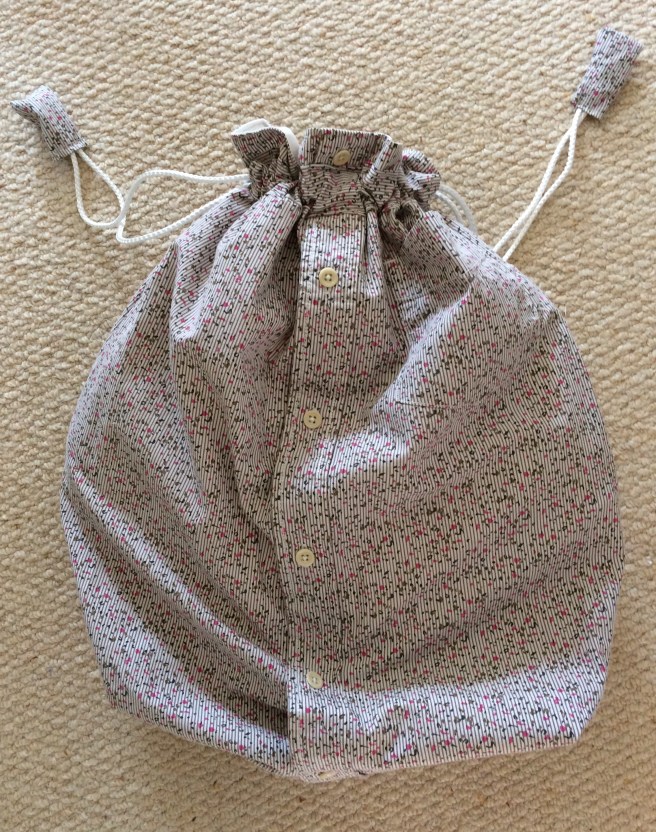
Key Ring Pocket – ideal for Mother’s Day

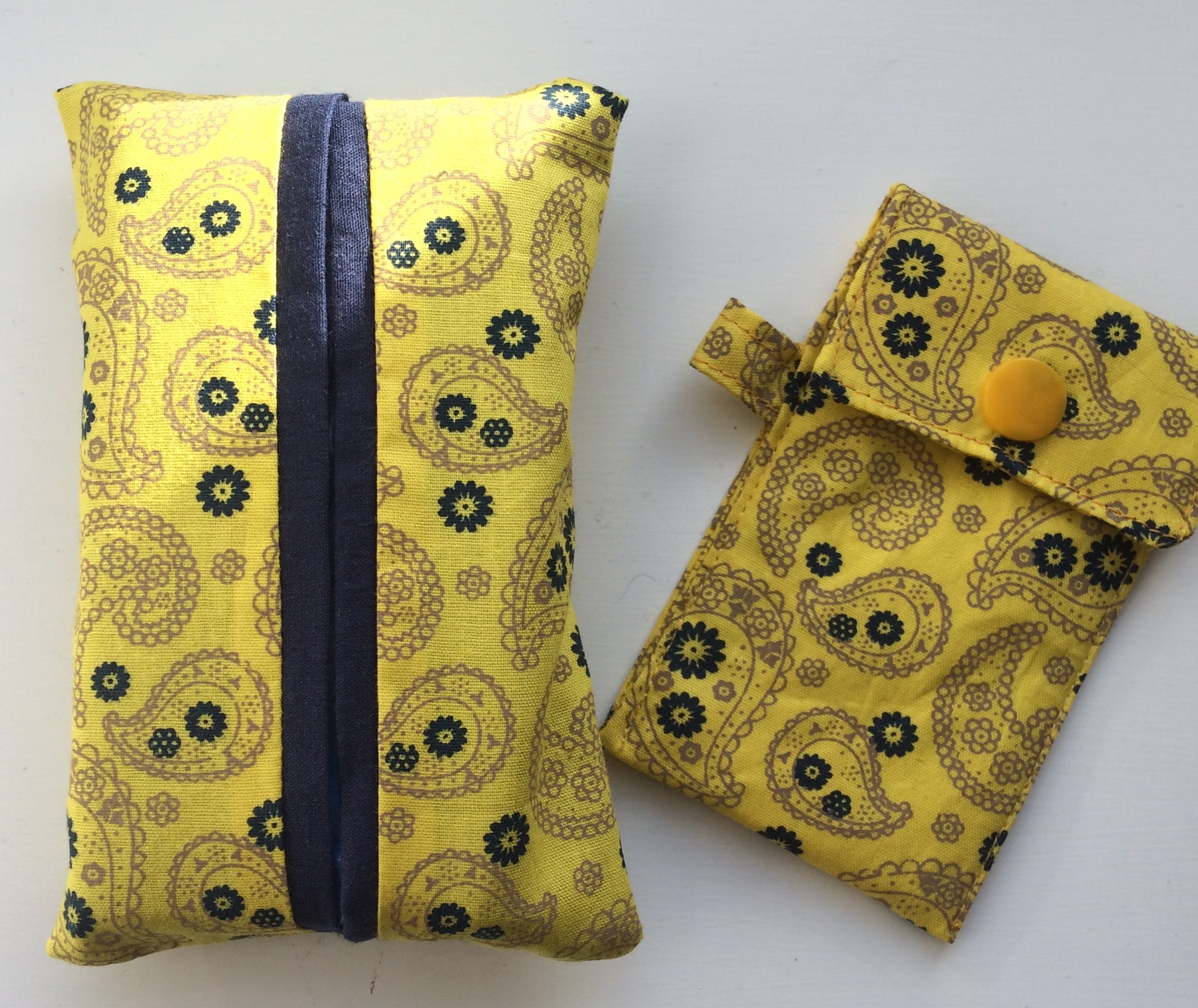
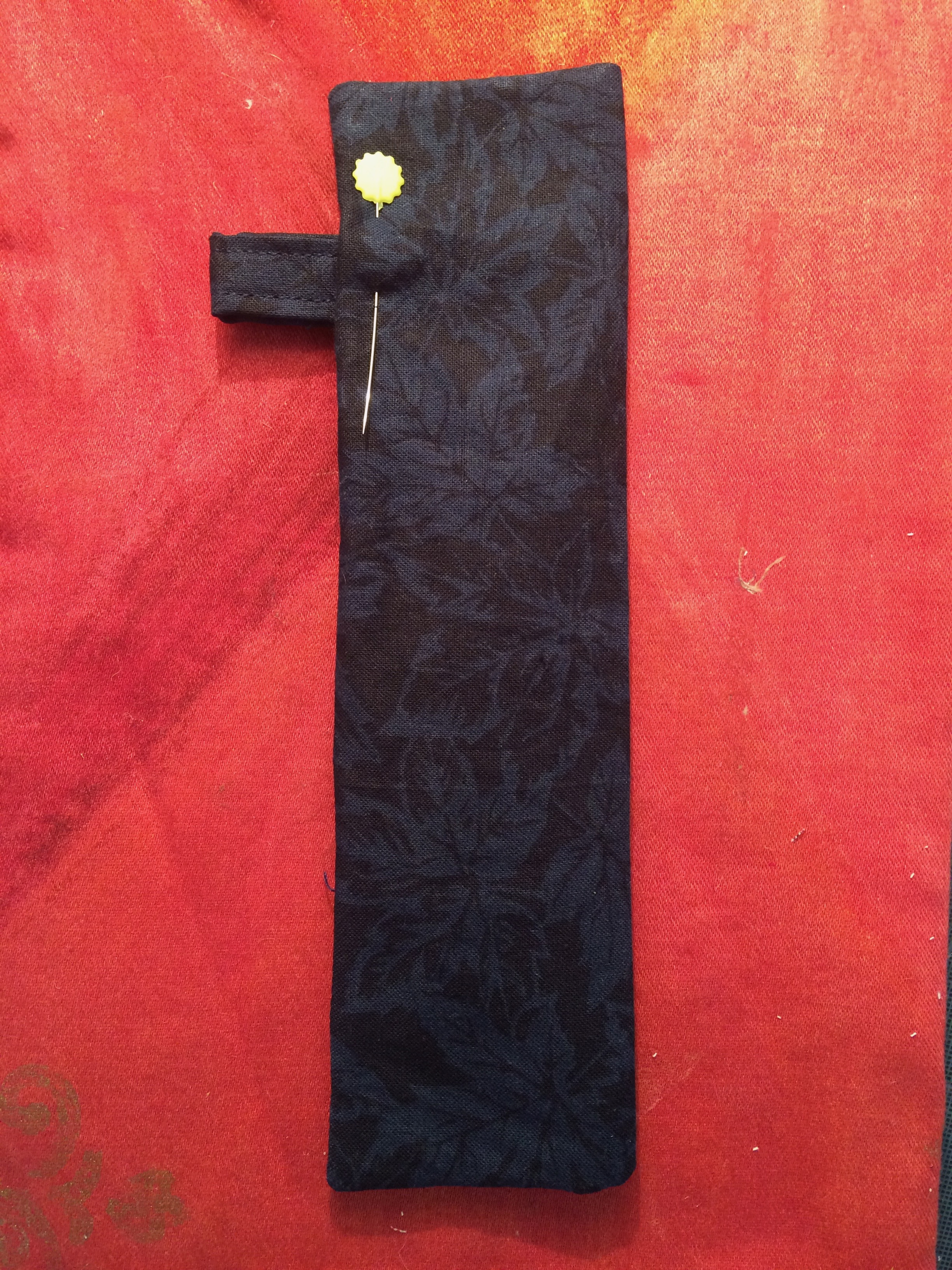
These little pockets fit on your key ring and usefully hold a lip balm or some pooh bags or emergency fiver. I made a bunch of them with co-ordinating tissue pockets (see post from 2015 A-tishoo! A tissue …) for a sweet little handbag accessory gift. The original idea came from Lorrie Nunemaker but I simplified her project a bit.

All you need is a piece of fabric that is 5″ x 9″ plus a 2″ square for a tab that will slide on your key ring. If your fabric is lightweight cotton interface the main piece then fold it in half  (right sides facing and iron it so you have a piece that is 2.5″ x 9″.

Sew around the open edges with a 1/4″ seam leaving a turning gap between 2″ and 3″ from the top.  Clip the corners and turn right sides out then iron flat again.

Now make your tab by ironing the 2″ square in half opening it out and ironing two sides towards the centre fold and then folding in half again so you have a strip that is 1/2″ x 2″. Sew around the four sides of the strip with a narrow seam.

fold the tap in half and push it inside the turning gap  left in your main piece as shown

Now fold the top down to about 1 1/2″ from the bottom to form the pocket

In this picture I have now rotated the fabric 180 degrees – I didn’t poke out that corner very well did I?

Now sew around the sides and top with a tiny seam allowance to finish the pocket and fix the tab in. Take it slow over the tab as it is quite bulky.

If you have KAM snaps this is the time to use them, if not some old fashioned poppers or velcro tabs would work as alternative  fasteners.

Bonus for middle aged users: the brighter the fabric the easier it is to find your keys at the bottom of your handbag!

quick and simple hot water bottle cover

So quick yet makes such a difference…

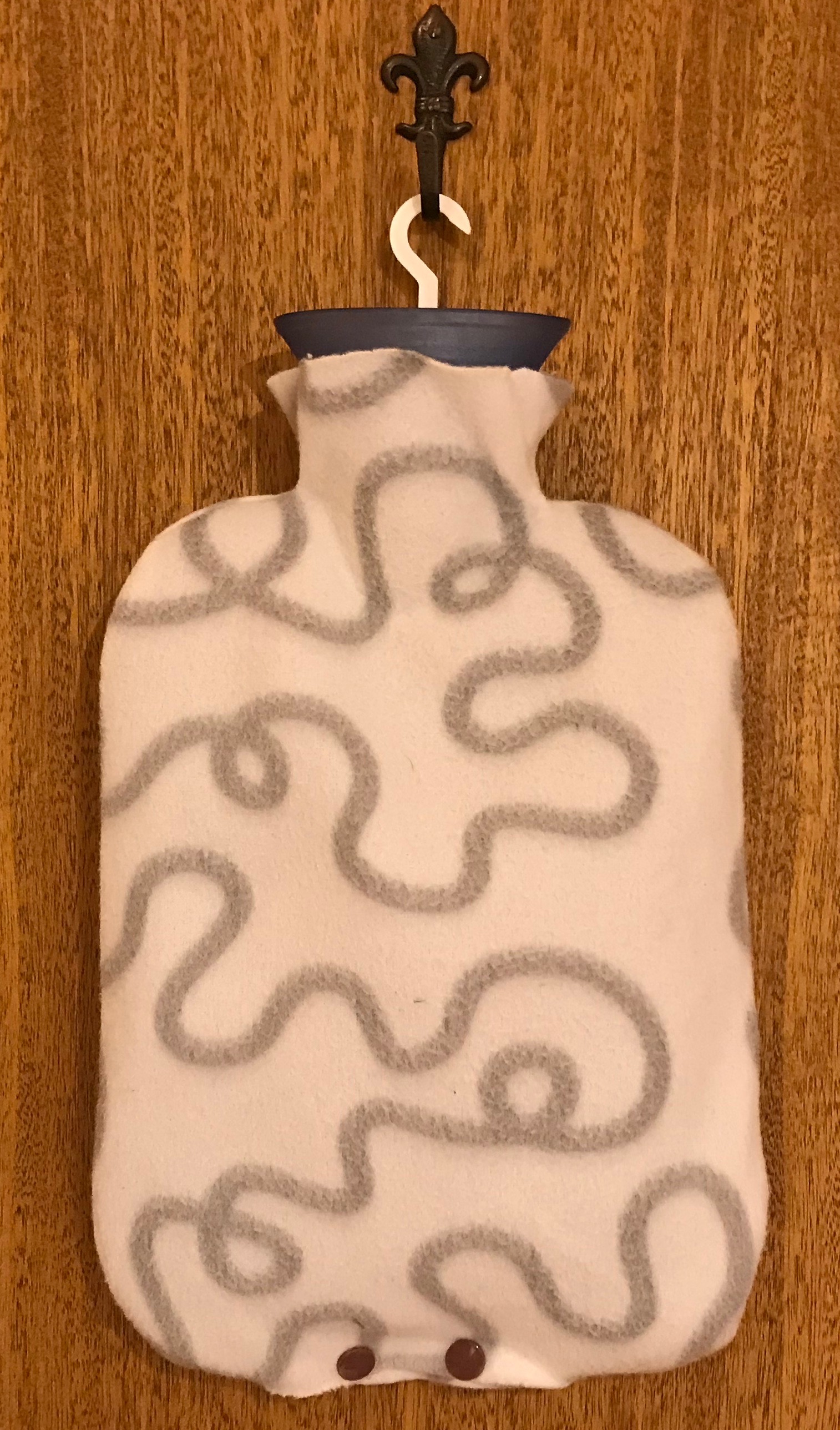
I laid the bottle on the fabric, traced round it leaving a half inch seam allowance then cut out a matching pair of fabric pieces.

With wrong sides facing, I sewed the sides from neck to bottom before flipping fabric right sides out and sliding in the bottle.

On one version I hand stitched the bottle in permanently, on the pictured version I used kam snaps to close up the bottom. With IKEA fleece I don’t have to worry about hemming the exposed edges.

This is a huge success as it keeps the bottle water hot for longer and is nice and cuddly too. Great return on the time spent on this one.

Jeans to bottle bags…

0FBD631B-C8B8-4AAE-954A-23D4BDB3A94C.jpeg

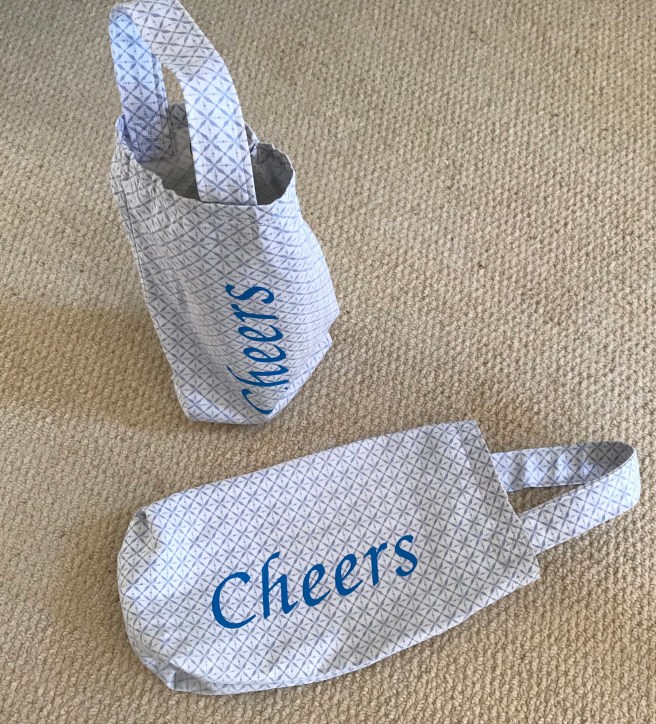
A worn out pair of jeans is repurposed so the bottoms of both legs have become bottle carriers.

This is a quick job suitable for heavy weight fabric, such as denim. Lighter weight material will need lining. With straight leg adult jeans the resulting bag is big enough for champagne or magnums if you are feeling generous.

method

Cut the bottom of the jeans leg off.  I took 15 inches off. Cut up one of the seams so you have a rectangle 15 inches tall and the width is the circumference of your jeans leg. Mine were straight leg jeans so plenty big enough for the next step. (If your jeans are skinny, cut a further 3 inch strip from the remaining jeans leg to make your handle)

Cut a strip about three inches wide from the side of the rectangle. Turn in the raw edges , fold this strip in half and then sew down both sides to make a 15 inch long handle. Set aside.

Turn the remaining fabric so the hem is at the top then fold it right sides facing  and seam down the side and across the bottom of the rectangle. This leaves the hemmed edge open so it becomes the neat, finished top of your bag. I boxed the corners of my bag, but it isn’t essential.

Sew the ends of the handle inside opposite edges of the top of the bag. I took care to double stitch the handles in to avoid breakages.

As a finishing touch I added a heat transfer vinyl ‘cheers’.


Magnetic wristband

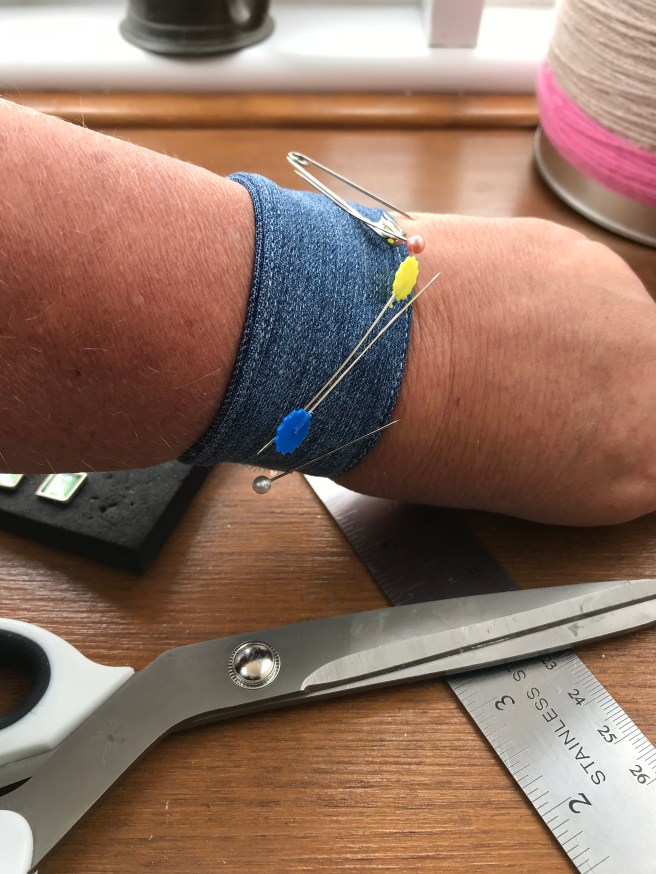
6439824B-416C-4B62-B868-C3C6504B21BFGreat for sewing or diy. No more dangerous pins between the teeth or dropped screws with this quick stitch wristband.
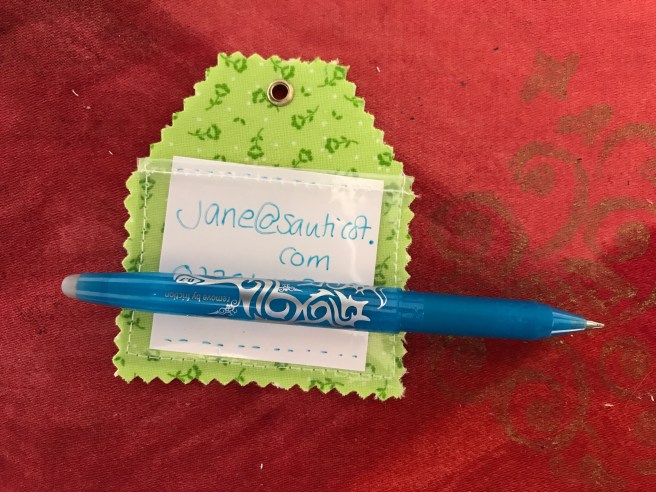
Materials

fabric about 11 by 2.5 inches for a woman’s wrist – light denim ok, cotton better

velcro, 7 mini magnets, 6x 0.5 inch strip of magnetic sheet from craft shop, glue, needle and thread

Method

Fix Velcro towards opposite corners of the fabric i.e. top right and bottom left so that when the fabric is folded the strip will fasten comfortably around the wrist, stitch Velcro in place

Fold the fabric in half, with right sides facing, to form a thin strip and stitch round the three open sides, leaving a turning gap about half way along the long side. Turn fabric right side out.

Stick mini magnets along the magnetic sheet, spacing them evenly. I used multi medium glue. When dry, slide the strip in to the fabric through the turning gap – make sure the magnets are facing up to what will be the top of your wrist band

Top stitch all around the edge and you are done.12A02BF1-0859-481A-9AF6-8A0D0859AA31

Luggage tags

imageEasy peezy lemon squeezy tags that take minutes to make if you keep it simple…
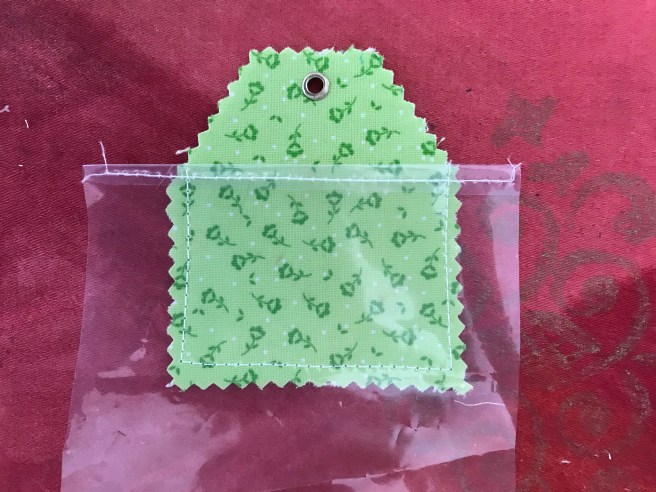
1. fuse a piece of firm interfacing ( I used Pellon fuse-n-shape) between two scraps of material that are just bigger than the interfacing.

My interfacing was 3.5 inches by 4 – a scrap that I wanted to experiment on, my next versions will be a bit bigger if I decide to cut into my carefully hoarded interfacing.

2. Trim the fabric sandwich to a tag shape, rotary cutter works well but my favourite was  using pinking shears

3. Punch a hole and set an eyelet, I used my cropodile and was grateful to make a tiny dent in the eyelet stash (how did that get so big?)

4. Cut a piece of plastic packaging – the firmer the better- to a rectangle bigger than your tag and fold over a small ‘hem’. With a long straight stitch sew the hem down 44B7F43C-280A-4762-ACB5-76146994A8D9.jpeg

5. Position the plastic over the tag with the hem across the ‘shoulders’ of the tag and then sew the other three sides to the tag

6. Trim the plastic, I angled my scissors so I could trim it just smaller than the fabric

7. Insert card or paper with your details on

What a great little project. Inspired by Riley Blake designs.

If you embroidered or monogrammed or vinyled a design onto the fabric first,  these would make fab personalised tags


‘Use what you have’ lavender bags

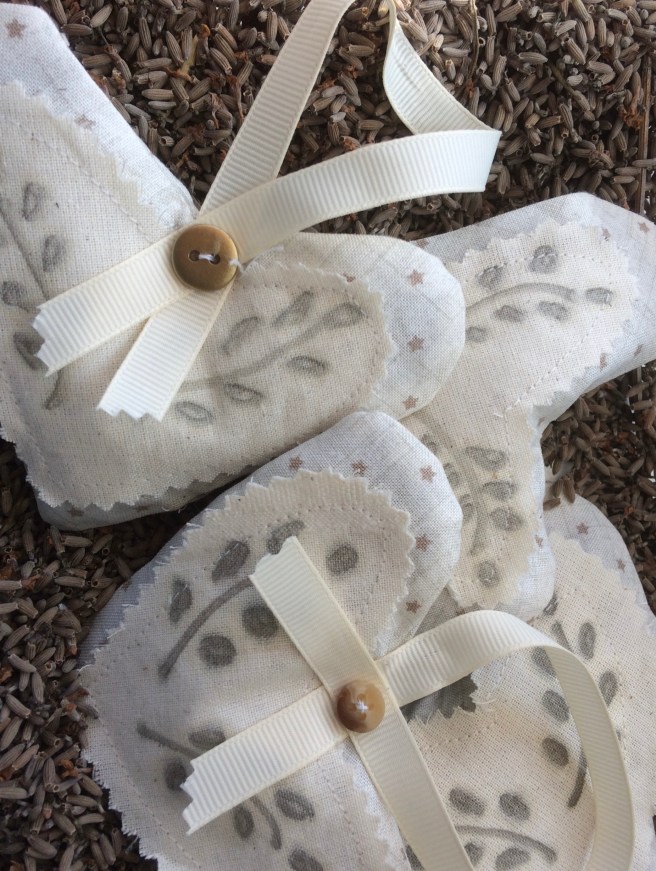
D30CB97B-0C48-4ACC-A8C4-13785FDAB47B.jpegI am determined to use up some of the fabric heap. So lavender bags makes a little (very little) dent …

heart templates hand drawn as half heart on paper before pinning to plain (smaller heart) and patterned  fabric. I cut the smaller heart out with pinking shears and then sketched a design on with a gold sharpie before sewing it on a bigger heart

simple machine sewing of two large hearts right sides together before turning right side out, stuffing with dried lavender then hand stitching an odd button and some offcuts of ribbon on for hanging

CD335CAC-5996-46FB-BB1F-0CE9FB6E37D3.jpegwhen the lavender is finished I plan to make some in Christmas colours scented with cinnamon and cloves, well one day
 

old jeans to…

873FBF31-E217-4CE3-A8F0-F63C384E4432.jpeg
 

What shall I call this type of pouch?


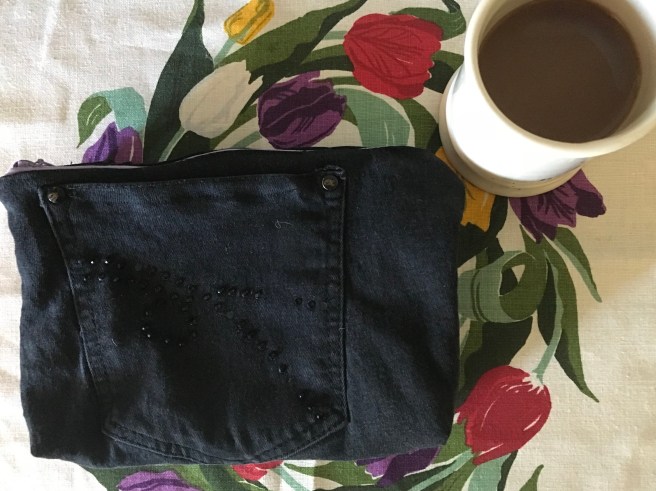
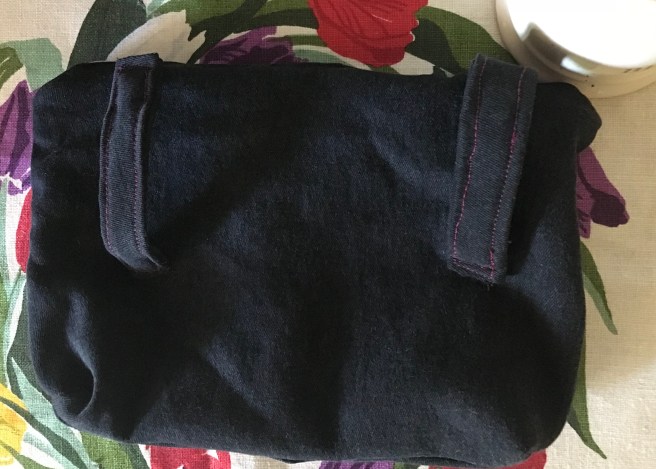
There has to be a better name for this type of bag than ‘bum bag’ or ‘fanny pack’. It is the type that you thread on your belt as a hands free pouch. I am going to call it a Harvey pouch as it is big enough for my dog (Harvey) lead, treats, poo bags, my phone and more.

Materials: I cut a rectangle around the back pocket of some old jeans and a matching rectangle from the leg material plus two strips each three inches wide and about four inches long (to make the belt loops)

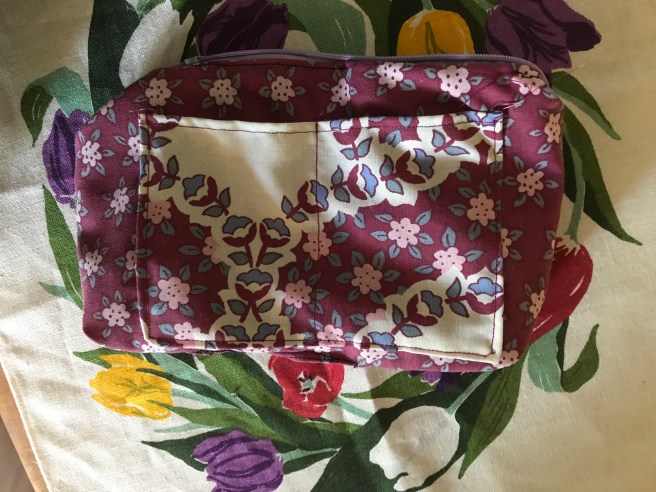
I then cut two rectangles from lining material (old duvet, I am being so economic) and a small rectangle to make an inside pocket, then I found a zip the same length as the width of my rectangles – although I could have chopped a longer one down or made a shorter one longer by adding tabs.

To assemble: make the belt loops by folding in the short ends of a strip,  then folding it lengthwise in half and finally folding the long edges into the centre before sewing all the way round the edge of your thin layered strip. Repeat for the other strip then position both on the outer one of the denim rectangles.

I want the jeans pocket with its stud and pattern to be on the front of my bag when it is on the belt so sewed my loops on the plain rectangle that I cut from the leg material. I positioned them nearer the top than the bottom and tried to make them equidistant from the edges, bearing in mind the seam allowance I planned

666062DA-8A7D-4956-A472-D026F00F7735
The loops were tough to sew on the panel, so many layers of denim . Should have used my walking foot.

I then made the pocket for inside by folding under the raw edges of my pocket piece and top stitching the top edge, then seaming the three other sides to one of my lining pieces.  I positioned the pocket it slightly lower down the panel to keep it out of the way of the zip I was planning. I also ran a seam down the centre of the pocket to make two compartments, each big enough for credit cards.

The zip was sewn, sandwiched between the right sides of an outer and lining rectangle on each side and top stitched before opening out the pieces with lining right sides facing on the left, outer right sides facing on the right and I sewed all the way around leaving a turning gap (yes I remembered to open the zip 3/4s of the way first). I boxed the corners of lining and outer to give the pouch a bit of shape before turning, finishing the lining then flipping the lining inside.

image
Not beautiful sewing but it is only the lining!

Shower soap pockets

8d634539-153f-40c2-89d9-ccb7d7f5b1c7.jpeg

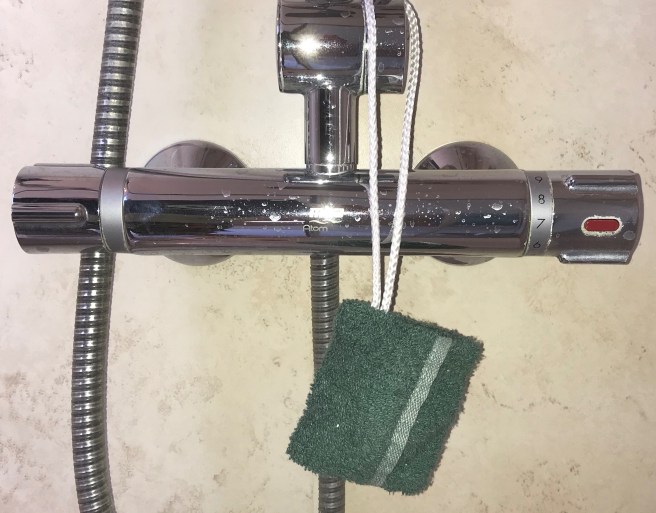
A neat way to use soaps without getting the shower scummy.

Have you lots of soaps in the house although you use shower gel these days? Here is a quick sew to help use them up…

Cut a strip of towelling (or flannel) that is two inches wider than the soap bars you have to use up and three times longer. I cut my towelling so that one edge was ready hemmed, otherwise sew a rolled hem along one width.

Now fold the towel strip in thirds and then ease the folds out to make an envelope shape just bigger than a soap bar. The hemmed edge should be inside the overlap, ready for sewing

Next cut a length of cord to form a hanging loop. Fold the cord in half with the ends sticking outside one side and pin the loop inside so it doesn’t get caught up in your seam sewing

Sew  both open sides with a quarter inch seam allowance,  then turn the envelope inside out so the hemmed fold is now outside and the hanging  loop is showing and you have a little packet to tuck your soap bar in…

After a few showers when the soap has been dispersed and the towel is nicely soapy you can launder and/or tuck in another soap bar … you might even use up those hotel soaps you keep collecting!

Should I switch to reusable make up remover pads?

The trial starts today…

I have followed a tutorial on making reusable remover pads (an envelope of cotton around some wadding or – in my case- towelling) by the crafts channel on YouTube and made myself a starter kit of pads. So easy. But will they wean me off cheap cotton pads?

These are really simple in that you trace a template for the finished pad on to the reverse of a scrap of cotton. I made my own template roughly copying the one suggested.

You then cut a rectangle outside the traced line, leaving a generous allowance. Cut two more rectangles, each just bigger than half of the full one and overlap them as if making an envelope back cushion. Pin the two halves together to the full rectangle right sides facing.

Sew around the shape you marked,  trim away the spare allowance then flip the envelope shape right side out.

Cut some wadding or towelling just smaller than the finished shape and slip it inside the envelope. Top stitch across the envelope opening and around the edge to finish.

The theory is that each pad is equal to four cotton wool ones because of their size and shape.

How many do you need to keep going between laundering? How do they last through washes? Is it worth the effort?

I will let you know…

Pyramid pouch

Easy zip sew.

fabric 10” x 5” with matching lining piece and batting or fleece, zip at least 5” long

optional 4×2” fabric folded lengthwise in quarters and top stitched to make loop

method;

1. fix fleece/batting to outer by fusing or quilting

2. Pin zip between one short end of outer ( pretty side of fabric facing top of zip) and lining fabric  and then sew in place using zipper foot. Repeat other short end to form a tube.

3. turn fabric tube with outer side showing and top stitch either side of zip to keep fabric away from the teeth

4. switch to normal foot, turn tube inside out with zipper positioned half way, if using pin loop inside and sew bottom edge of tube closed then trim seam close – also trimming excess zip – then zig zag over seam edge to tidy

5. twist fabric so zip is the side of tube. Pin or clip remaining raw edge and open the zip (or you won’t be able to turn fabric) then straight stitch, trim seam close to stitch- cutting off zip excess again- then zig zag up to, but not across, zip teeth

6. turn right sides out.

Done!